
Free Printable Behavior Chart for Kids
Print a free behavior chart for kids below: weekly, daily, classroom, toddler or a blank template. A plain picture beside every goal shows a child who can’t read yet what to aim for. Or customize your own with names, goals, days and a reward, then print it or save a PDF on Letter or A4.
Ready-made behavior charts
-
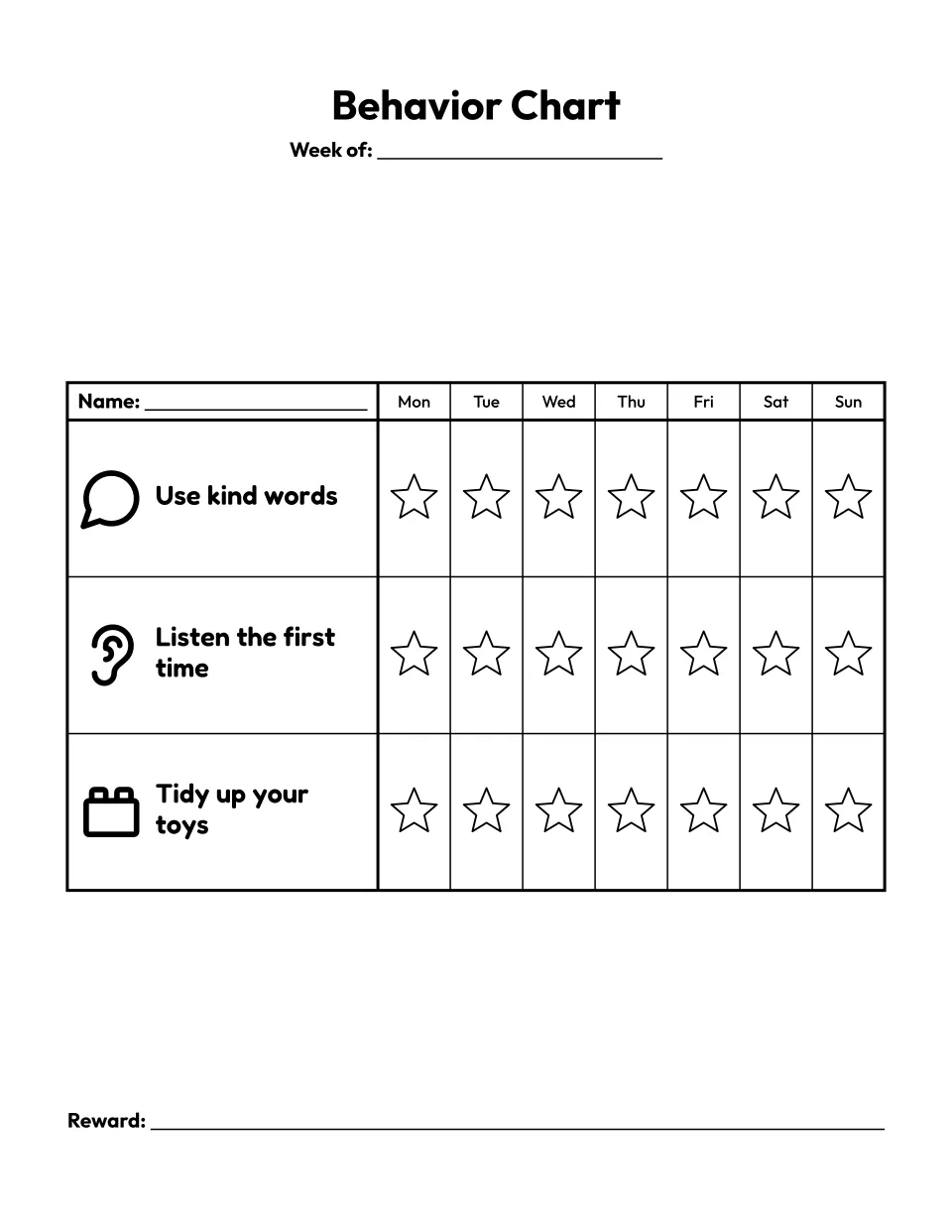
Weekly
Customize the printable weekly behavior chart for kids with pictures -
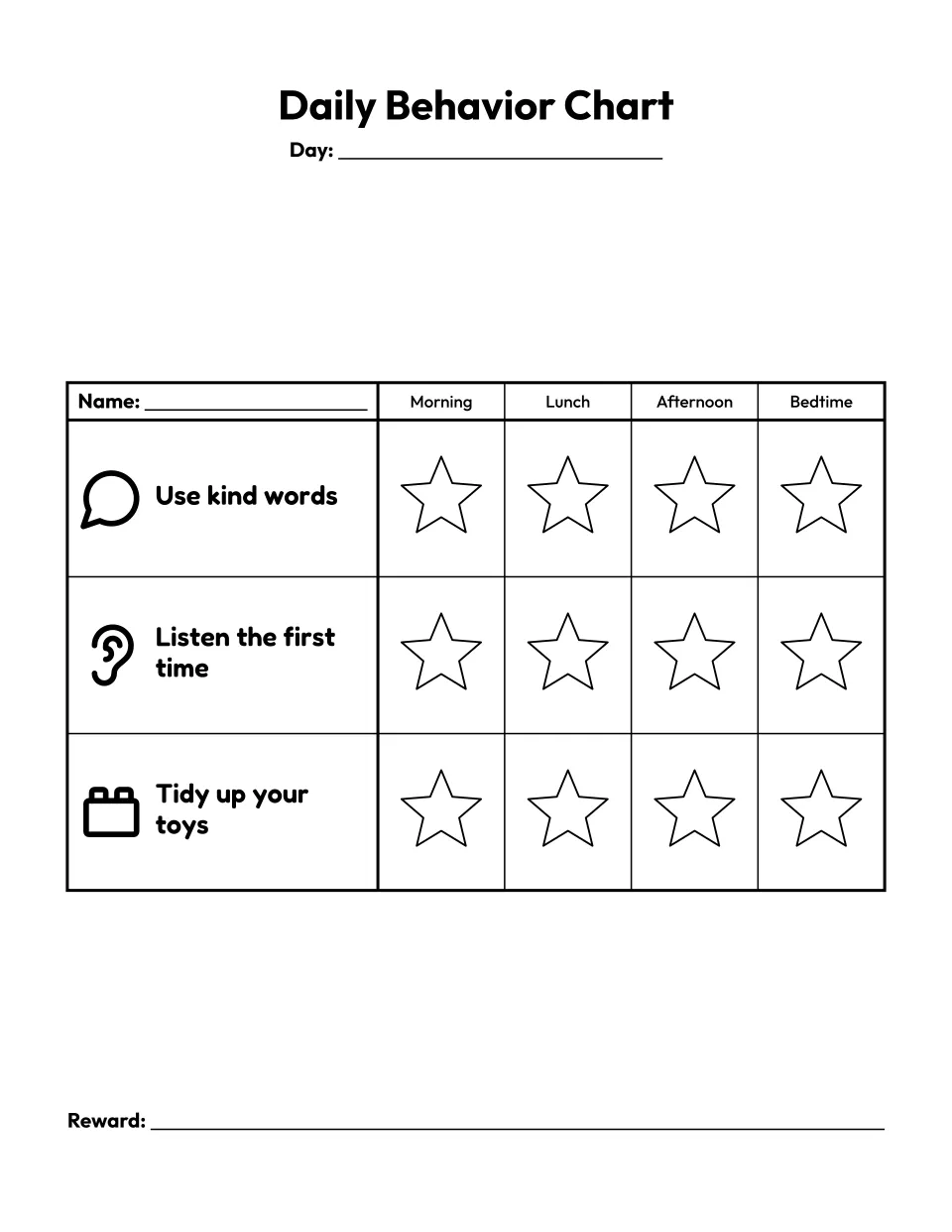
Daily
Customize the free printable daily behavior chart -
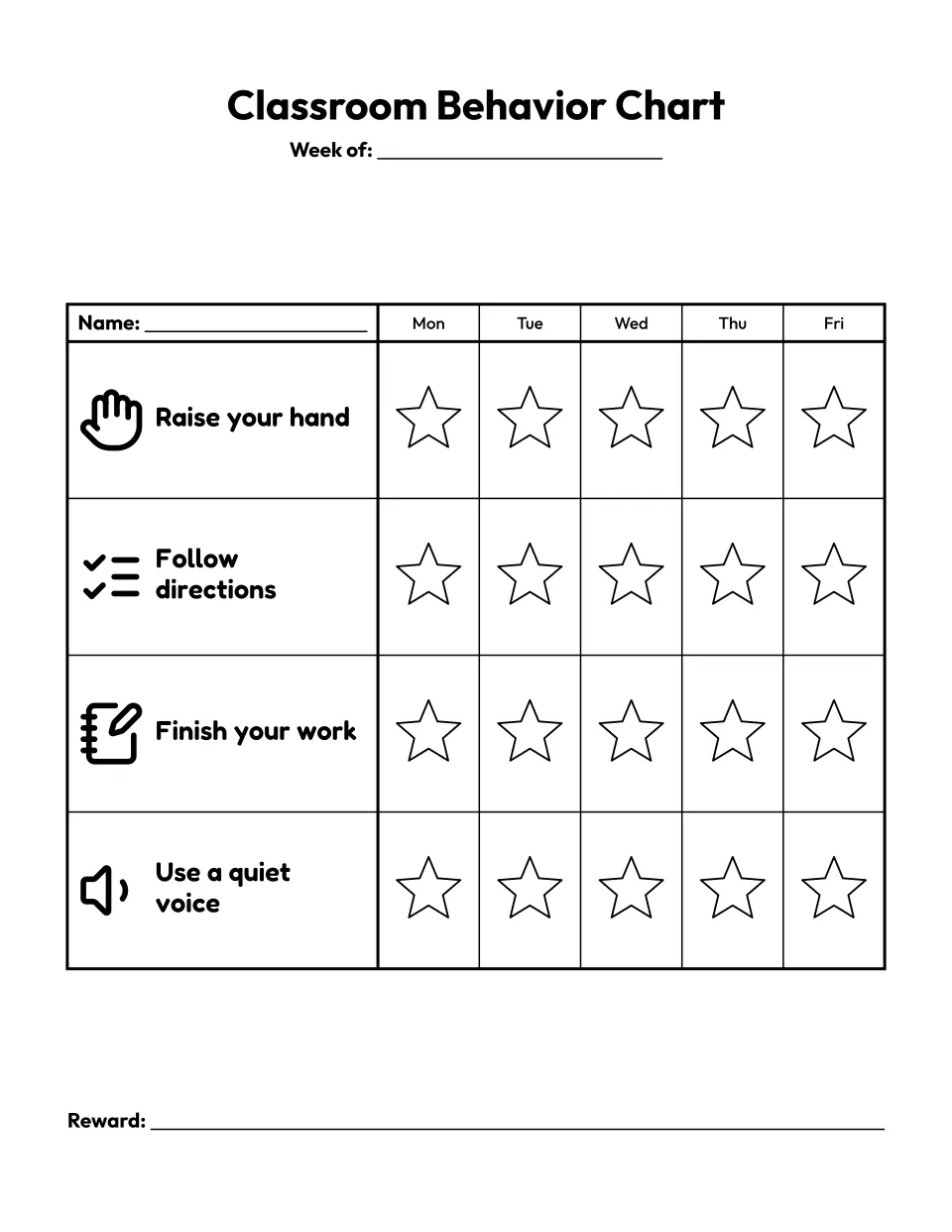
Classroom
Customize the classroom behavior chart for school days -
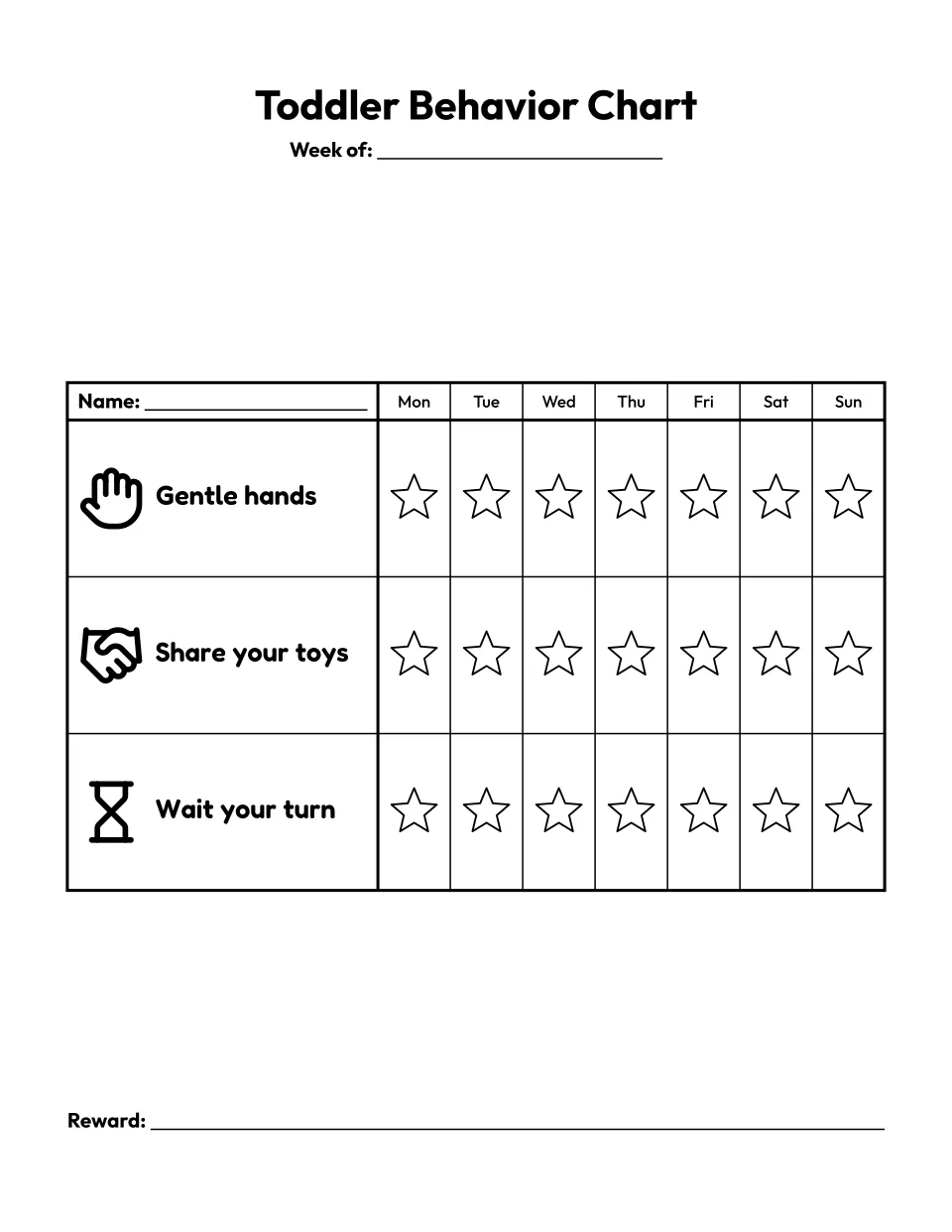
Toddler
Customize the toddler behavior chart with pictures -
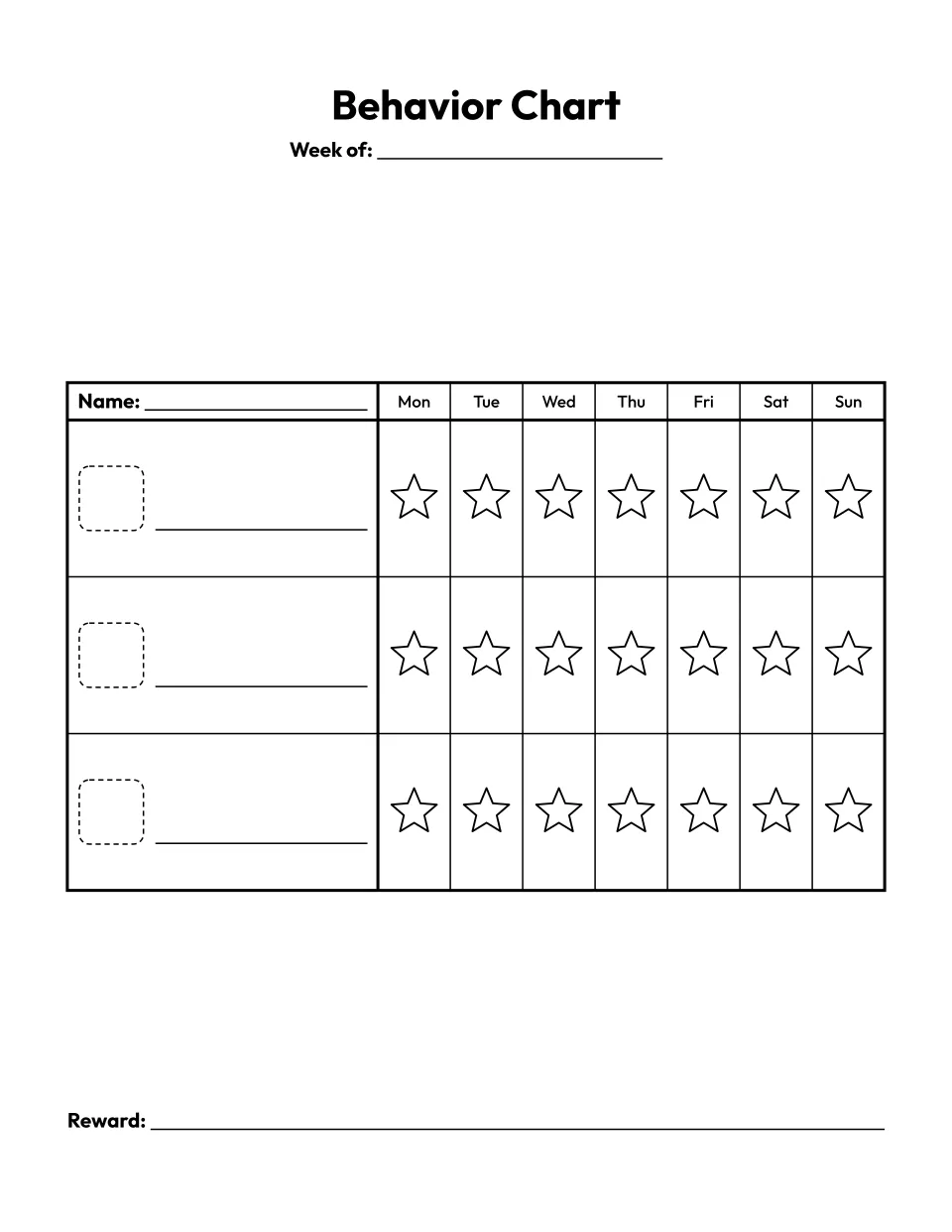
Blank template
Customize the blank behavior chart template -
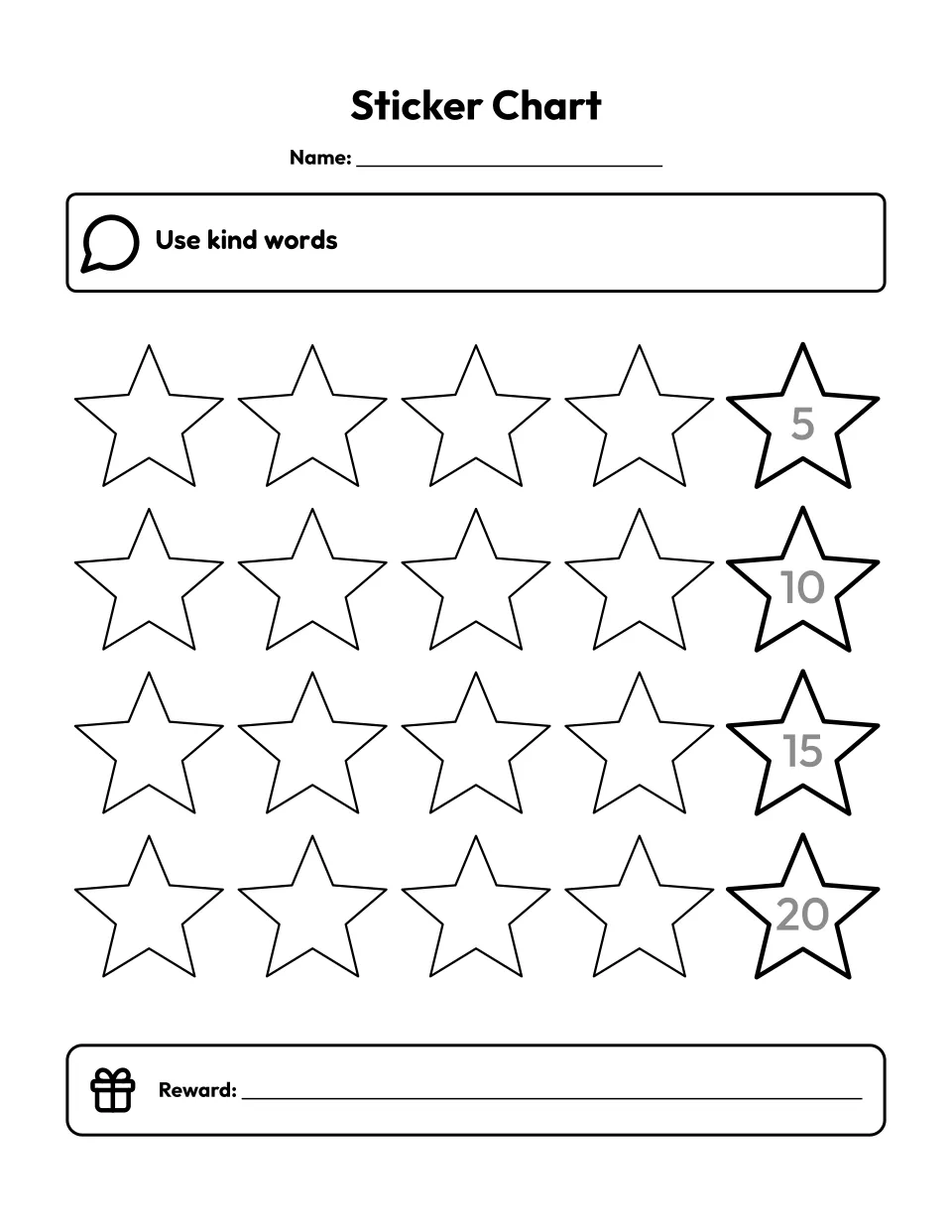
Sticker chart
Customize the printable sticker chart for kids with 20 spaces
How do you make a behavior chart?
A behavior chart lists a couple of goals, as the CDC suggests, each with a picture and a box for every day. Word each goal as what to do: “Use kind words” rather than “No yelling.” Hang it where your child can see it, mark a box right after the goal is met, and never take one away.
Customize your own
How many goals should a behavior chart have?
Start with two or three. The CDC suggests picking a couple of specific behaviors that fit your child’s age and ability. A chart here holds 1 to 5 goals, and each list below starts with goals worded as what to do. Open one and remove any goal that can wait.
| List | Goals it starts with | Good for |
|---|---|---|
| Home | Use kind words, Listen the first time, Tidy up your toys | Everyday behavior at home |
| School | Raise your hand, Follow directions, Finish your work, Use a quiet voice | A student’s behavior plan, on school days |
| Toddler | Gentle hands, Share your toys, Wait your turn | Toddlers and preschoolers, with big pictures |
| Bedtime | Brush your teeth, Put on pajamas, Read a story, Stay in your bed | The hour before sleep |
| Faith | Pray on time, Say bismillah before eating, Read Quran, Say salaam, Help at home | Prayer and good manners |
| Blank | Three empty rows, each with a dotted box and a line | Drawing a picture and writing your own goal |
How to make your own behavior chart
Under Customize your own, choose how many children the chart is for and type their names, or leave a Name line. Tap a goal list, then change any goal or its picture. Pick the days or parts of the day, what each box holds and the lines, type or tap a reward, then press Print or PDF.
Daily or weekly behavior chart?
A weekly chart has a box for each day, Monday to Sunday or Sunday to Saturday, and a Week of line under the title. School days gives five boxes, Monday to Friday. A daily chart splits one day into 2 to 6 parts you type, starting from Morning, Lunch, Afternoon and Bedtime, with a Day line under the title. A young child can earn a star before lunch instead of waiting for Sunday. Print a short stack of daily behavior charts and start each morning on a fresh one.
A behavior chart for the classroom
Tap the School list and choose School days. Up to 4 students fit on a page, each in a block with their name, and Add a version gives a student goals of their own. A class set holds up to 6 versions, and Print or PDF gives every chart at once or only the one on show. Hand each student their chart to keep in a folder or on their desk.
What you get
One page on US Letter or A4 with your title, a Week of or Day line, and a block for each child with their name or a Name line. Up to 5 goals run down the side, each beside a black line picture from a set of 75, such as an ear for listening. Each box holds a star or circle to color, or stays empty for a sticker or a tick. A Reward line runs along the bottom. Print it, or save it as a PDF or PNG.
Tips for a behavior chart that works
- Say what to do. The CDC suggests stating exactly what you want to see and avoiding “no,” “don’t” and “stop,” so write “Gentle hands” for a child who hits.
- Go over it together. Read each goal aloud as you point to its picture, then ask your child to tell you what earns a star.
- Mark it right away. Color the star as soon as the goal is met, because the CDC says rewards that come right after a behavior are best.
- Hang it where they look. The CDC names the fridge as a good spot, so put the chart there low enough for your child to add a sticker.
More printables
For one goal and a row of stickers, try the sticker chart. Jobs around the house fit the chore chart, and the Faith goals pair with our Ramadan good deeds tracker, one of our printable trackers. When the chart fills, let your child pick a new coloring page, a maze or a dot-to-dot. More are on our free printable makers page.
Questions about the behavior chart
Is this behavior chart free?
Yes. The six ready-made behavior charts and any chart you make here are free to print as often as you like, and you don’t need an account or an email address. Each chart is drawn in your browser. They work for home and classroom use, so print a new chart every week, or one for every student in a class.
What is a behavior chart?
A behavior chart lists a few goals for a child, such as Listen the first time, with a box for each day. When your child meets a goal, they color the star in that day’s box or add a sticker, and the marks add up to a reward you agreed on. The CDC describes simple reward charts as a way to track behavior and motivate kids, and says young children often use a chart with pictures.
How do you make a behavior chart for a toddler or a 4 year old?
Keep it short and easy to see. The Toddler list has three goals: Gentle hands, Share your toys and Wait your turn. With only three rows, each picture prints large enough to point to. The CDC suggests keeping behaviors simple for toddlers and preschoolers, with pictures and simple words they understand. Read each goal aloud as you point to its picture, and try the daily chart so your child can earn a star before lunch.
Should I take stars away for bad behavior?
No. The CDC says to never take away rewards your child has earned: they belong to your child, and to earn new ones, your child does the right behavior again. Leave the colored stars in place after a hard day and start fresh with the next box. That is why the charts here have only stars, circles or empty boxes to fill in, and no sad faces.
How long should you use a behavior chart?
Until the goal becomes a habit. The CDC suggests rewarding often when you start, then changing the behavior or phasing out the chart as your child does the right thing more often. When your child meets a goal most days without a reminder, swap it for a new one, or move from a daily chart to a weekly one. Behavior takes time to change, so give a new chart a few weeks.
Can I save my behavior chart, or print it on A4 or from a phone?
Once you change anything, the page address holds your settings, including the names and goals you typed, so a bookmark brings the same chart back next week. Anyone you send the link to can read those names. The maker works in a phone or tablet browser: save the PDF, or print to a wireless printer. Choose A4 under Paper if your printer uses A4.