These solar system coloring pages are drawn for kids ages 4 to 8 and for the parents and first grade teachers who print a space lesson at home or in class. Each planet has the feature that makes it easy to spot: craters on Mercury, clouds on Venus, a volcano on Mars, the Great Red Spot on Jupiter, rings on Saturn and Uranus tipped on its side.
The set has sixteen pages: a smiling sun with all eight planets on their orbits, a sun with solar flares, a page for every planet from Mercury to Neptune, the Moon with a lunar lander, Pluto with its heart and its moon Charon, a comet, a Mars rover, a child at a telescope and a solar eclipse. Every page is a free PDF that prints on US Letter and A4, with nothing to sign up for.
Hand out one planet a day during a science unit, or print the whole solar system coloring set for a quiet afternoon. Kids who finish can carry on with the space coloring pages.
Download the solar system coloring pages
 Save
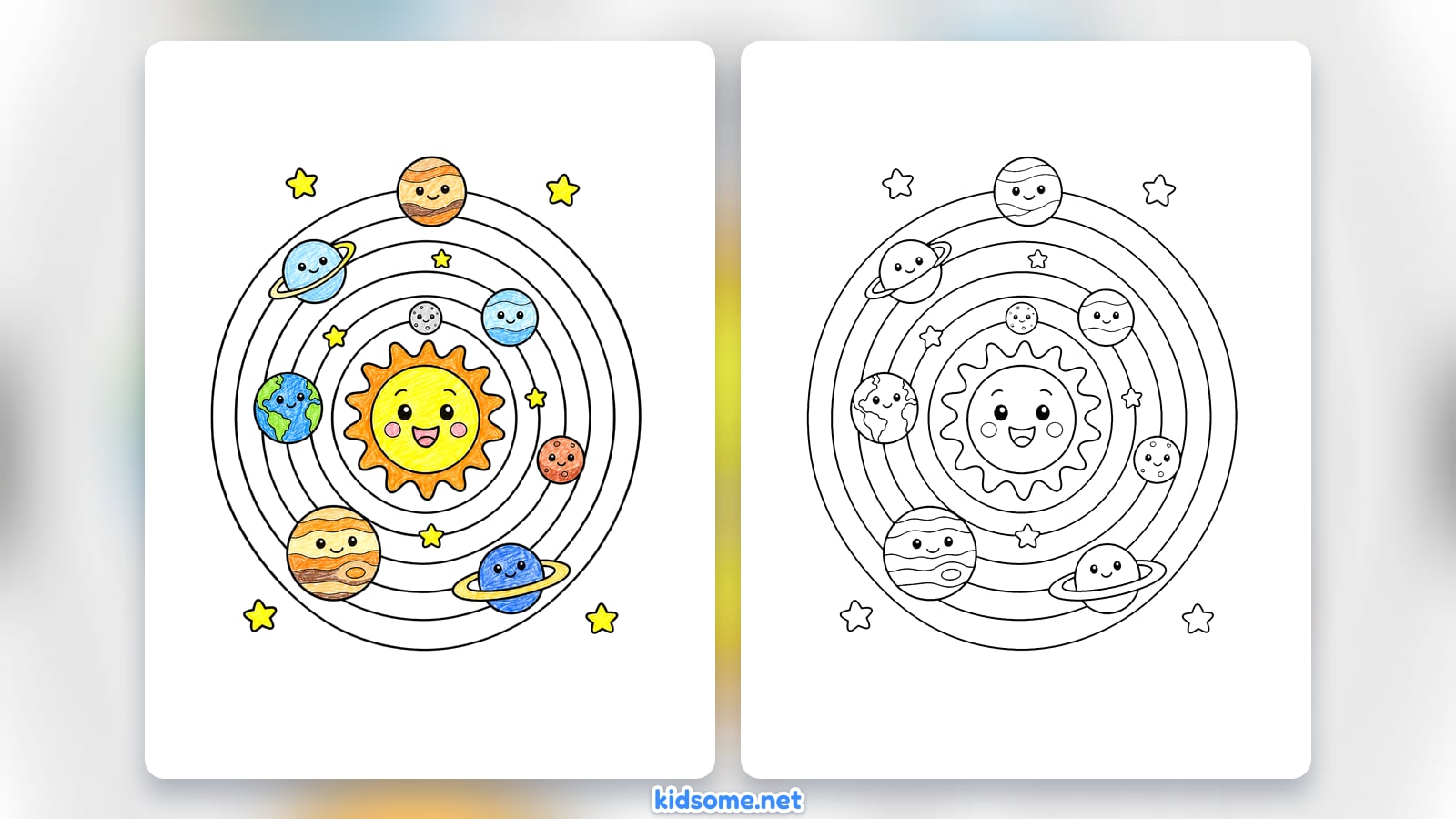
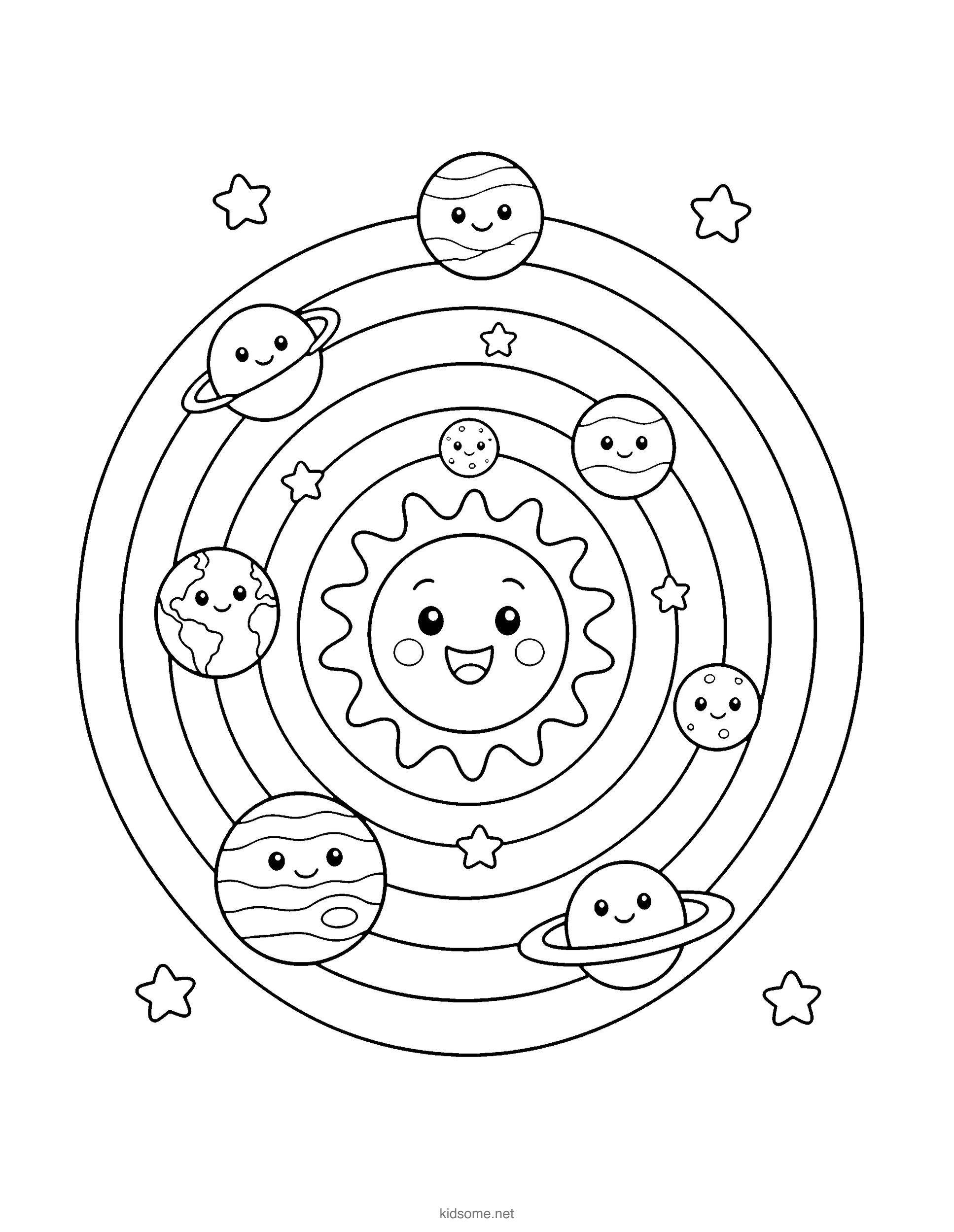
Smiling Sun and Eight Planets
This solar system coloring sheet shows a smiling sun inside round orbit rings with all eight planets, including striped Jupiter, ringed Saturn and Earth.
Download PDF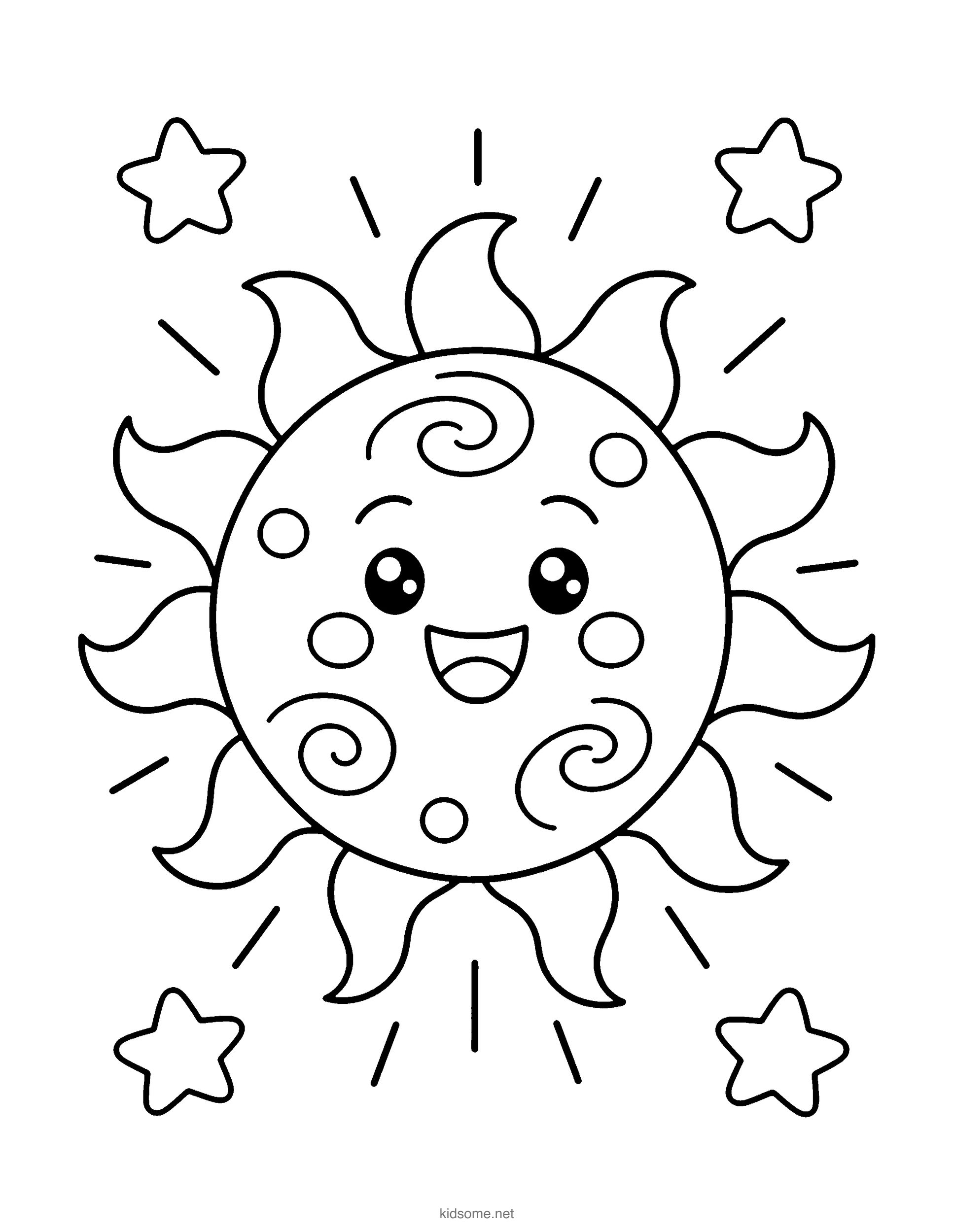 Save
Happy Sun With Solar Flares
A happy sun covered in swirls and spots, with wavy solar flares all around it and a star in each corner.
Download PDF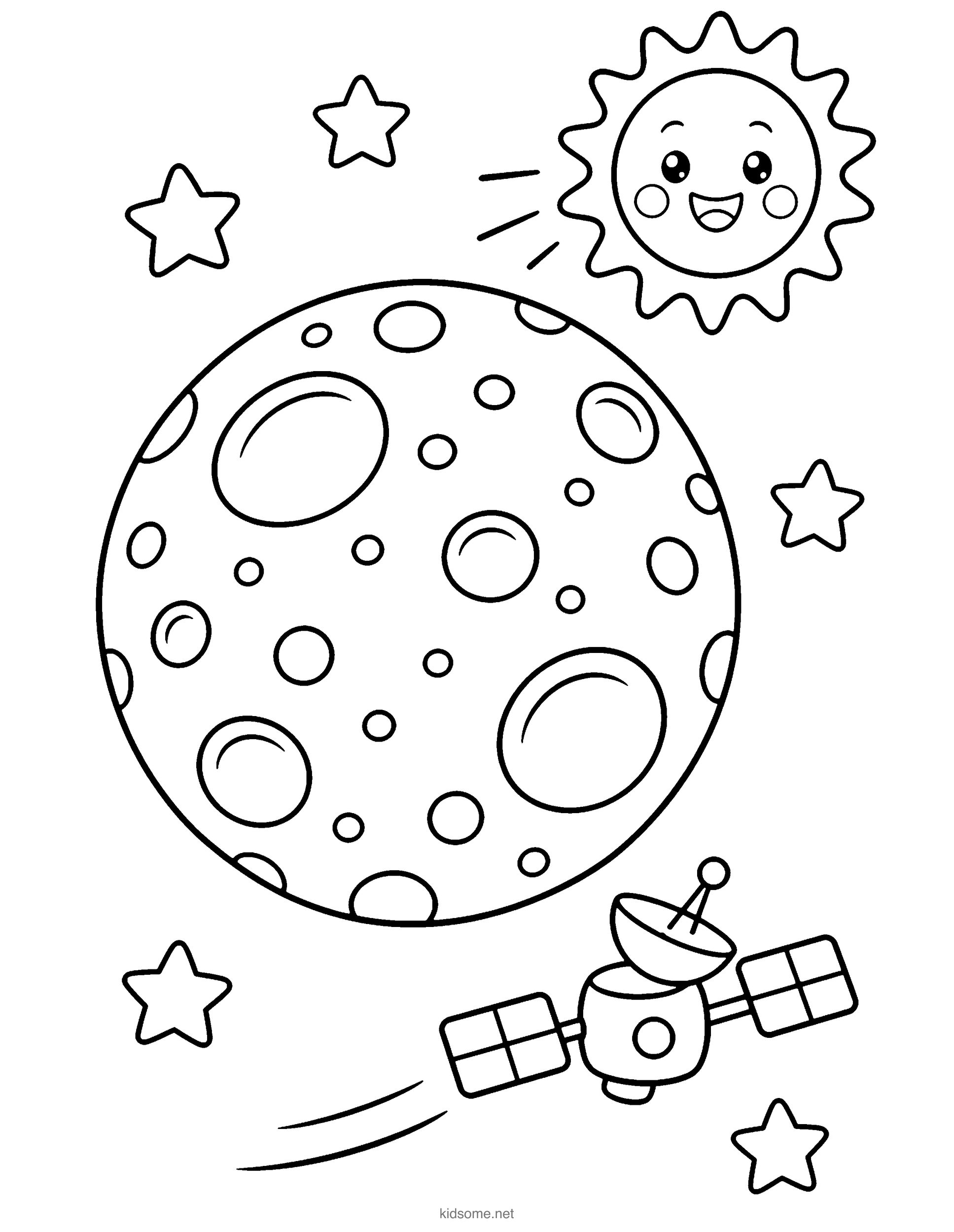 Save
Mercury Covered in Craters
Mercury, the smallest planet and the closest to the sun, is covered in round craters as a space probe flies past.
Download PDF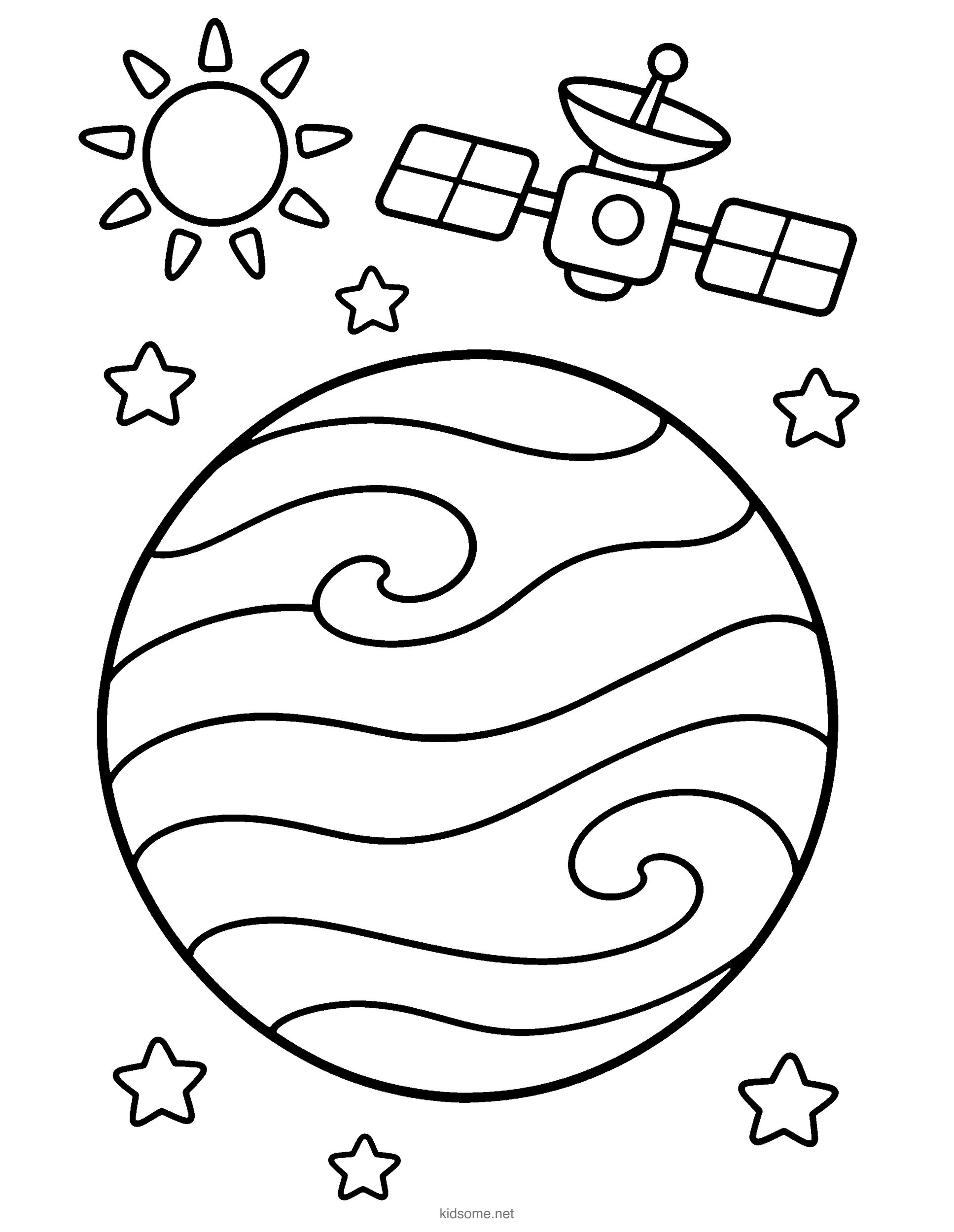 Save
Venus With Swirling Clouds
Venus, the hottest planet, is wrapped in swirling bands of cloud, with a little sun and a space probe above it.
Download PDF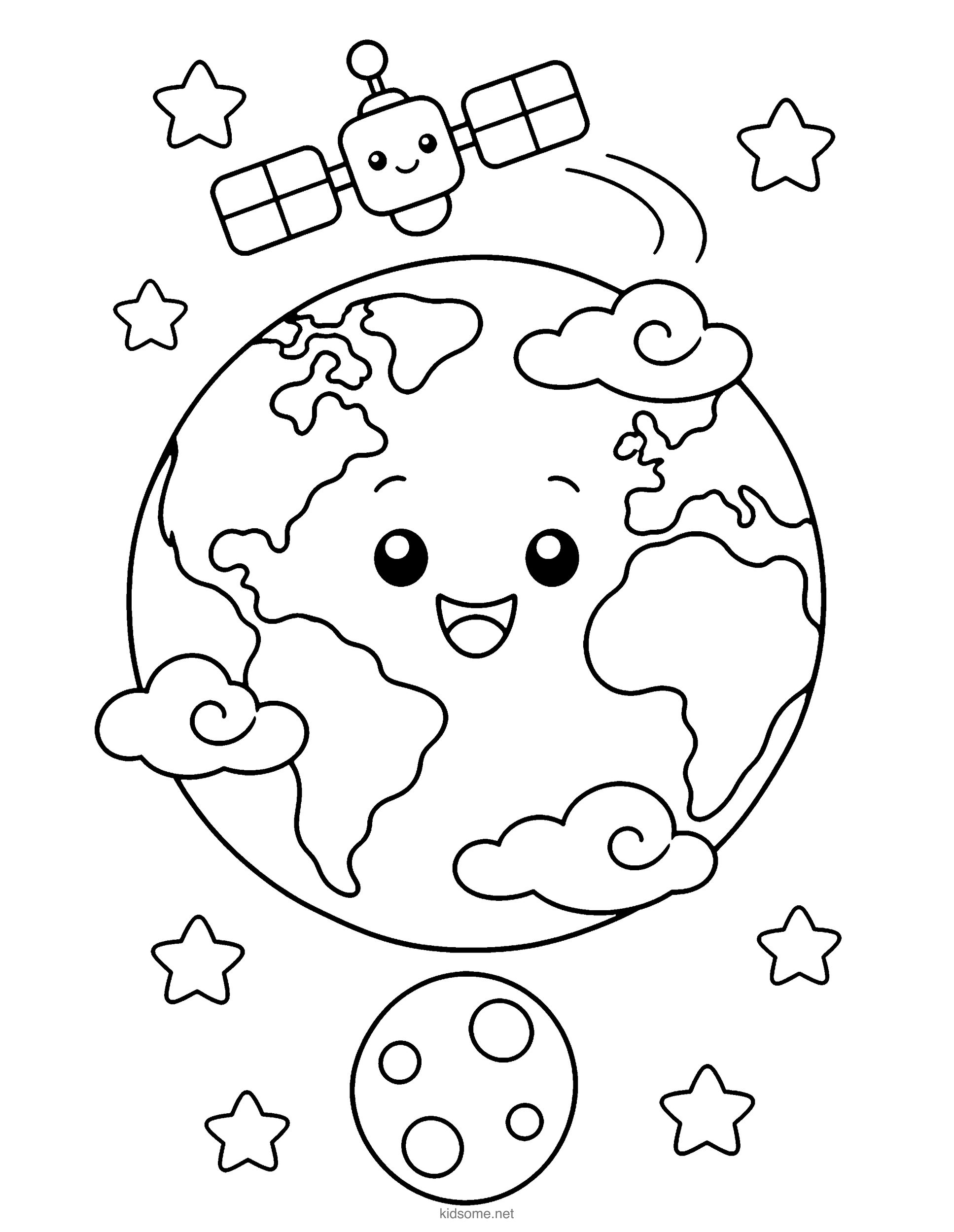 Save
Smiling Earth With a Satellite
A smiling Earth with its continents, oceans and puffy clouds, a friendly satellite circling above and the Moon below.
Download PDF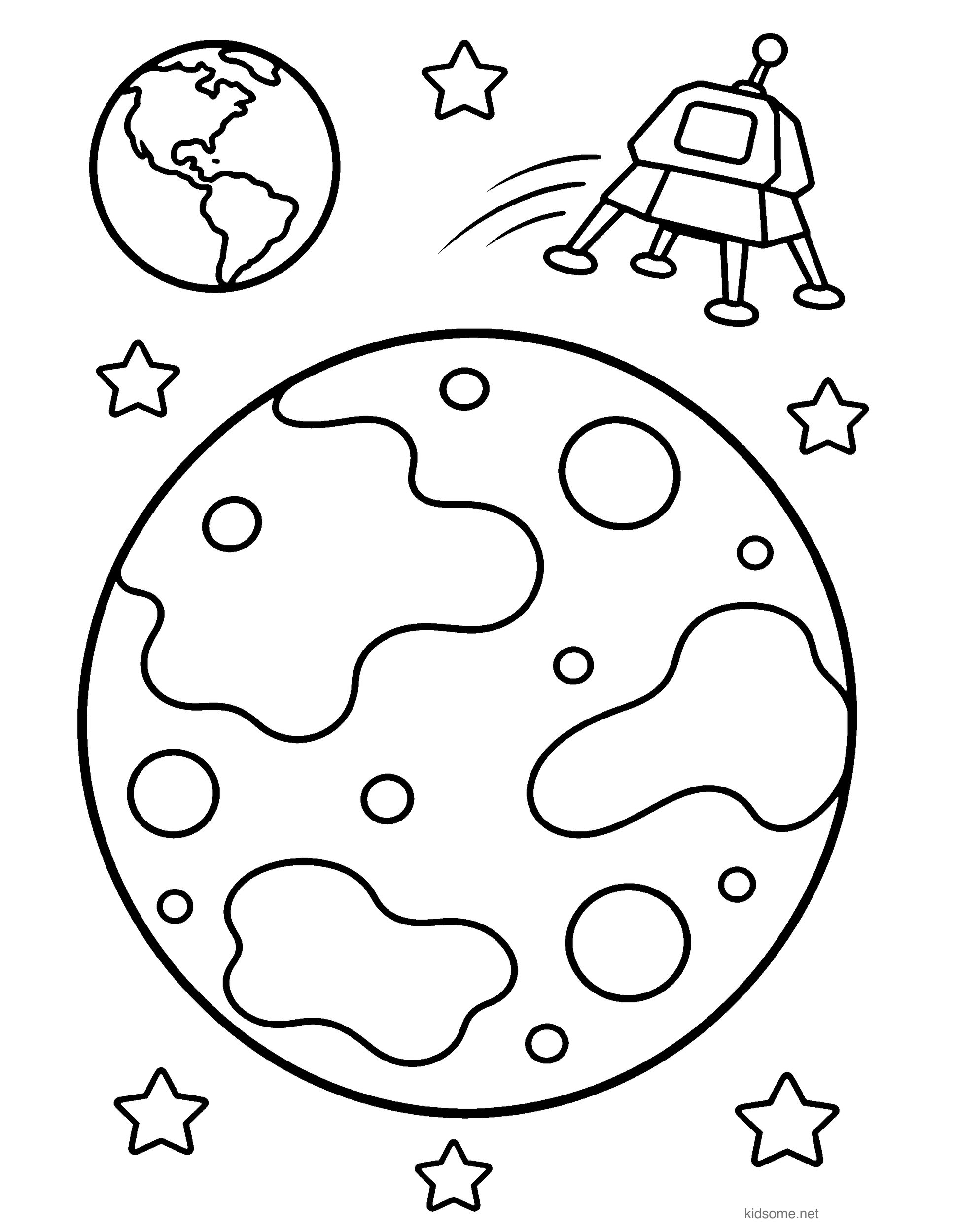 Save
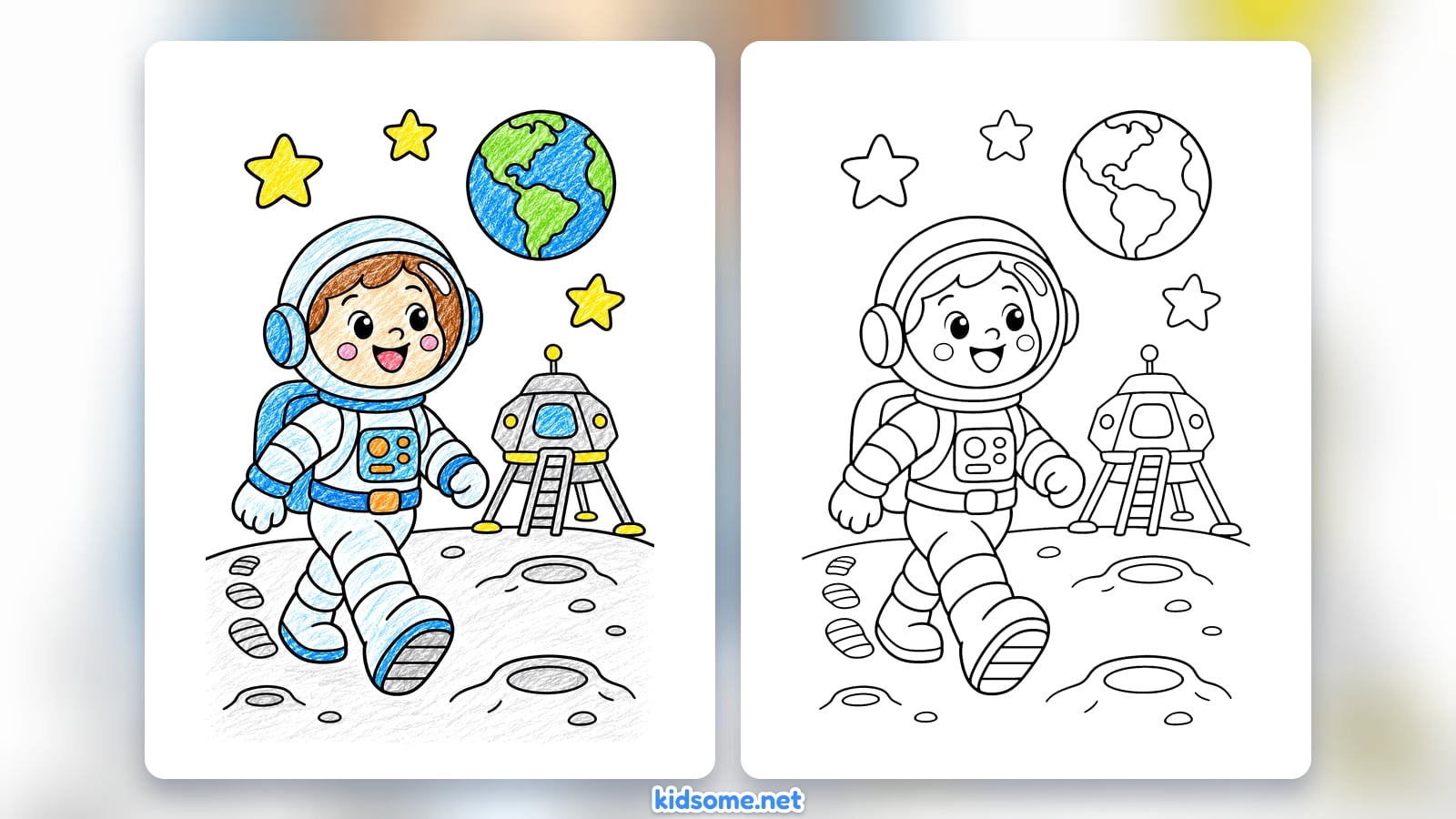
The Moon and a Lunar Lander
The Moon with round craters and smooth plains, a lunar lander on four legs heading toward it and Earth in the corner.
Download PDF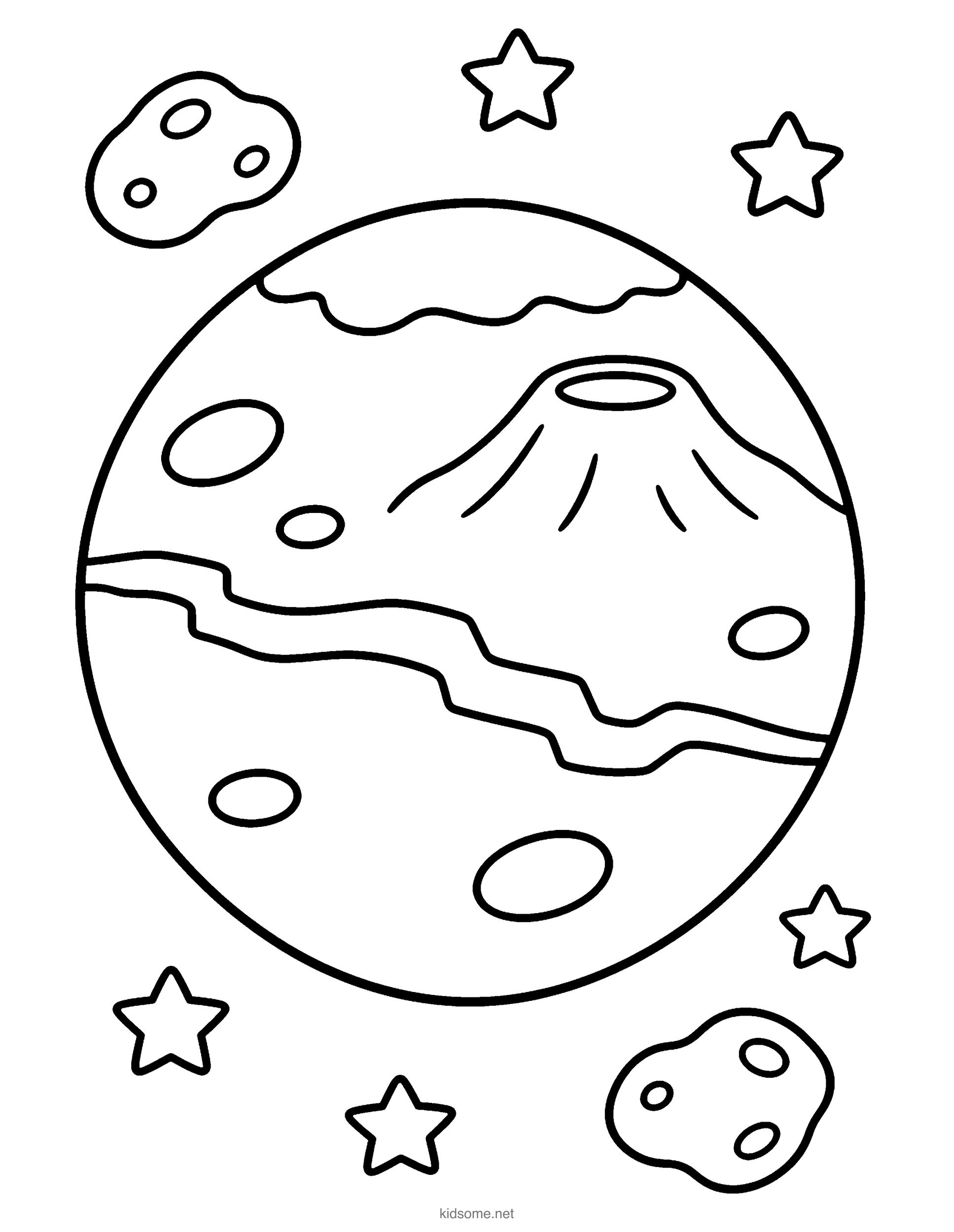 Save
Mars With a Tall Volcano
Mars, the red planet, with an ice cap, a tall volcano, a long canyon and its two lumpy moons, Phobos and Deimos.
Download PDF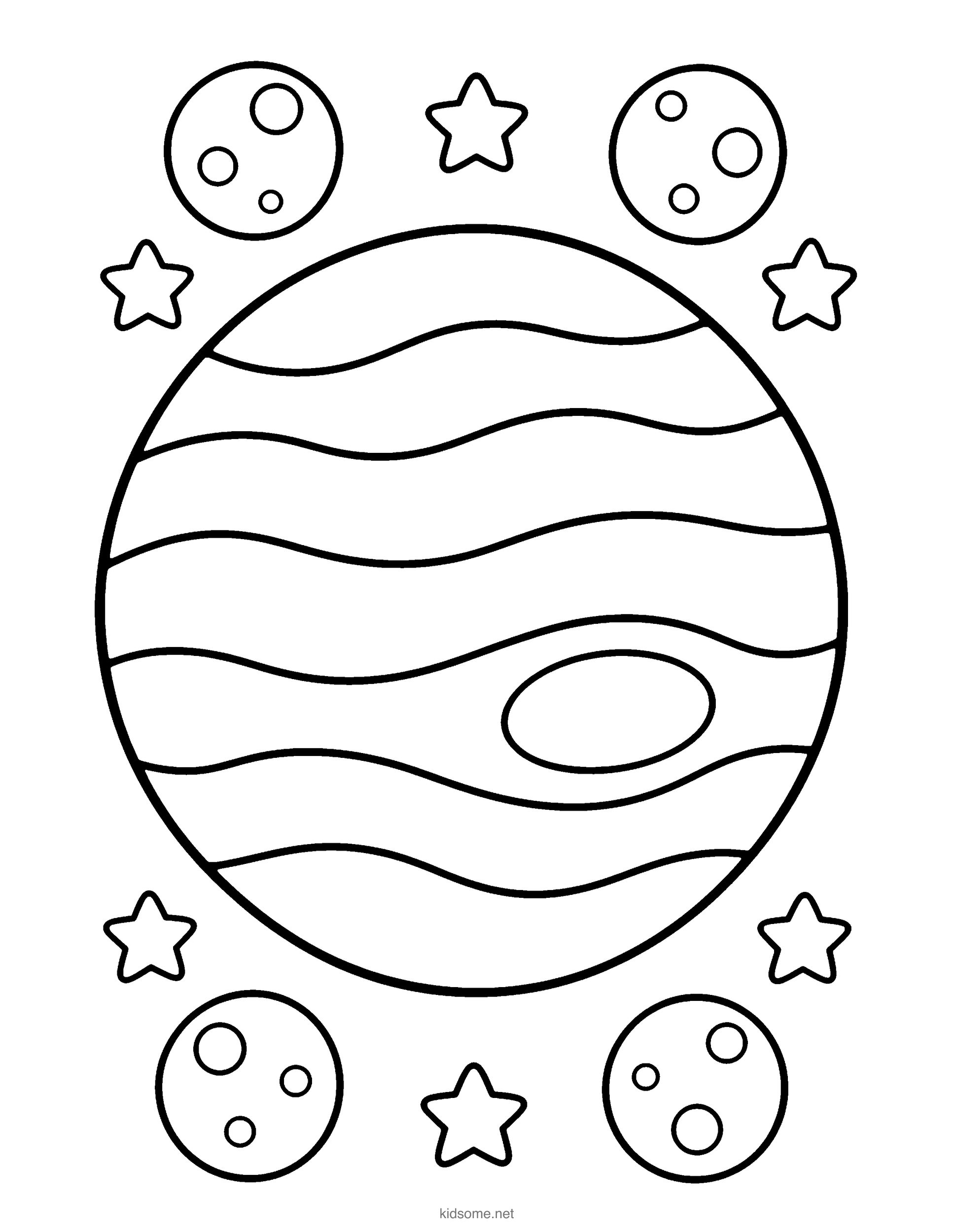 Save
Jupiter and Its Four Moons
Giant Jupiter with wavy stripes and its Great Red Spot, a storm bigger than Earth, and four round moons around it.
Download PDF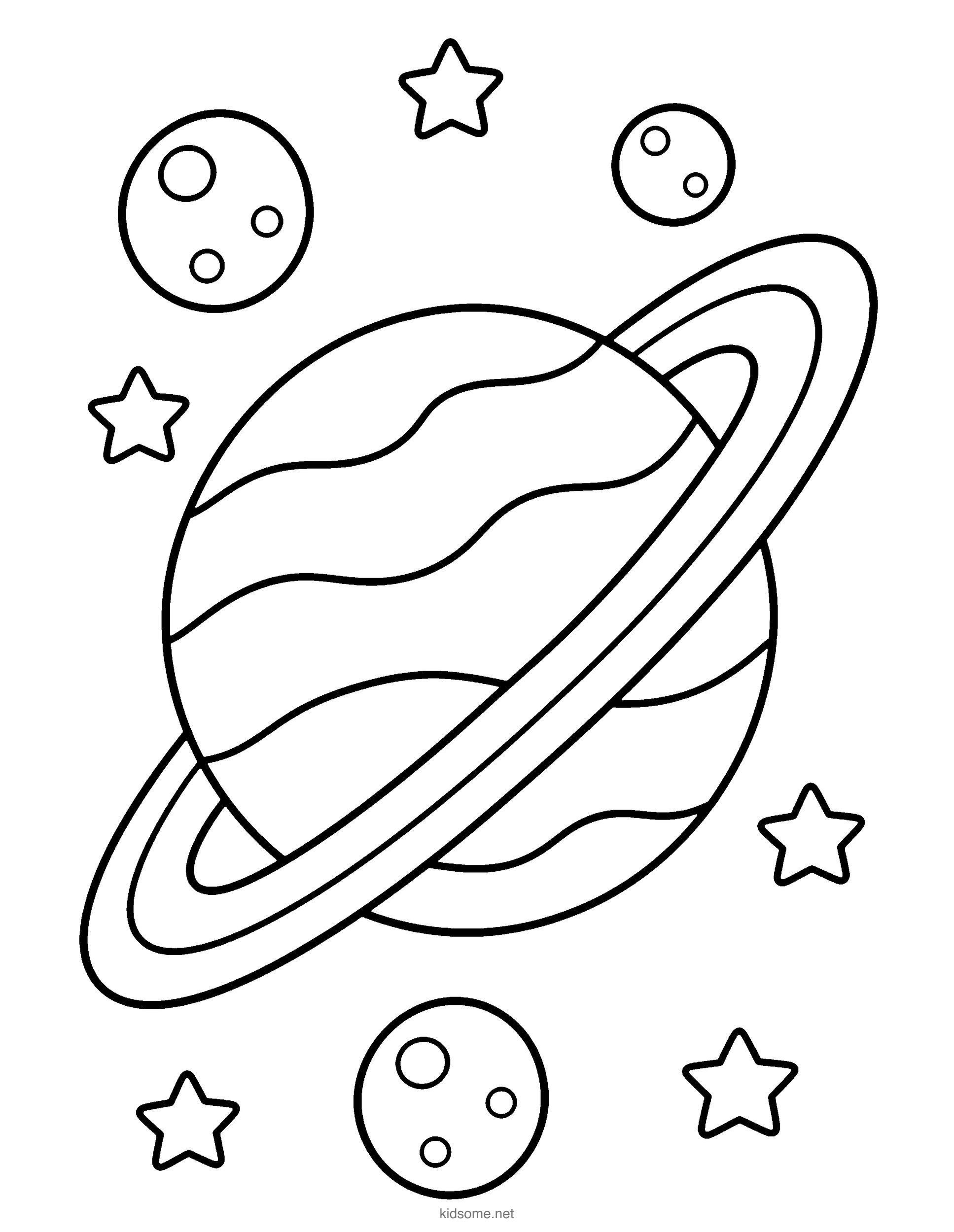 Save
Saturn With Tilted Rings
Saturn with soft cloud bands and wide rings of ice and rock slanting across it, plus three cratered moons.
Download PDF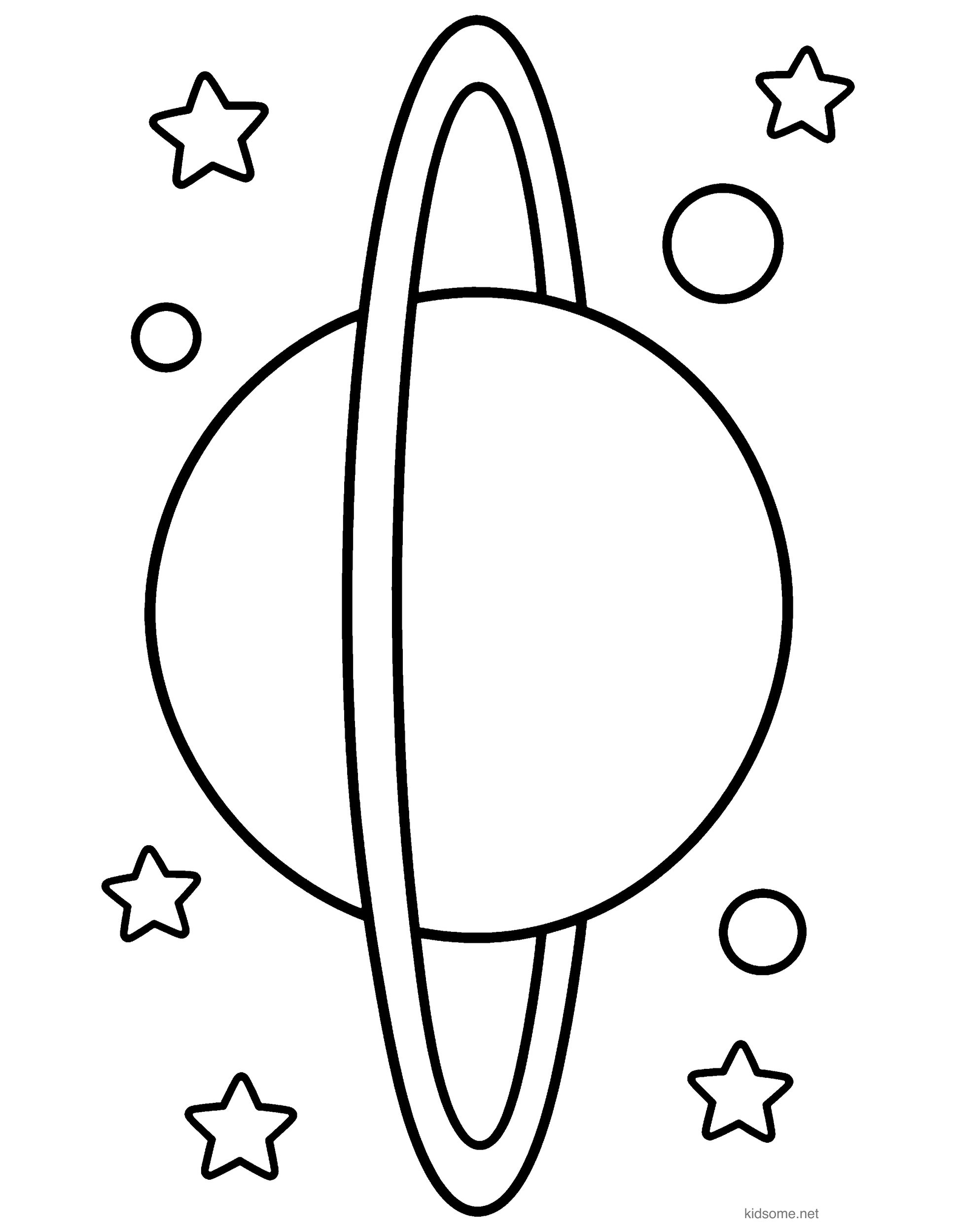 Save
Uranus Tipped on Its Side
Uranus rolls around the sun on its side, so its ring stands up and down, the simplest page in the set.
Download PDF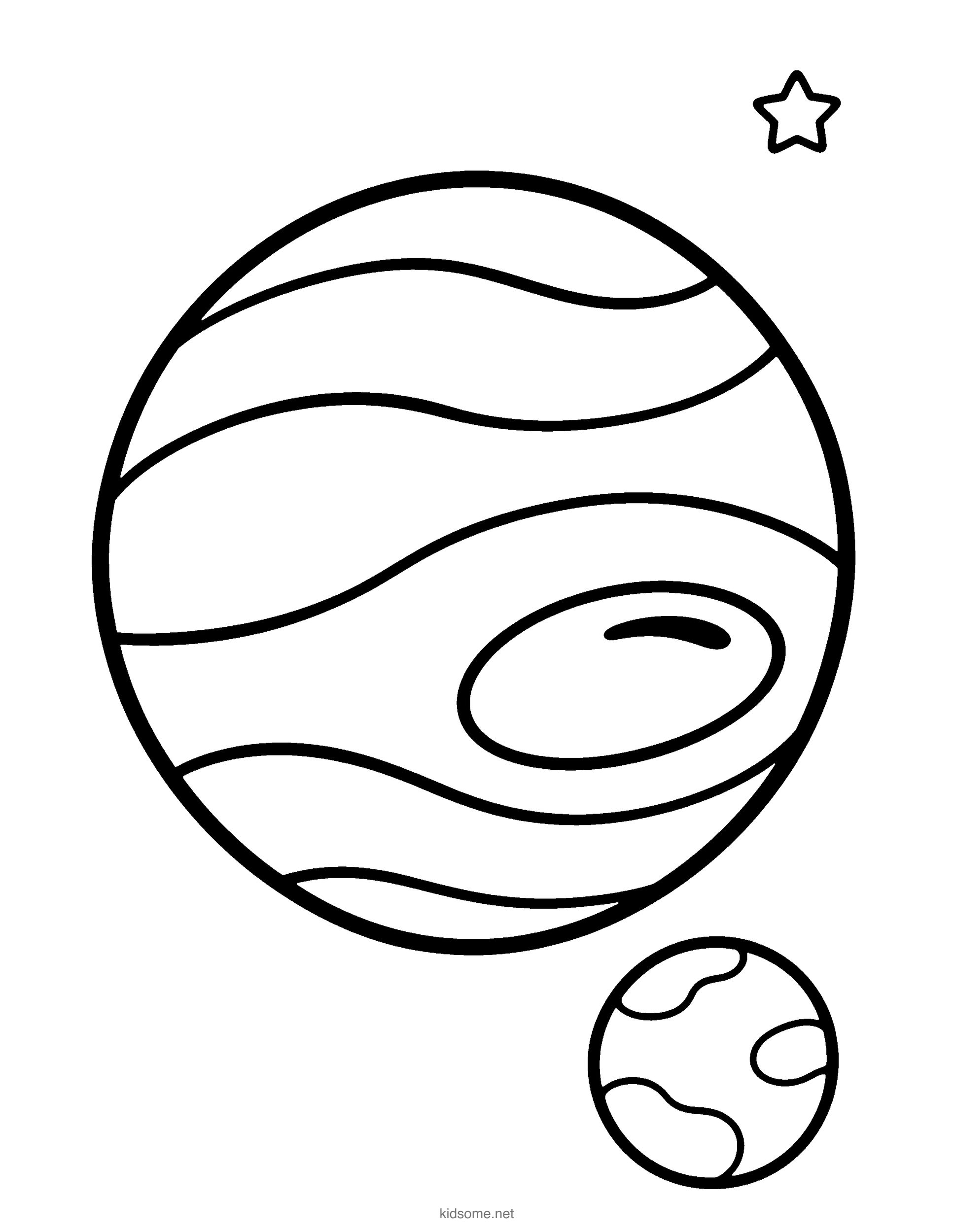 Save
Neptune and Its Moon Triton
Neptune, the windiest planet, with streaks of wind cloud, one big dark storm spot and its moon Triton beside it.
Download PDF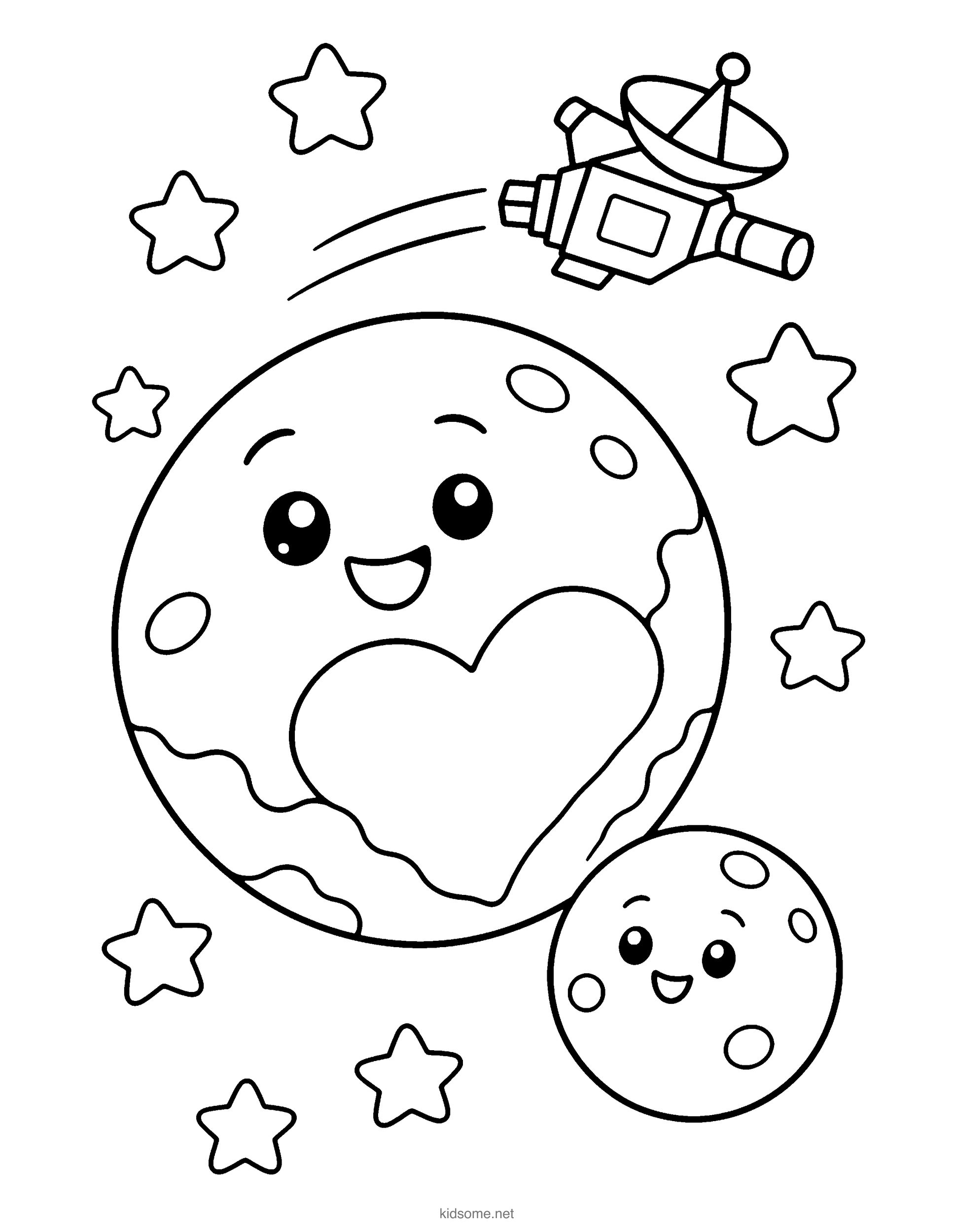 Save
Pluto With a Heart and Charon
Little Pluto, a dwarf planet, smiles with a big heart on its face, its moon Charon beside it and a probe flying past.
Download PDF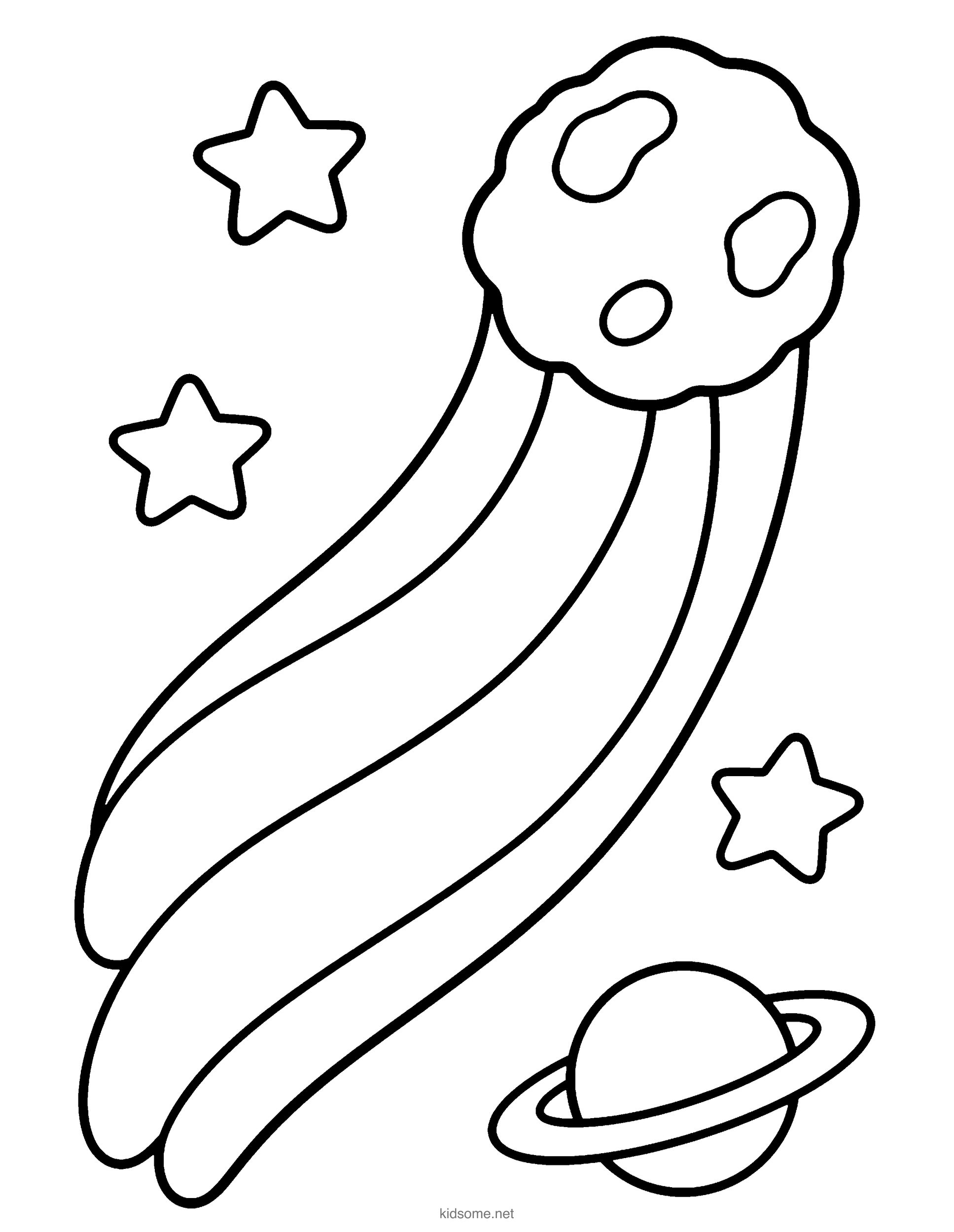 Save
Comet With a Long Tail
A comet with a bumpy icy head and a long, wide tail streaming down the page, with a small ringed planet in the corner.
Download PDF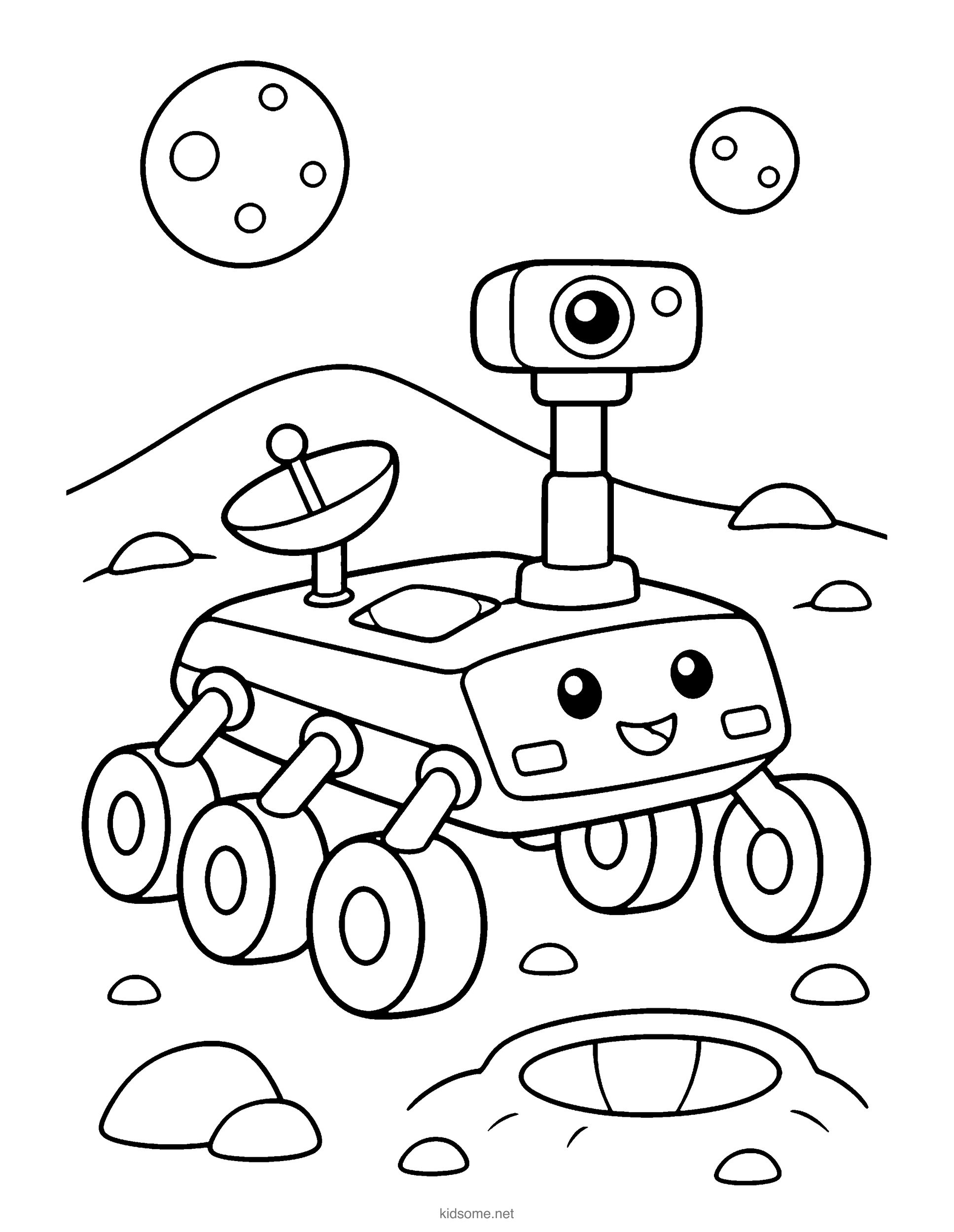 Save
Mars Rover by a Crater
A smiling six wheeled rover with a camera on a tall mast explores rocky Mars, with a crater in front and two moons above.
Download PDF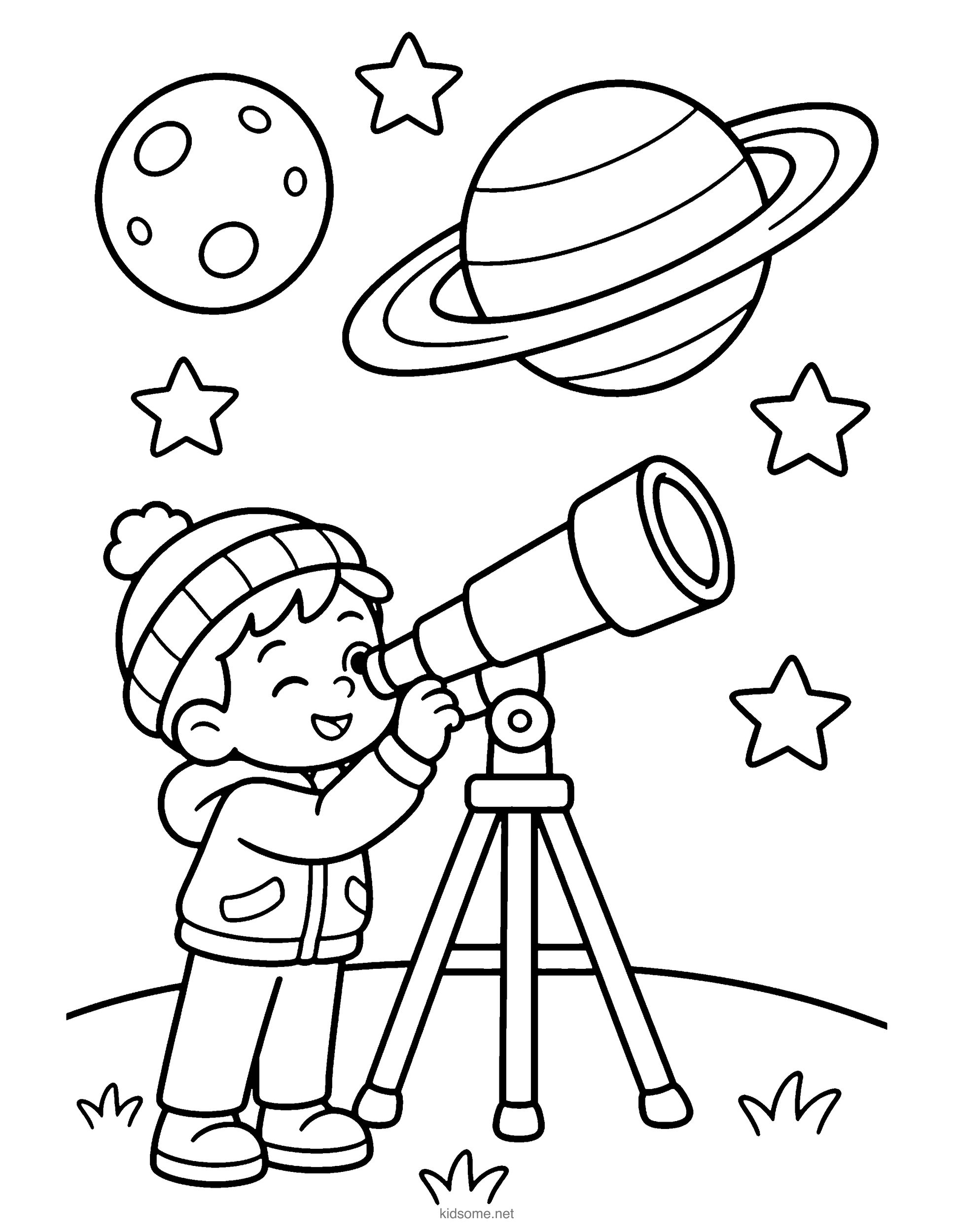 Save
Child Looking Through a Telescope
A happy child in a warm hat looks through a telescope on a grassy hill, with Saturn and the Moon big in the sky.
Download PDF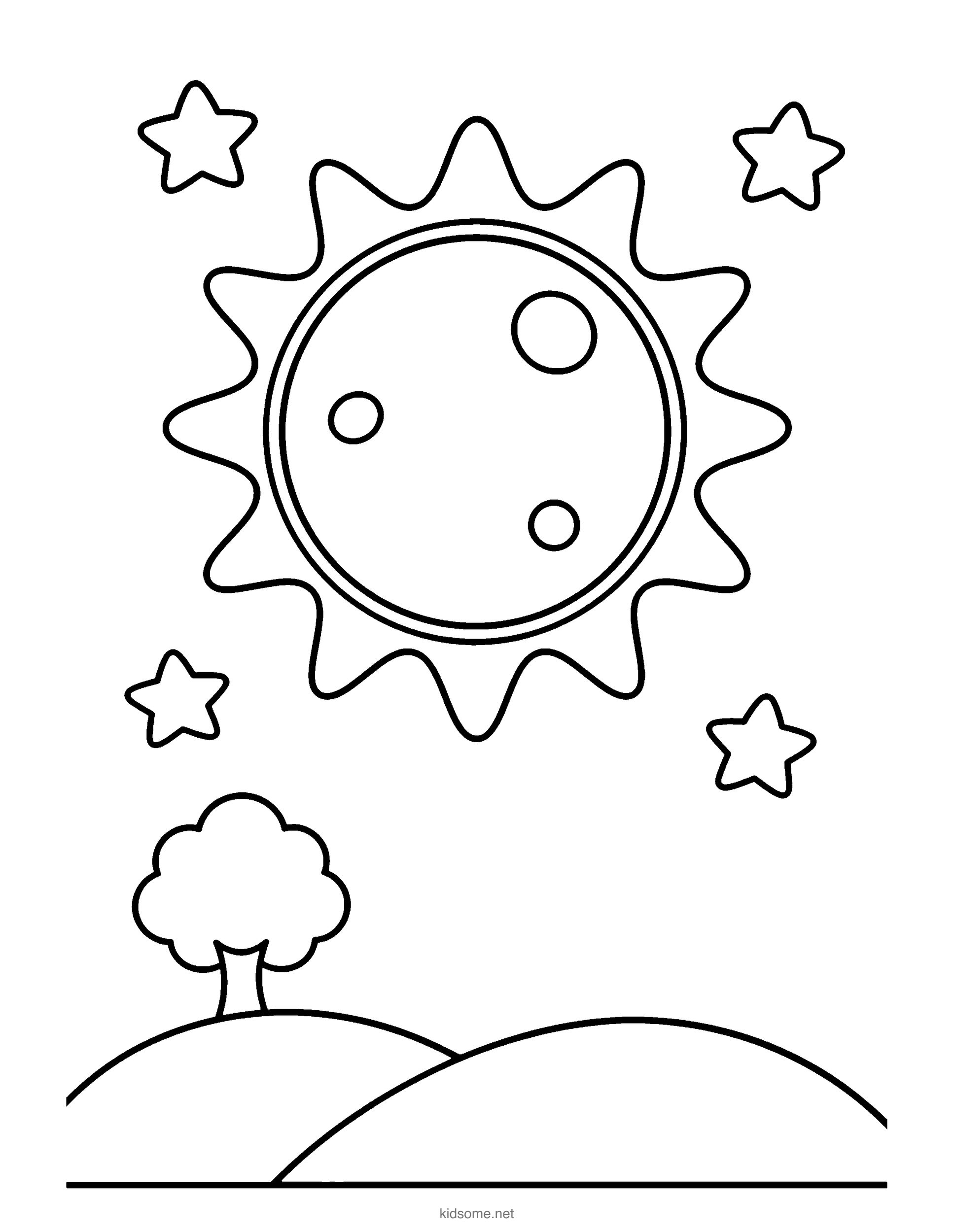 Save
Solar Eclipse Over the Hills
The Moon slides in front of the sun in a solar eclipse, with a few stars above two hills and a little tree.
Download PDFHow to use these pages
Open the PDF and print at 100 percent, or choose Fit to page if your printer asks. Each page is set to US Letter with margins wide enough for A4, so the planet stays whole on either paper. Print on one side only, so marker on the front never shows through on the next page.
Plain copy paper works well for crayons and colored pencils. For markers or watercolor paint, print on cardstock so the color does not soak through. A dark blue or black crayon makes a good night sky, and a white crayon pressed hard over the stars keeps them bright if a child paints over the page afterward.
Uranus Tipped on Its Side and Comet With a Long Tail are the easiest pages, with big open shapes and very few lines, so start there with a younger child. Jupiter and Its Four Moons, Saturn With Tilted Rings and Neptune and Its Moon Triton come next, with wide stripes that are easy to color one band at a time. Smiling Sun and Eight Planets, Mars Rover by a Crater and Child Looking Through a Telescope have the most small parts, so save them for kids with a steady hand.
For a science lesson, print the planet coloring pages in order from the sun outward and staple them into a small book. Children write the planet name at the top and one fact underneath, such as Jupiter is the biggest planet. A science word search makes a calm follow-up once the names are familiar.
Ideas for these coloring pages
- Planet parade: Color the eight planet pages, cut them out and tape them along a hallway wall in order from the sun. Say each name out loud as you walk past.
- One fact a day: Hand out one planet each morning of a space unit with one easy fact, such as Venus being the hottest planet. Children say the fact back before they start coloring.
- Biggest to smallest: Line the colored planets up from smallest to biggest, Mercury first and Jupiter last. Earth next to Jupiter is about the size of a coin next to a dinner plate.
- Moon diary: Pair The Moon and a Lunar Lander with a week of watching the real Moon. Draw its shape each night, then try the how to draw a crescent moon guide.
- Rocket collage: Glue a colored planet onto black paper and add a paper rocket flying toward it, with chalk dots for stars. Kids can draw their own with the how to draw a rocket steps.
- Living room stargazing: On a rainy evening, color Child Looking Through a Telescope, then roll paper into a tube and take turns spotting the planets taped around the room.
- Name practice: Have children copy each planet name under its picture in their neatest letters. The space word search is a good next sheet once the names feel familiar.
- Science center: Set out the comet, rover and eclipse pages with a question card for each, such as why a comet has a tail. Older kids can then try the science crossword.
- Travel folder: Keep a few pages and colored pencils in a folder for car trips and waiting rooms. Uranus and the comet are quick enough to finish in one sitting.
What age are these solar system coloring pages for?
They are drawn for kids ages 4 to 8. Younger children in that range do well with the big shapes on Uranus, the comet and the eclipse. Older kids enjoy the rover, the telescope page and the full solar system with its orbit rings, where there are more small parts to color neatly.
Can I print them on A4 paper?
Yes. Each PDF is set to US Letter, and the margins leave enough room that the whole picture prints on A4 as well. Leave scaling at 100 percent or choose Fit to page, check the print preview first, and the planet stays in the middle of the sheet with an even border.
Can I use these pages in my classroom?
Yes. Teachers, homeschool parents and after school clubs can print as many copies as their students need. The pages are free for personal and classroom use. Please do not sell them or upload the PDF files to another site, but sharing a link to this page with other parents and teachers is always welcome.
What should my child color with?
Crayons are easiest for small hands and work fine on plain paper. Colored pencils give more control for the thin rings on Saturn and the stripes on Jupiter. Markers look bright on the sun and the comet tail, but print on cardstock first so the ink does not bleed through to the table underneath.
Are the planets drawn the way they really look?
Each planet shows its real feature, such as Jupiter's Great Red Spot, the volcano on Mars and the heart on Pluto. The shapes are simple and some pages have smiling faces, so these are friendly rather than realistic solar system coloring pages. For more lessons, browse the science coloring pages.