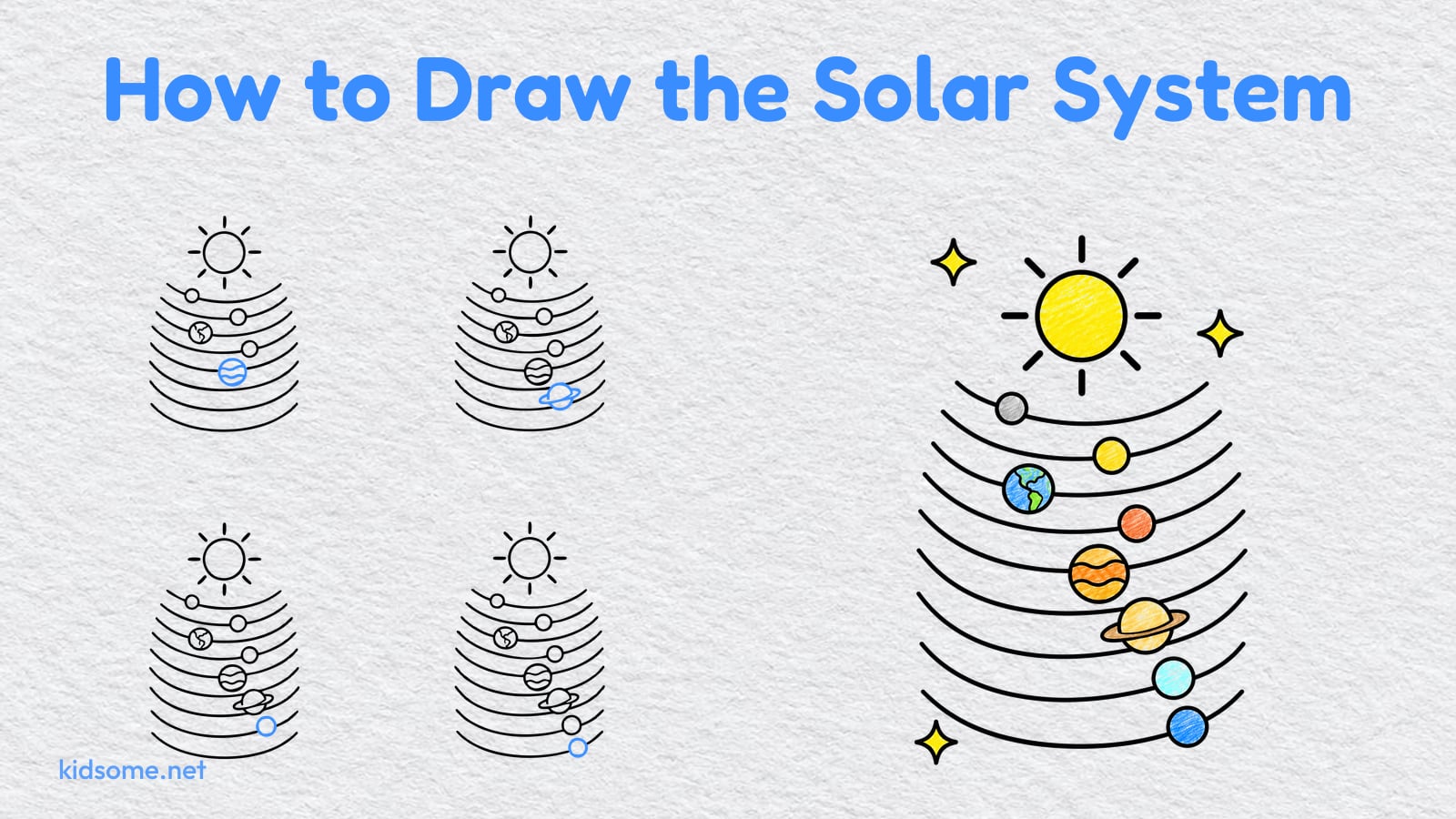
This guide shows how to draw the solar system for kids ages 4 to 8 and the grown-up beside them. If your child can draw a circle, they can finish it: the sun at the top with its rays, eight curved orbit lines, and the eight planets in order from Mercury to Neptune, with stripes on Jupiter and a ring around Saturn. It makes a solar system drawing easy enough for a first science project and neat enough to pin up.
There are nine steps. Each step shows the drawing so far in black and the new part in blue, so your child always knows what to add next. The last step shows the whole picture colored in, as an idea to copy or change. Two free PDFs go with the guide: the finished outline to color, and a printable guide with every step, two to a row. Both print on US Letter and A4, and there is no sign-up.
When the planets are done, the space drawing guides have more to try.
-
Step 1 : Draw the sun
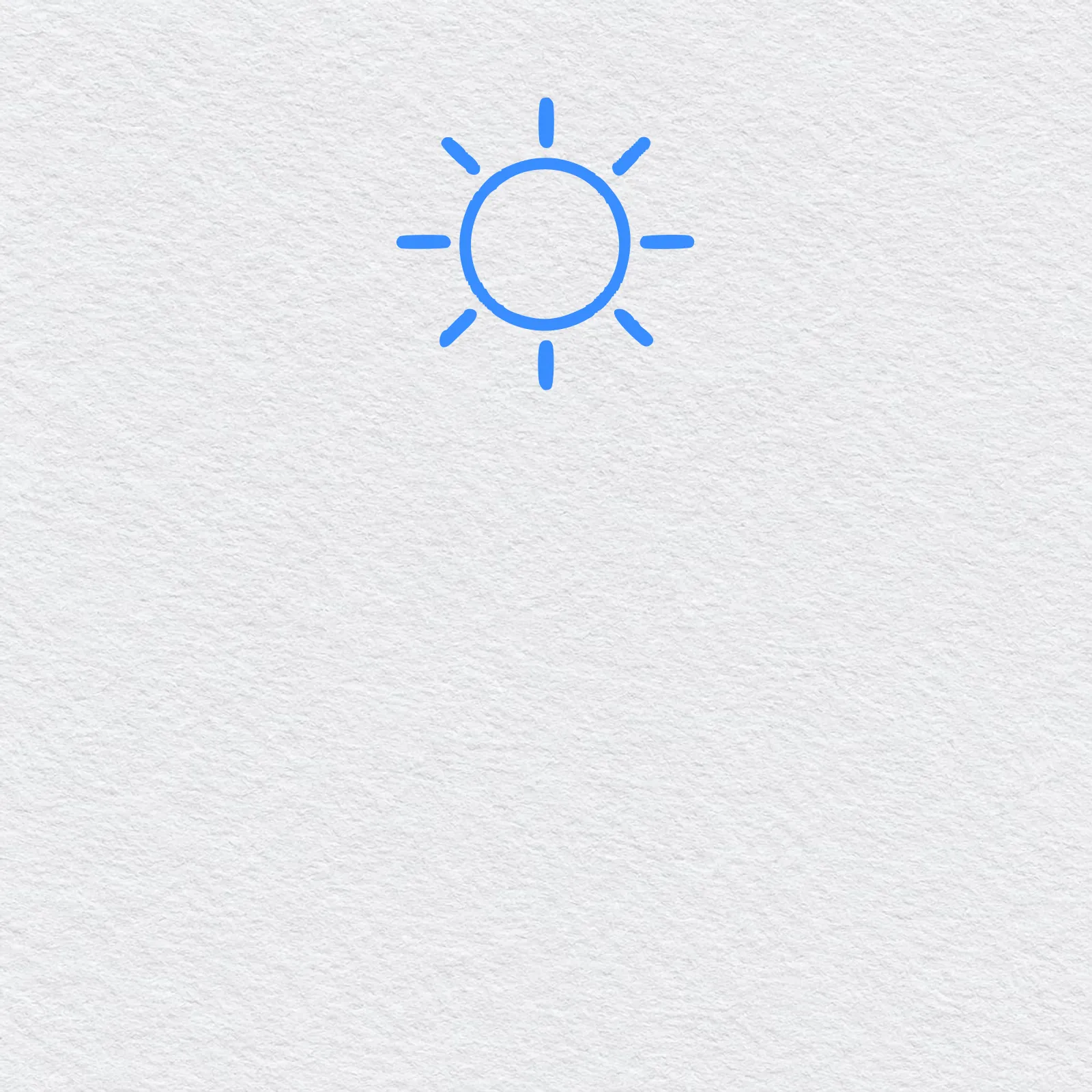
Draw a circle near the top of your paper. This is the sun. Add eight short lines around it for rays: one at the top, one at the bottom, one on each side and four in between.
-
Step 2 : Draw the orbit lines
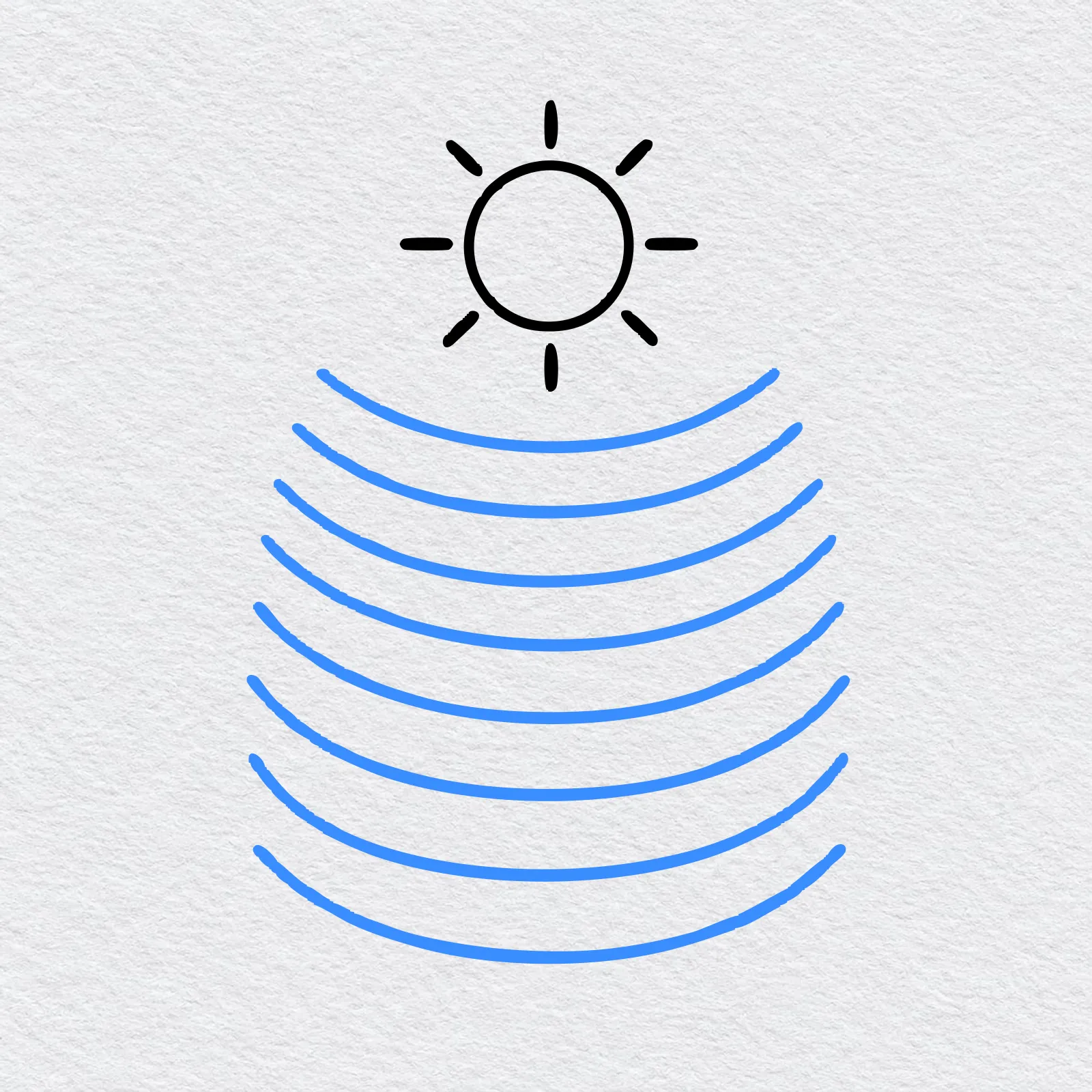
Under the sun, draw eight curved lines, like big smiles stacked one under another. Make each one a little wider than the line above. The planets travel on these paths.
-
Step 3 : Draw Mercury and Venus
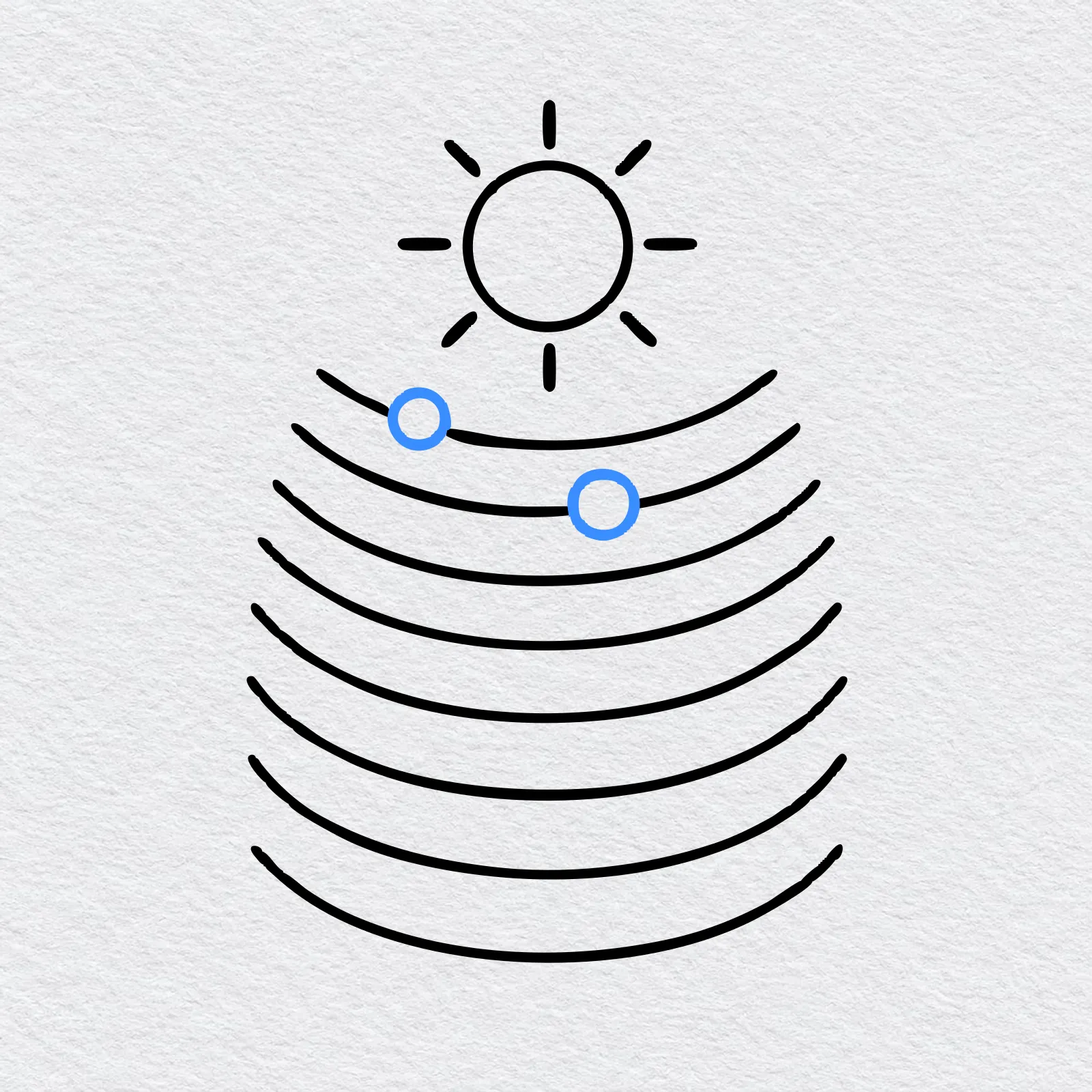
Draw a small circle on the first line, on the left. This is Mercury, the planet closest to the sun. Then draw Venus as a circle on the second line, on the right.
-
Step 4 : Draw Earth and Mars
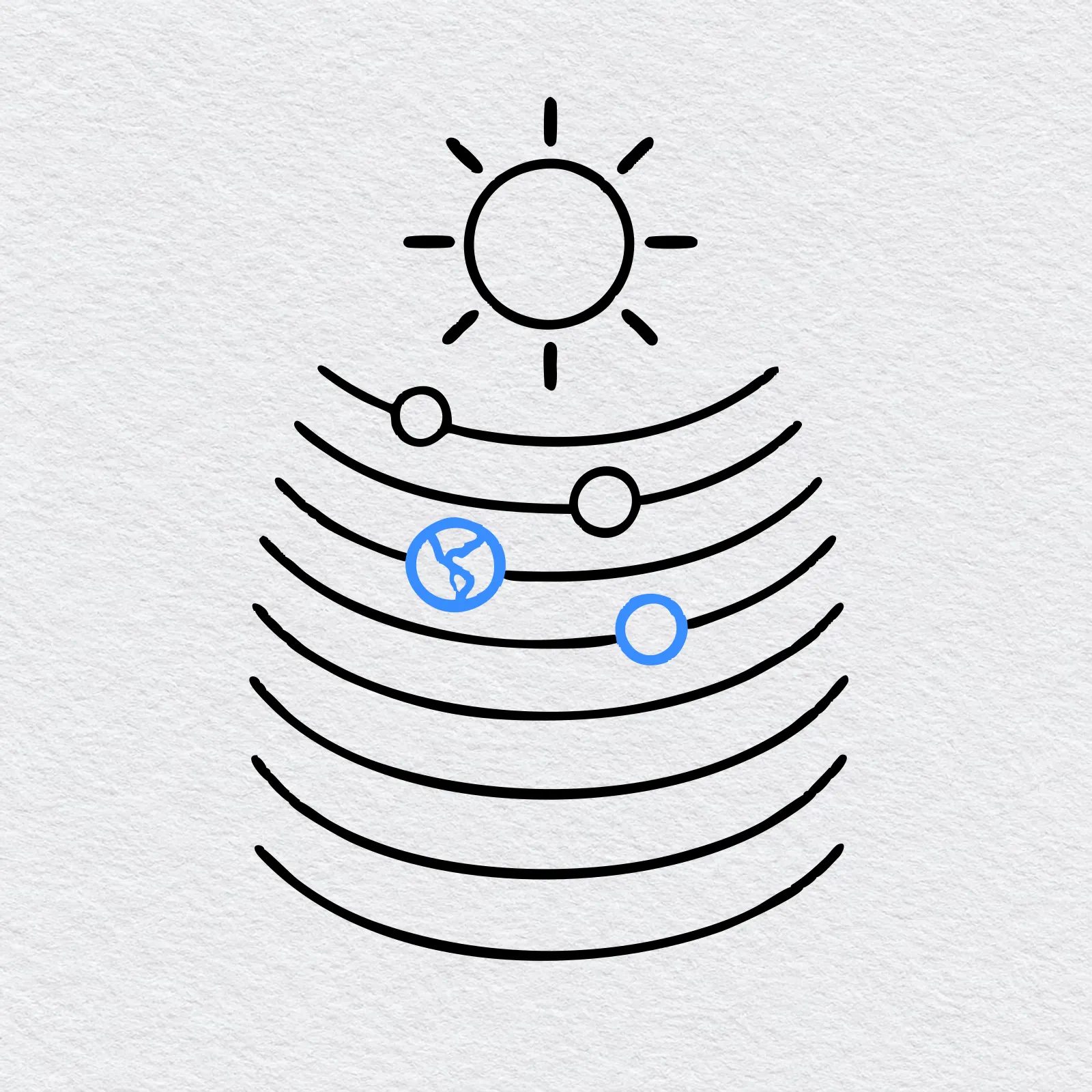
Draw Earth on the third line, on the left, with a few wiggly shapes inside for the land. Then draw Mars as a plain circle on the fourth line, on the right.
-
Step 5 : Draw striped Jupiter
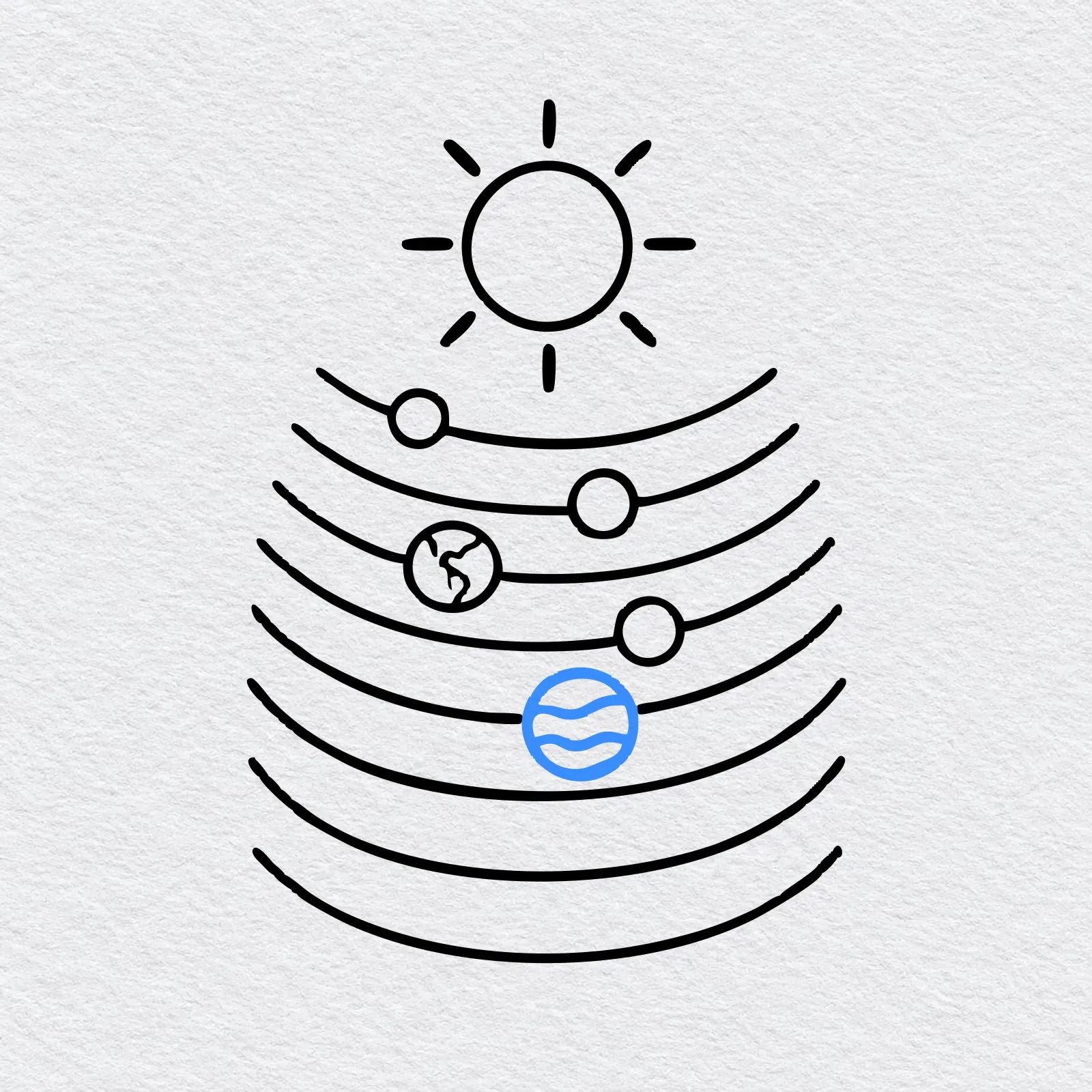
Jupiter is the biggest planet, so draw a larger circle on the fifth line, near the middle. Add two wavy lines across it for its stripes.
-
Step 6 : Draw Saturn and its ring
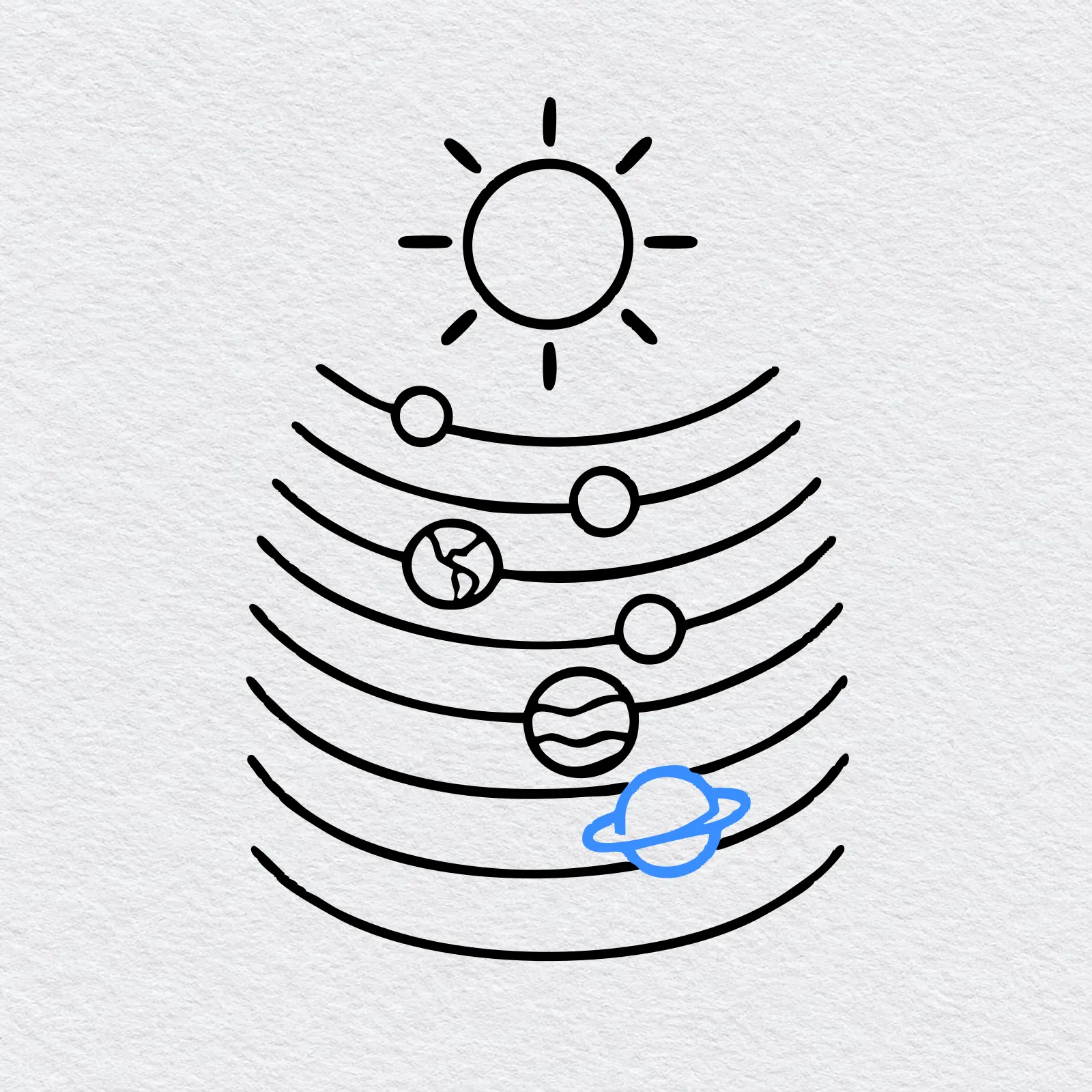
Draw a circle on the sixth line, on the right. Then draw a long, flat oval across the middle of it, tilted a little, for Saturn's ring. Let the ring poke out on both sides.
-
Step 7 : Draw Uranus
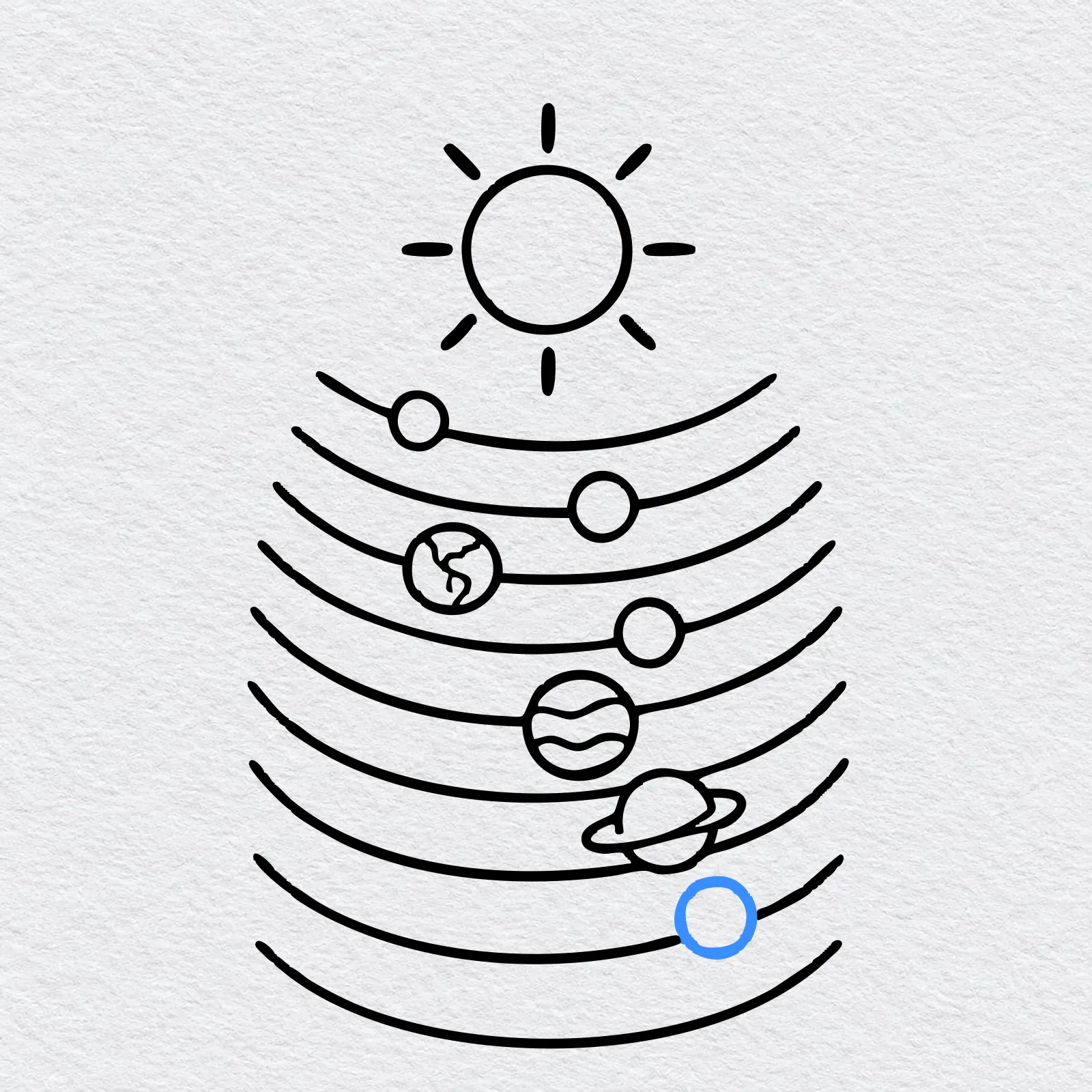
Draw a circle on the seventh line, on the right, a little below Saturn. This is Uranus. Only one planet is left to go.
-
Step 8 : Draw Neptune
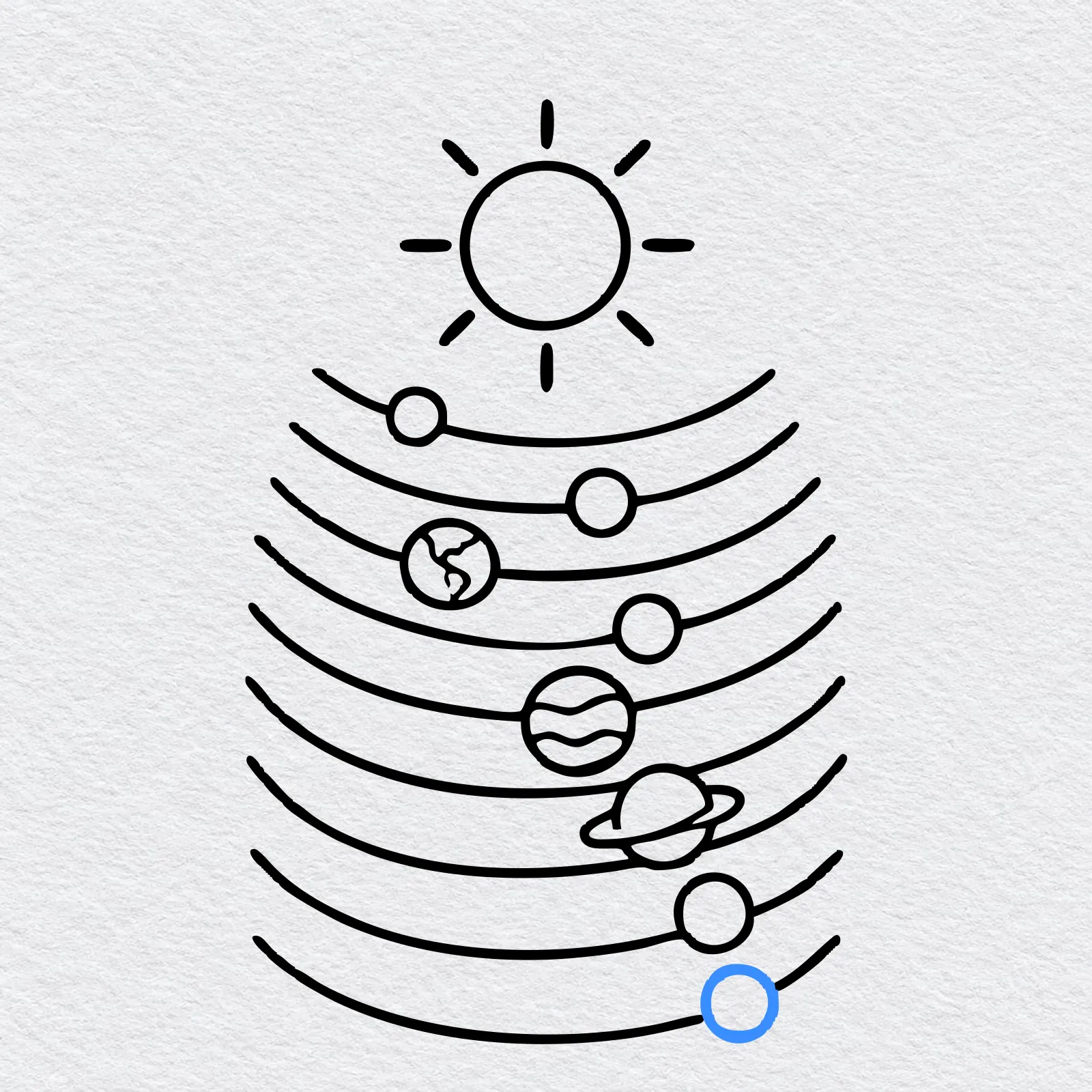
Draw the last circle on the eighth line, on the right. This is Neptune, the planet farthest from the sun. All eight planets are now in order.
-
Step 9 : Draw the stars
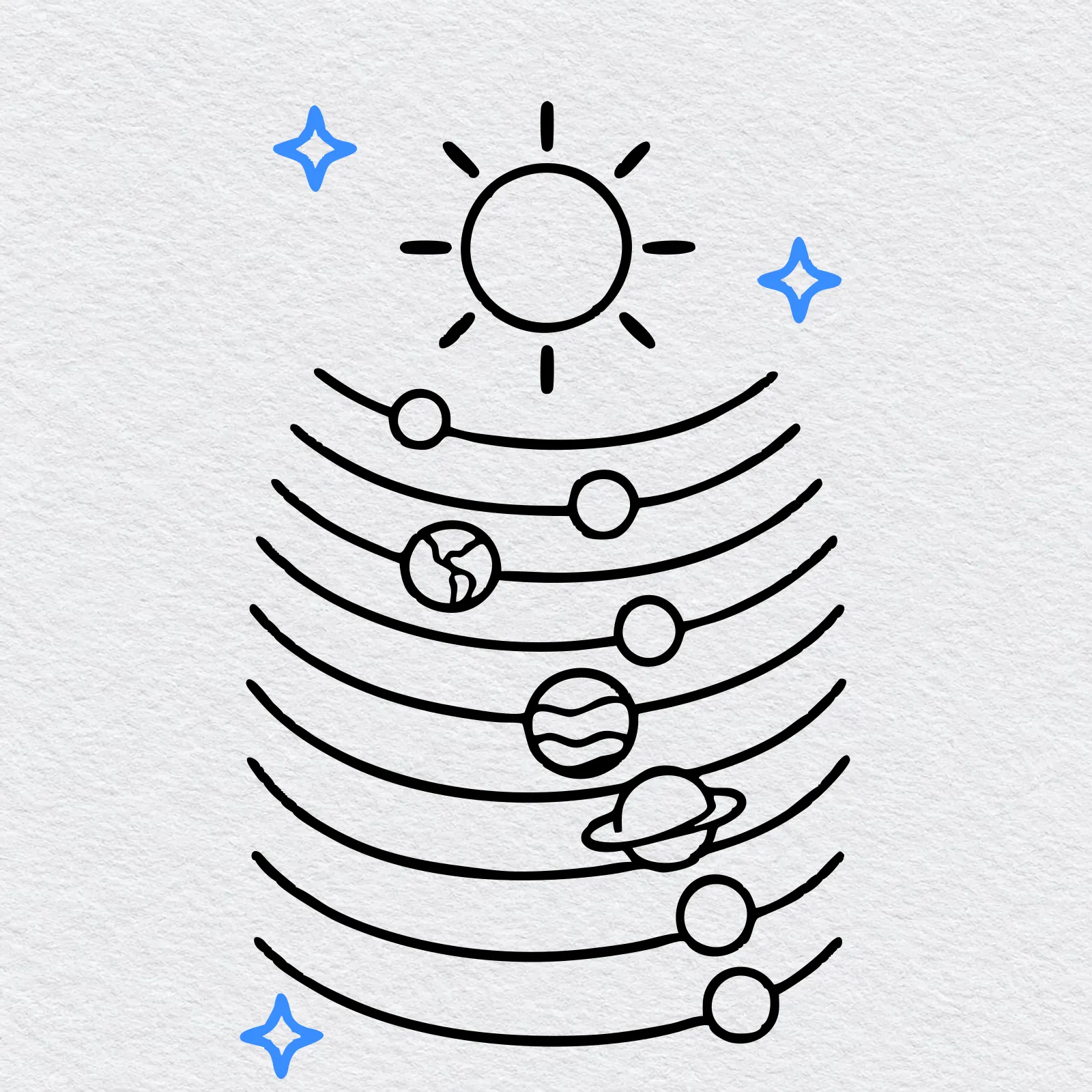
Add three stars with four points each: one at the top left, one on the right beside the sun and one at the bottom left. Your solar system drawing is finished.
-
Step 10 : Color your solar system
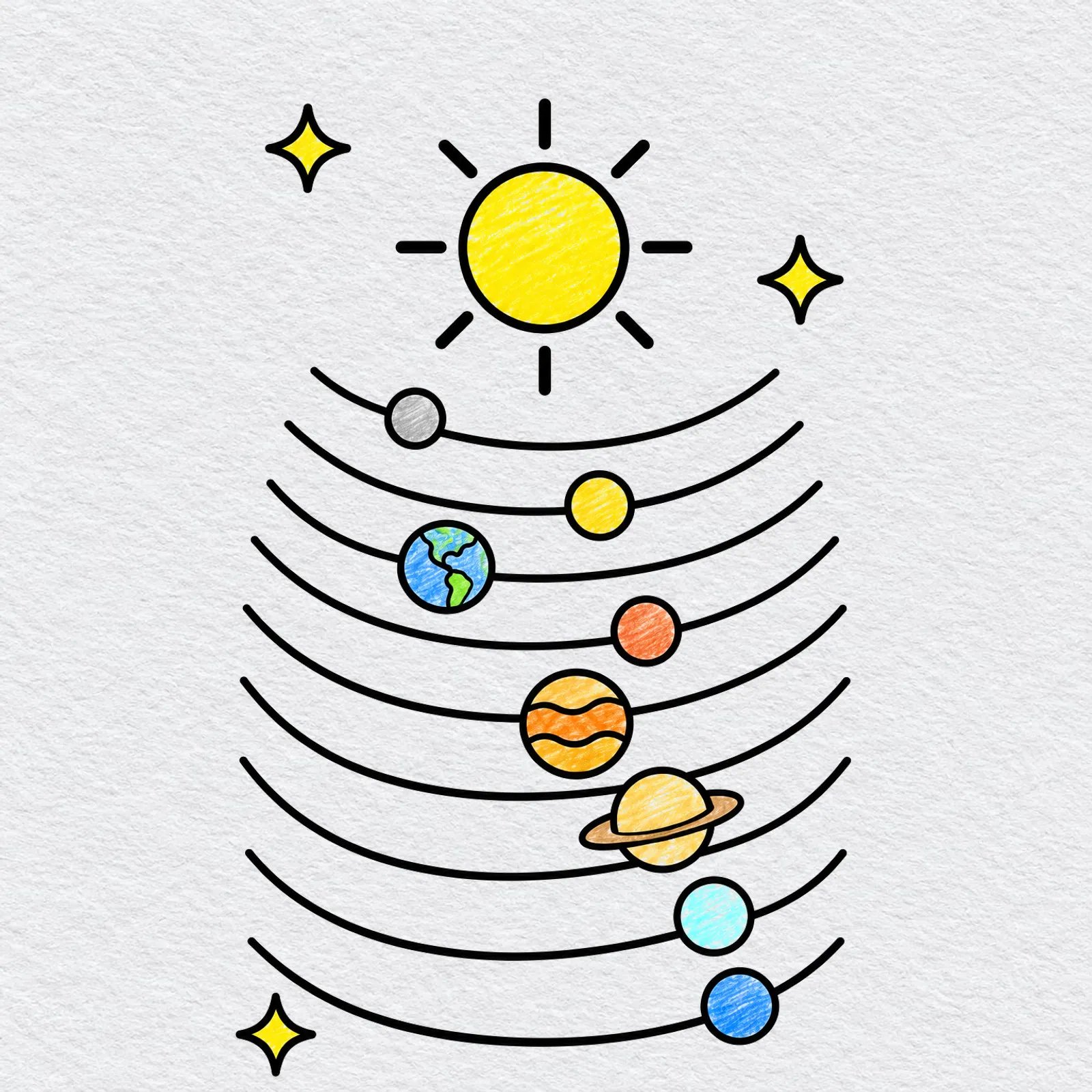
Color the sun and the stars bright yellow. Use gray for Mercury, yellow for Venus, blue and green for Earth, orange red for Mars and orange for Jupiter, with darker stripes.
Give Saturn a pale yellow body and a brown ring, and make Uranus light blue and Neptune a deeper blue. Go slowly and press lightly, because you can always add more color.
Printable the solar system drawing PDFs
 Save
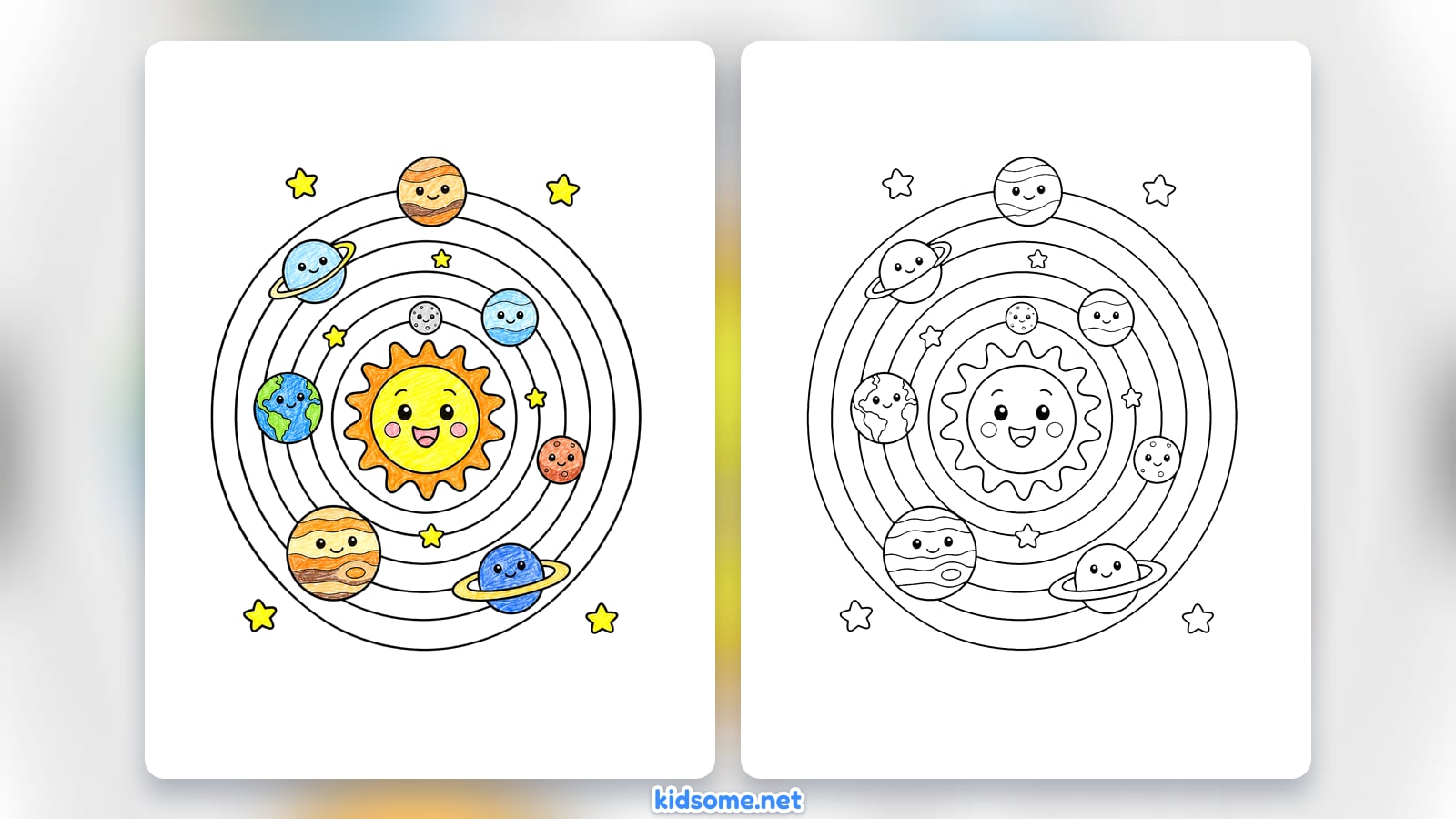
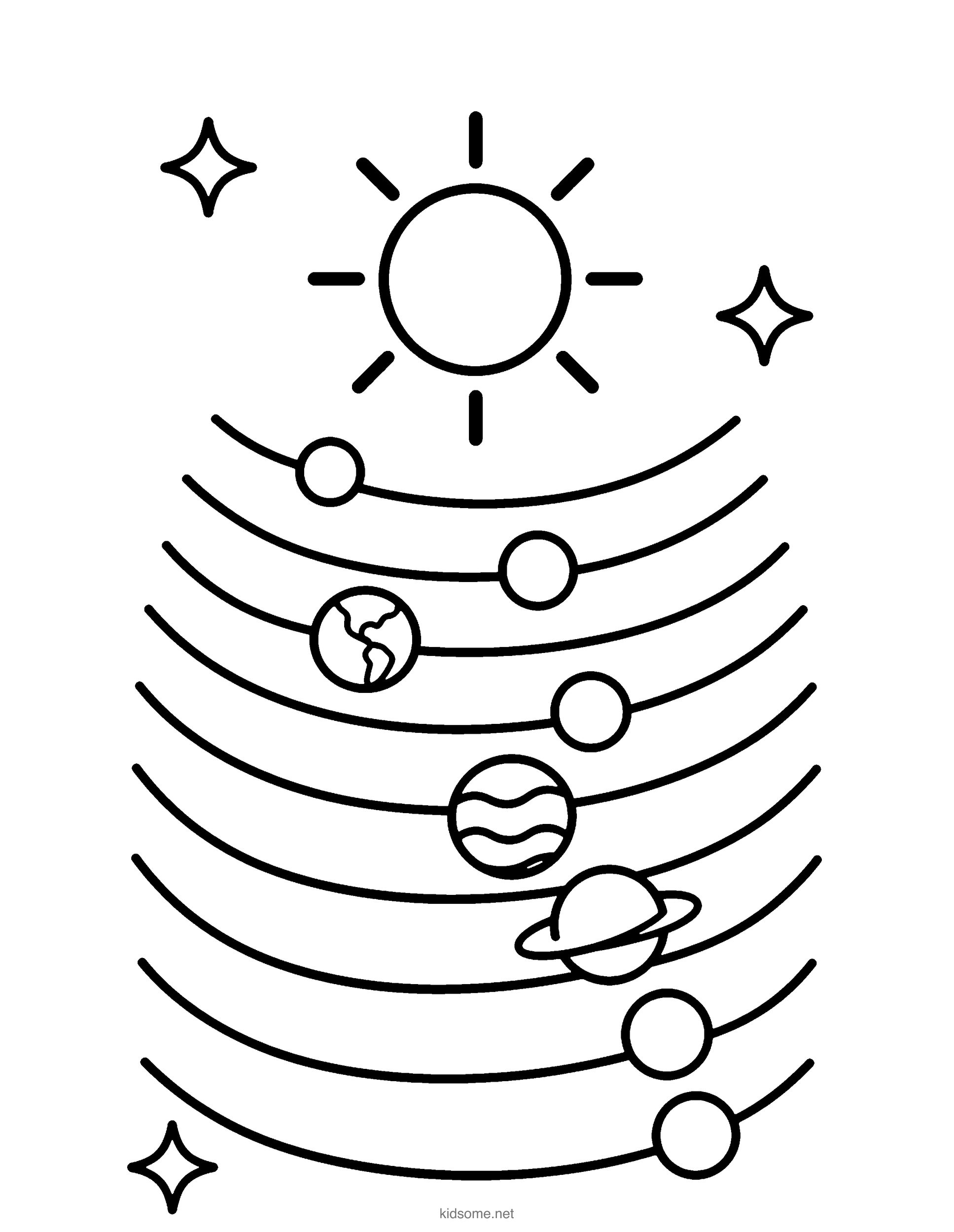
Solar System Outline to Color
The finished sun, orbits and eight planets as a clean outline to color, with the colored version on page two.
Download PDF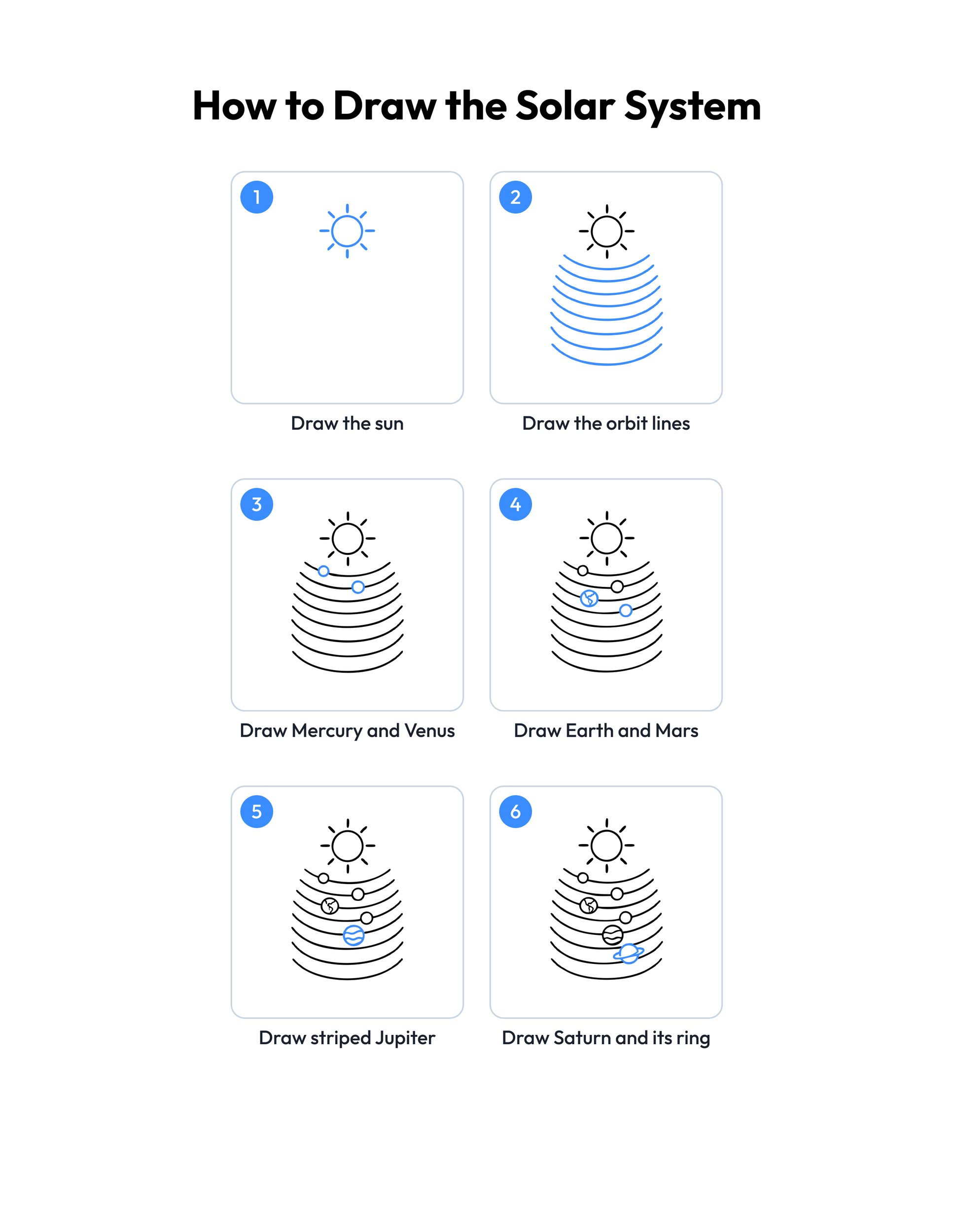 Save
Printable the solar system drawing guide
Every step, two to a row, with the finished the solar system in color at the end.
Download PDFHow to use this guide
Print the outline at 100 percent, or choose Fit to page if your printer asks. The PDF is set to US Letter, and the margins leave room for A4 too, so the whole drawing stays on the sheet. Page one is the outline to color. Page two is the colored solar system, so print page one alone if you only want the picture to fill in.
For drawing, plain copy paper and a pencil with a good eraser work best. Draw lightly at first, because the orbit lines are long and often need a second try. When the drawing looks right, go over the lines with a marker or a dark crayon. Markers and paint need cardstock so the color does not soak through.
The first steps are the easiest: a circle with rays, then curved lines, then small circles sitting on them. Younger children can draw the sun, the orbits and the first four planets, then stop and color. Jupiter's wavy stripes and Saturn's tilted ring take more care, so a grown-up can draw them lightly and let the child go over the lines.
Print the step guide and lay it beside the paper, or keep this page open on a tablet. Say each planet's name before your child draws it. After a few tries, your child may know how to draw a solar system from memory, planets in order.
Ideas for your the solar system drawing
- Planet order sentence: Teach a memory sentence such as My Very Educated Mother Just Served Us Noodles, one word for each planet. Say it while pointing to each planet, from Mercury down to Neptune.
- Science project poster: Draw the solar system big on poster board for a school project. Label each planet and add one fact beside it, such as Jupiter being the biggest planet.
- Size talk: The planets in this drawing are close in size so they fit the page. Look at a picture of the real planets side by side and talk about which ones are giant.
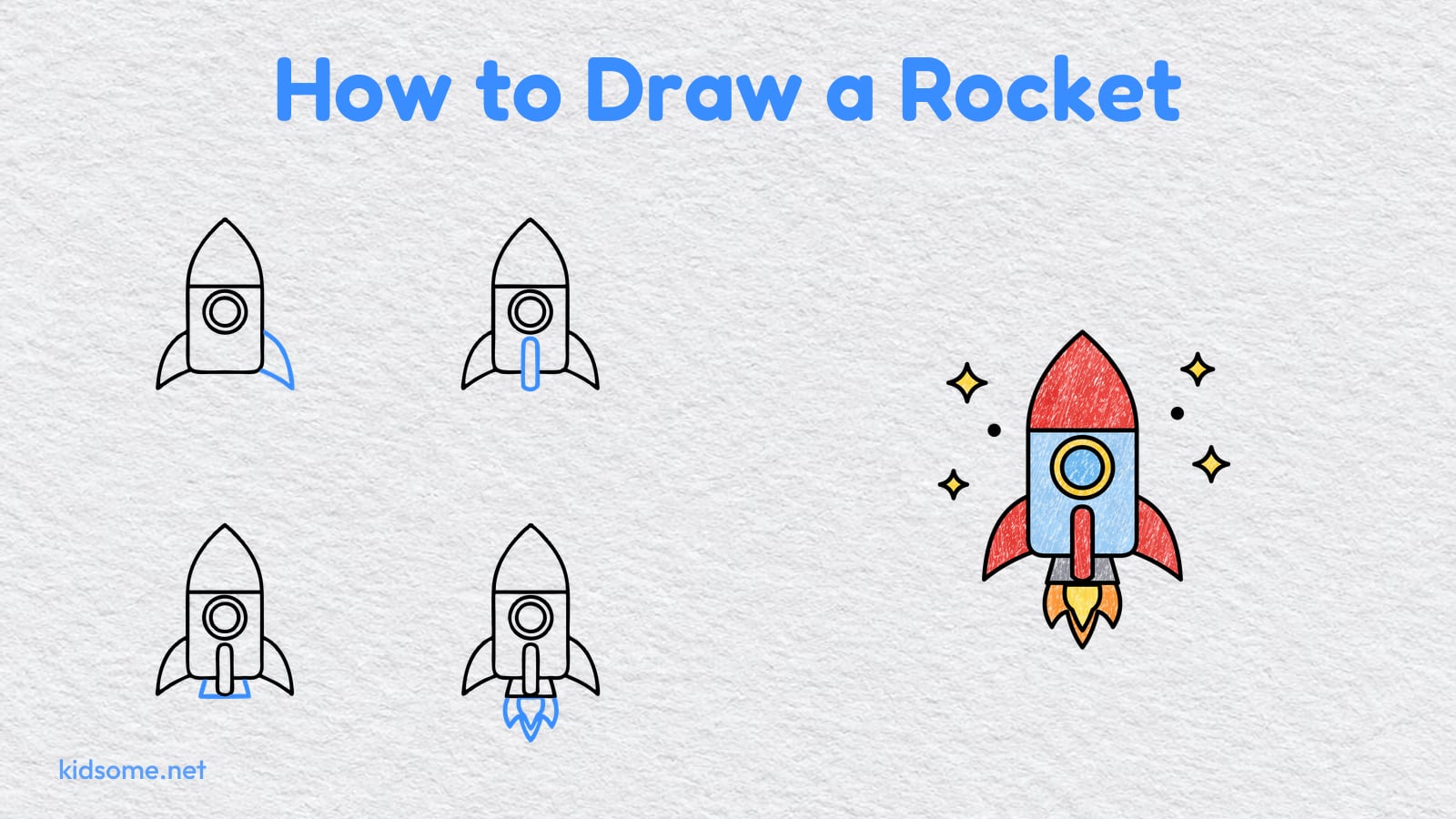
- Rocket trip: Follow the how to draw a rocket guide and add a rocket flying past Neptune. Ask your child which planet the rocket should visit first.
- Earth and its moon: Use the crescent moon drawing guide to add a moon beside Earth, then fill the empty spaces with more stars and a dark blue sky.
- Classroom space unit: Set out step guides, pencils and space coloring pages in an art center. Children work at their own speed, then hang their solar system drawings in a row.
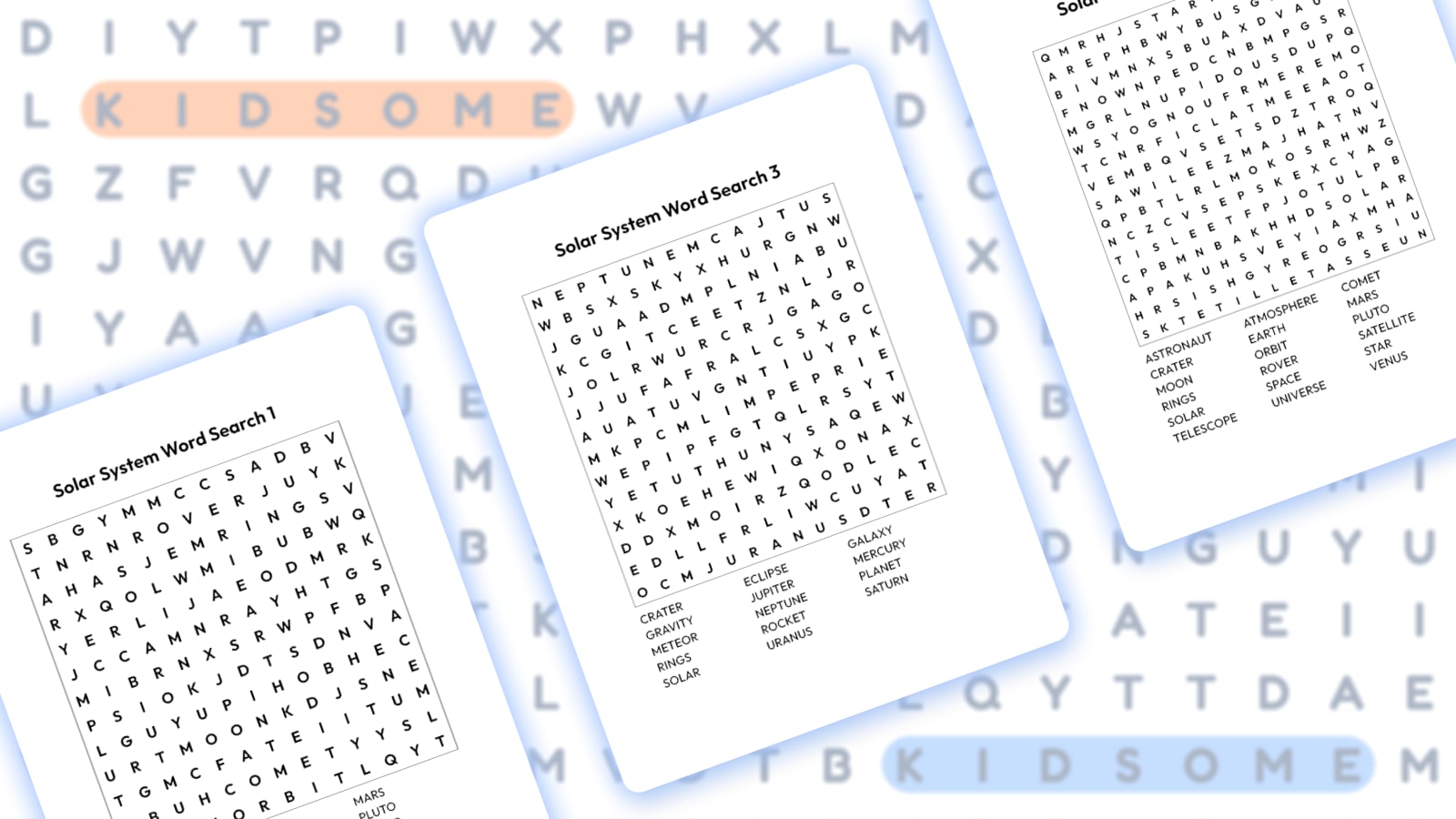
- Name practice: Write the eight planet names under the drawing and copy them slowly. Then try the space word search to spot more space words in a grid.
- Quiet-time folder: Keep the step guide, a few blank sheets and the science word search in a folder for car trips, waiting rooms and rainy afternoons.
What age is this solar system drawing for?
It is made for ages 4 to 8. The youngest children can draw the sun, the orbit lines and a few planets with a grown-up nearby. Older kids can draw the whole solar system alone, then label each planet and add a moon, a rocket or more stars around it.
Is this drawing of solar system planets in the right order?
Yes. From the sun out, the planets go Mercury, Venus, Earth, Mars, Jupiter, Saturn, Uranus and Neptune, one on each orbit line. The sizes are kept close so every planet fits on the page, so tell your child that Jupiter and Saturn are really far bigger than Earth.
How do I help a child who finds it hard?
Draw each new part lightly in pencil and let your child go over it, then swap for the next step. If an orbit line comes out bumpy, keep it: real orbits are not perfect circles either. Big, slow arm movements help more than small ones on the long curves.
Can I print the guide for my class?
Yes. Teachers, homeschool parents and science clubs can print as many copies of the outline and the step guide as they need, and the science crossword makes a good follow-up. Both PDFs are free for personal and classroom use. Please do not sell the files or post them on another site.