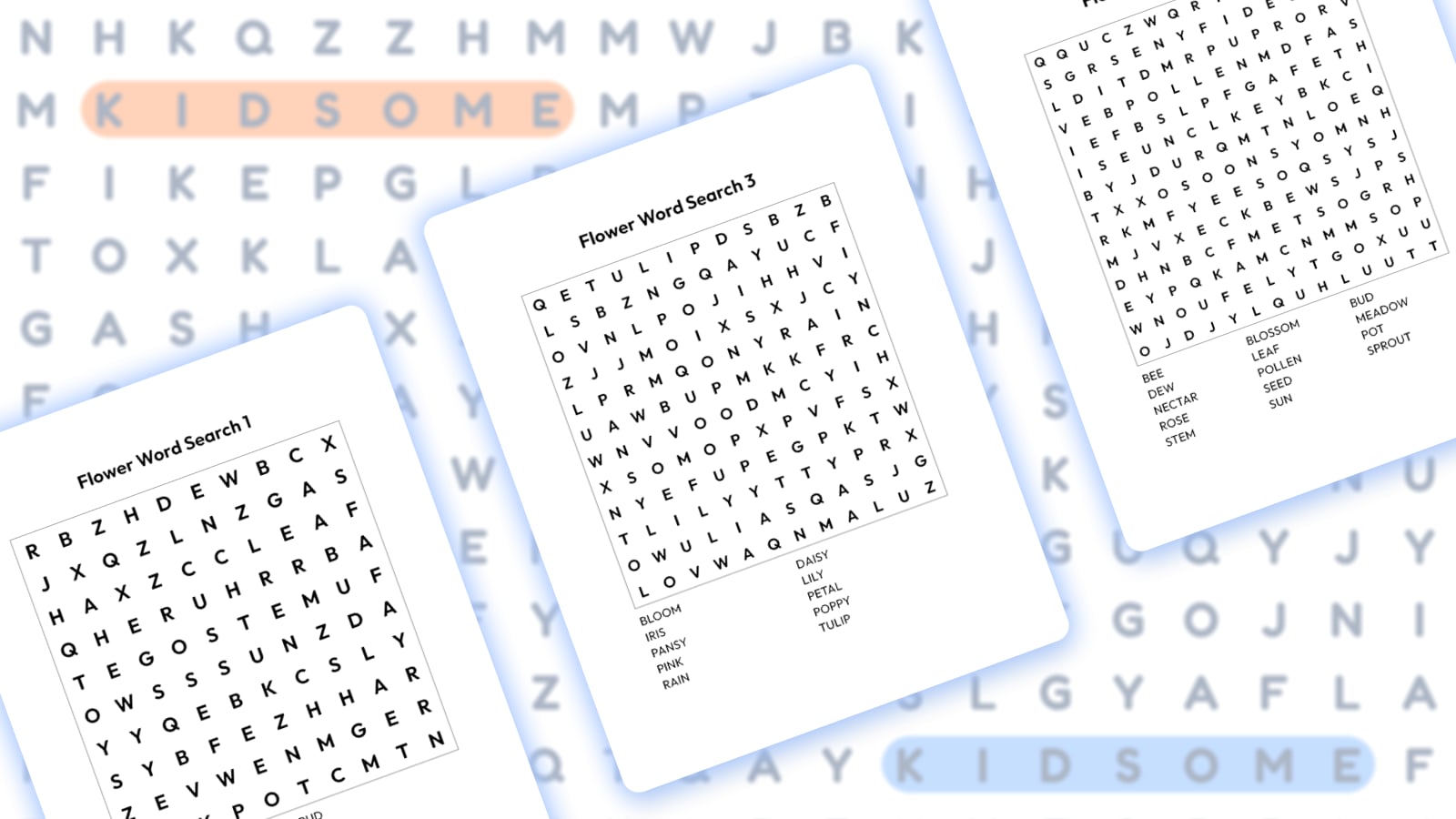
This flower word search for kids has six puzzles for early readers who like gardens and spring walks, and each one grows a little bigger than the one before. The first sheet has a 10 by 10 grid with eight short words, such as bee, bud, dew and sun, that run only across or down. By the sixth sheet the grid is 14 by 14, with fourteen words hiding forward, backward, up, down and on the slant.
The words come straight from the flower bed: rose, tulip, daisy, poppy, pansy, orchid and violet, along with the petal, the stem and the nectar that bees come looking for. Every puzzle is a free PDF with its answer key on page two, so a parent or first grade teacher can check a sheet in moments. The PDFs print on US Letter and A4 paper, at home or in class, and there is no sign-up.
The set suits ages 4 to 8. Younger children can start on the first two sheets with a grown-up reading aloud, while confident readers can jump to the backward pages. Sharpen a pencil and pick a flower. For other themes, visit the word search puzzles page.
Download the flower word search puzzles
 Save
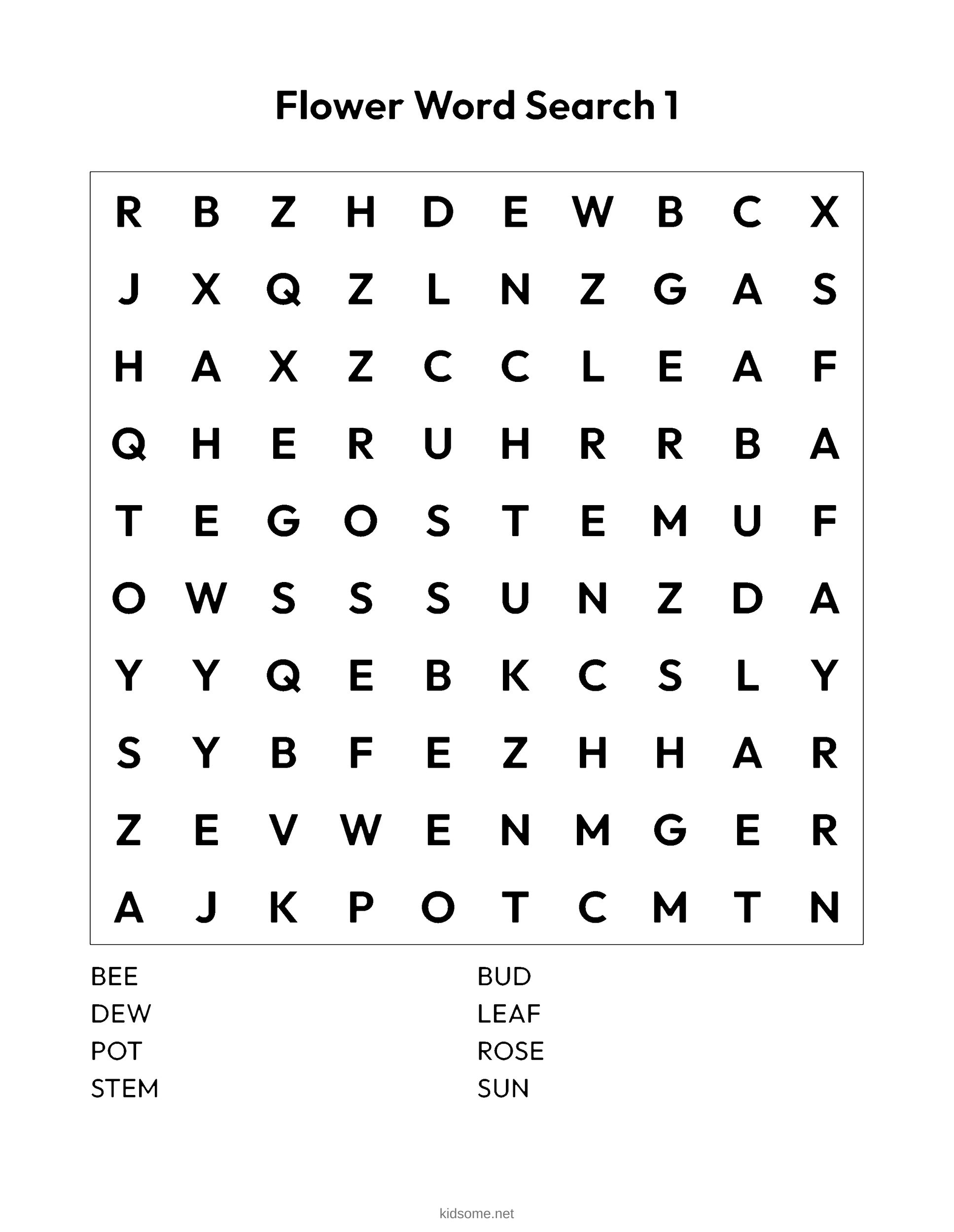
Easy Bee and Rose Search
A small 10 by 10 grid with eight short garden words, including bee, bud, dew and sun, that run only across or down, the easiest page for new readers.
Download PDFWord List: BEE, BUD, DEW, LEAF, POT, ROSE, STEM, SUN
Reveal Word List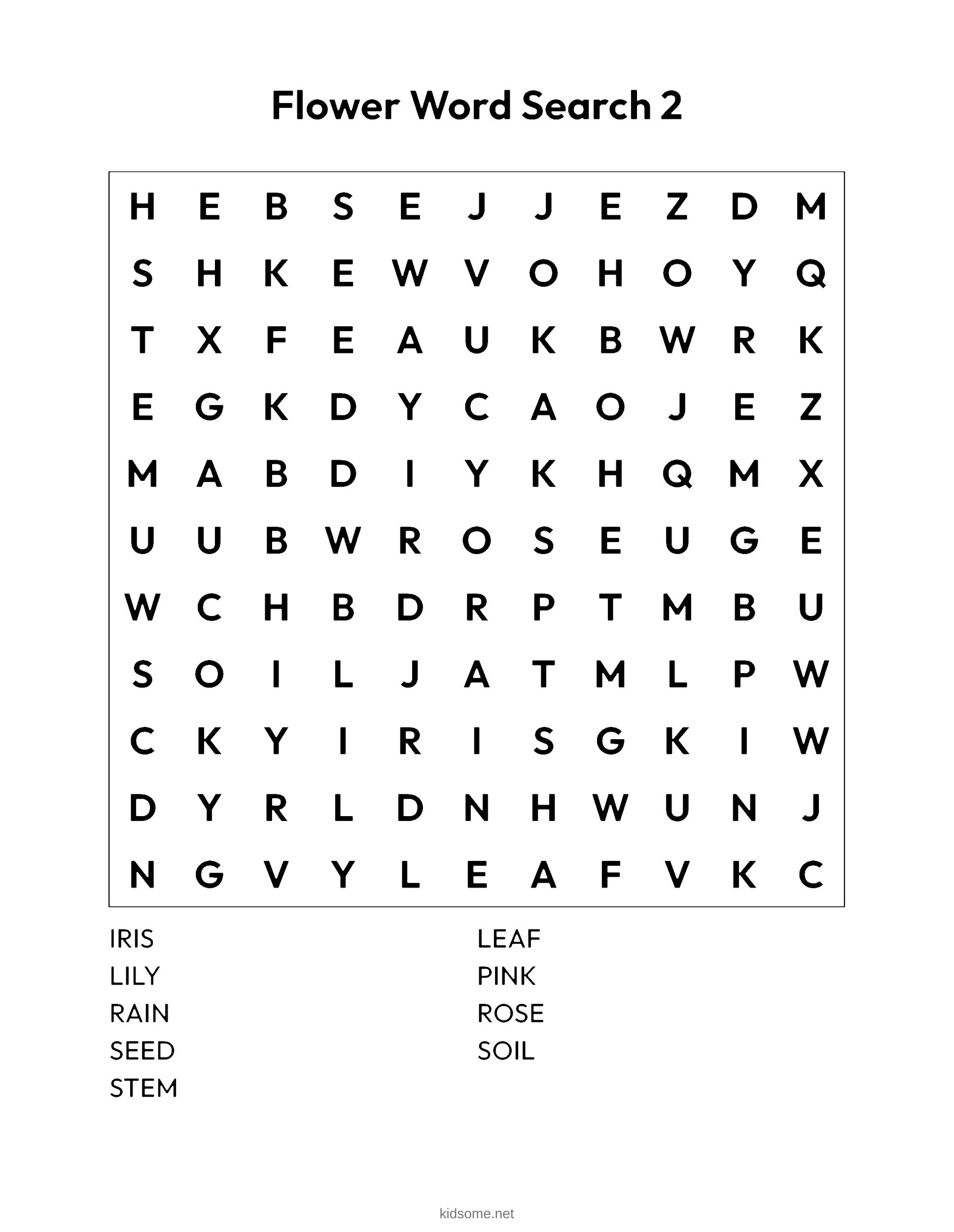 Save
Easy Iris and Seed Search
An 11 by 11 grid with nine words such as iris, lily, seed and soil, still running only across or down, a good next step after the first sheet.
Download PDFWord List: IRIS, LEAF, LILY, PINK, RAIN, ROSE, SEED, SOIL, STEM
Reveal Word List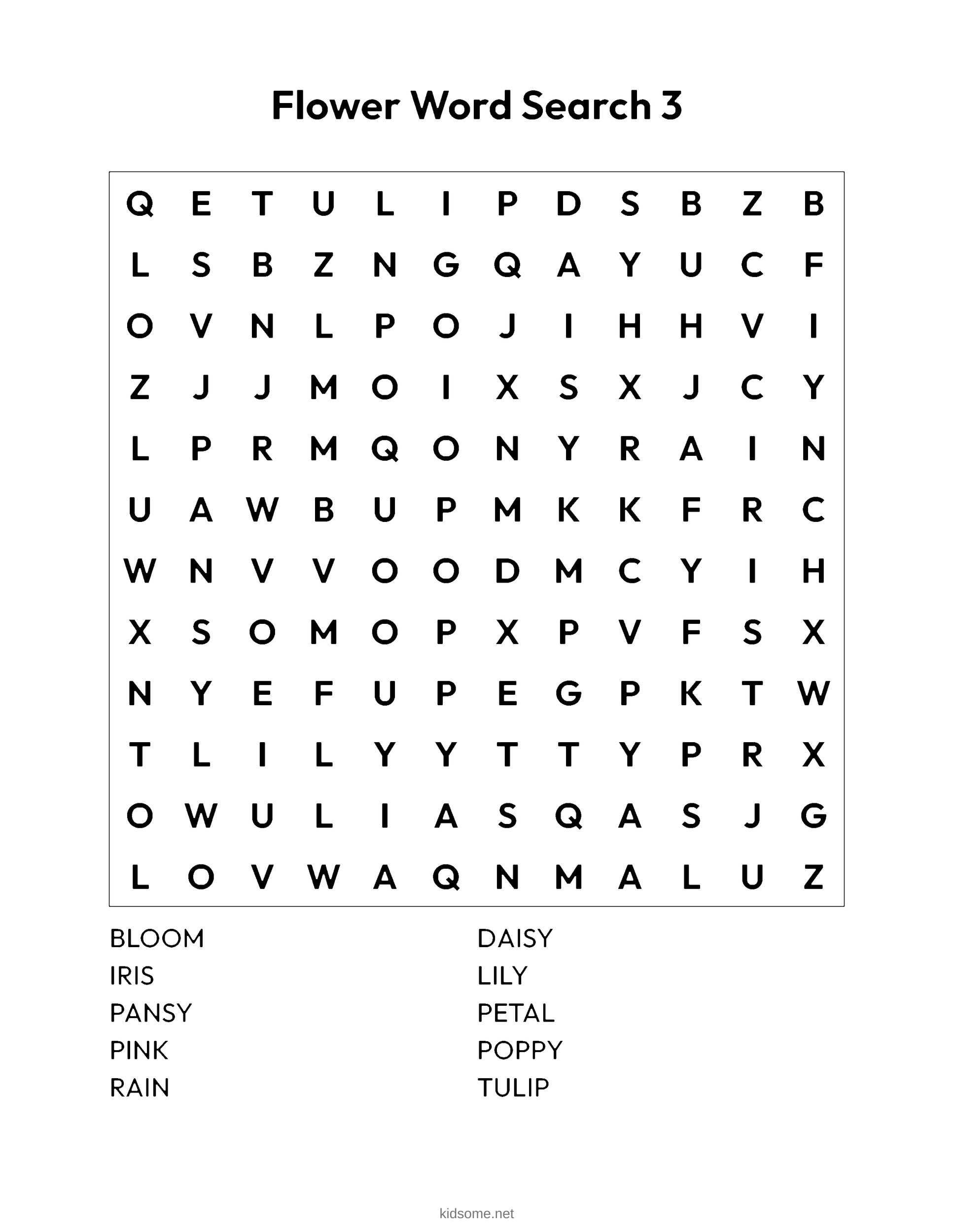 Save
Bloom and Petal Diagonal Search
A 12 by 12 grid with ten words like tulip, daisy, pansy and poppy, where bloom, pink and petal slant on the diagonal for the first time in the set.
Download PDFWord List: BLOOM, DAISY, IRIS, LILY, PANSY, PETAL, PINK, POPPY, RAIN, TULIP
Reveal Word List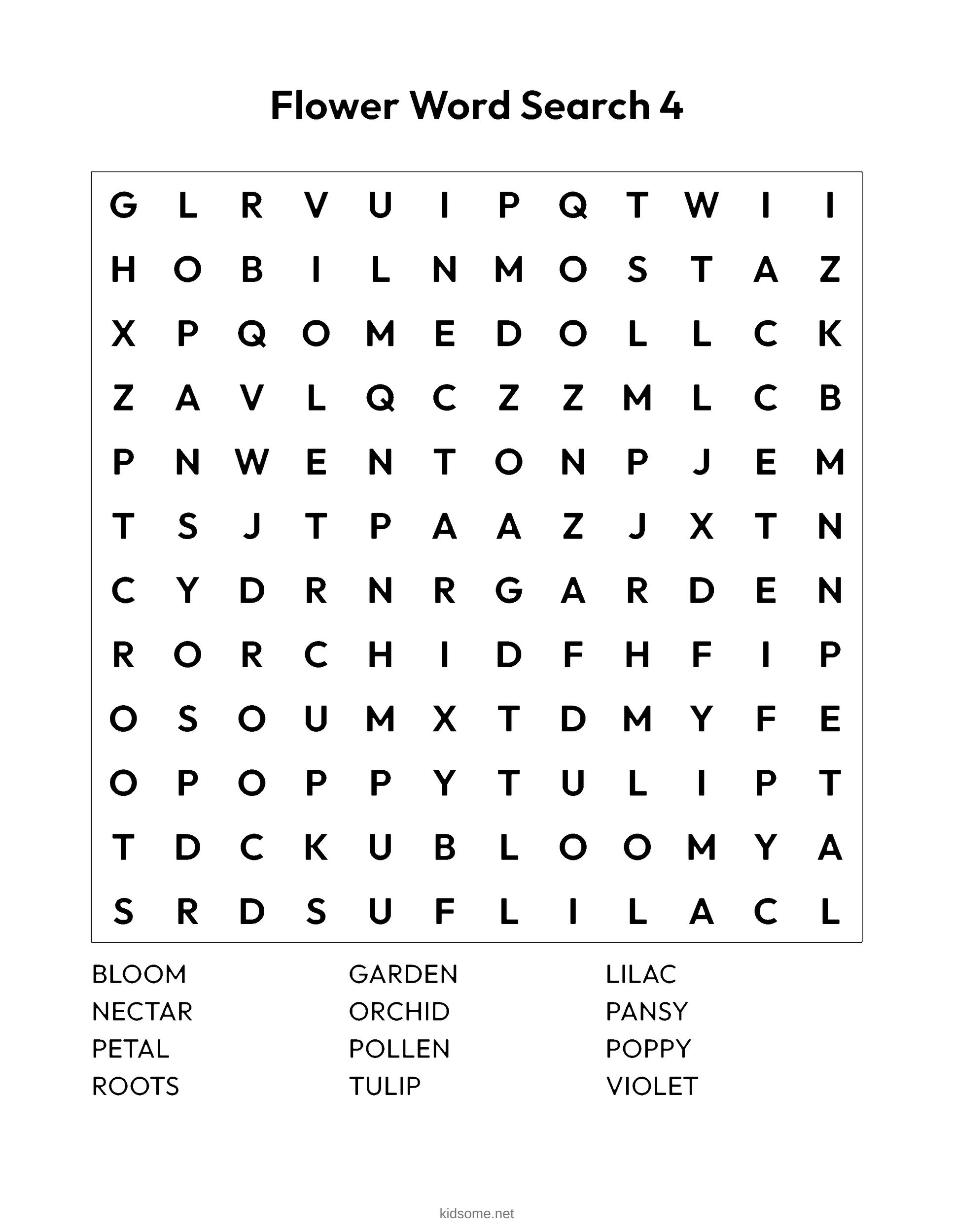 Save
Medium Orchid and Violet Search
A 12 by 12 grid for growing readers with twelve longer words, including garden, nectar, orchid and violet, most running across or down and pollen on the slant.
Download PDFWord List: BLOOM, GARDEN, LILAC, NECTAR, ORCHID, PANSY, PETAL, POLLEN, POPPY, ROOTS, TULIP, VIOLET
Reveal Word List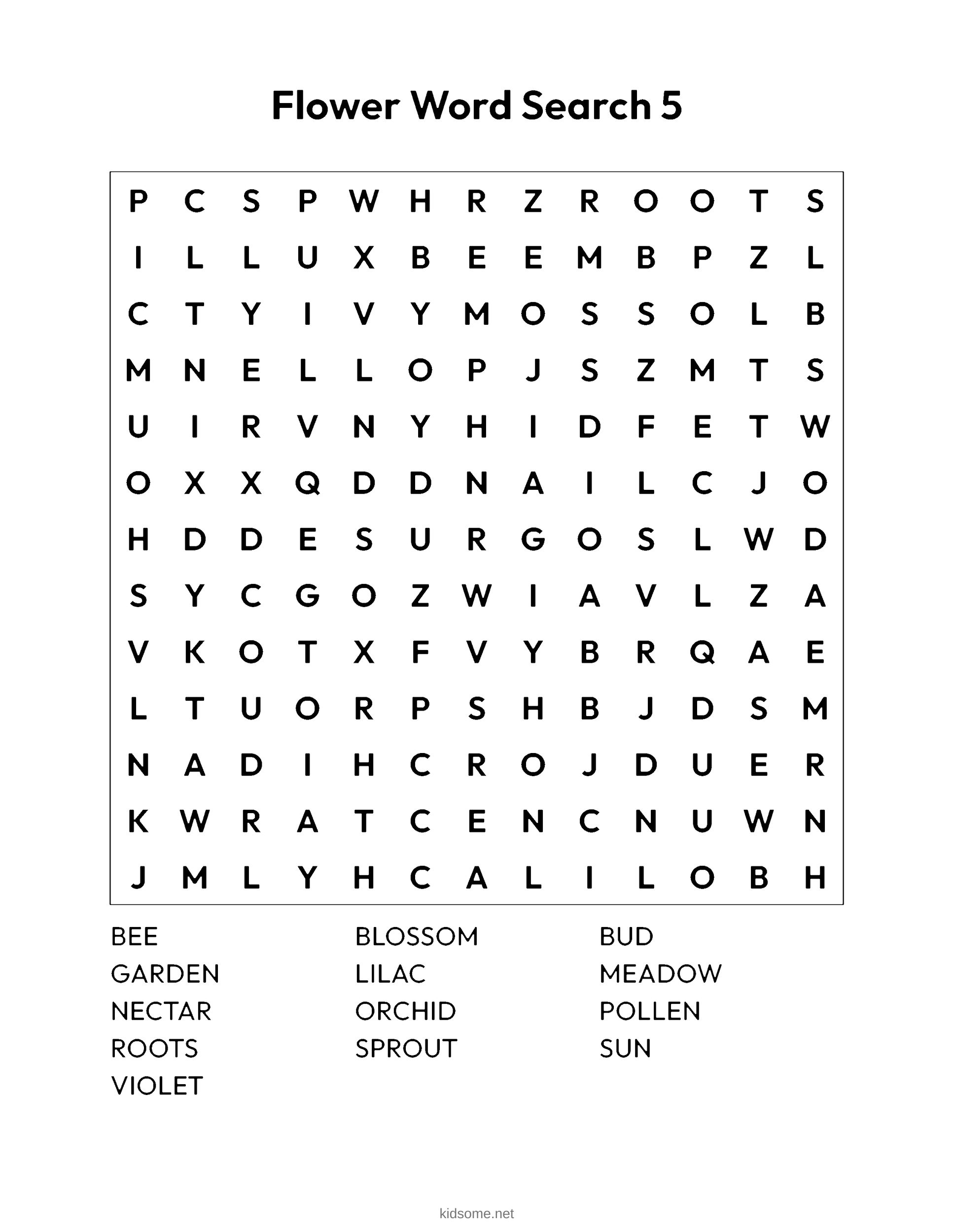 Save
Backward Blossom and Pollen Search
A 13 by 13 grid with thirteen words where blossom, pollen and sprout read right to left, meadow reads bottom to top and violet and garden run on the slant.
Download PDFWord List: BEE, BLOSSOM, BUD, GARDEN, LILAC, MEADOW, NECTAR, ORCHID, POLLEN, ROOTS, SPROUT, SUN, VIOLET
Reveal Word List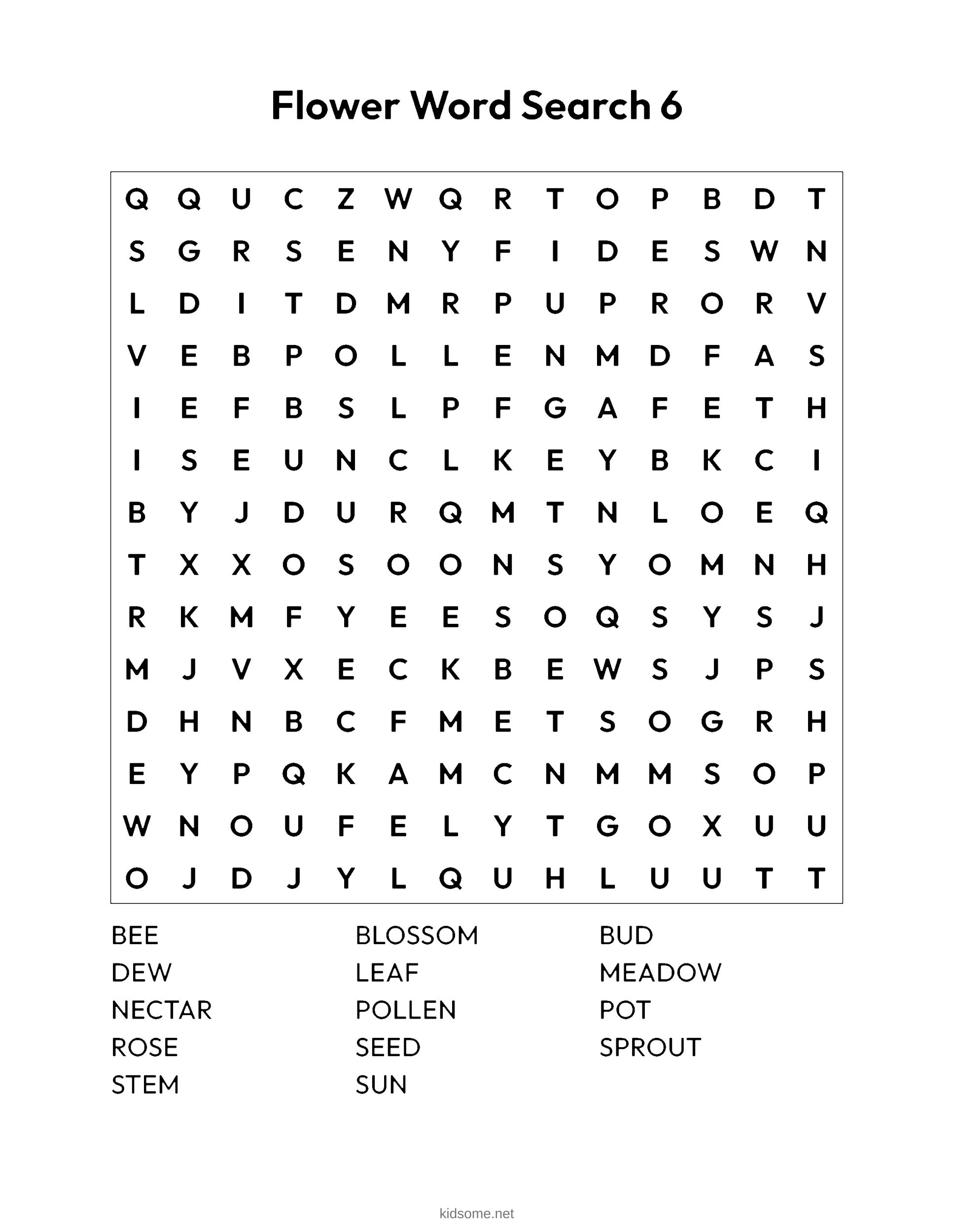 Save
Hardest Meadow and Sprout Search
The hardest page, a 14 by 14 grid with fourteen words hidden forward, backward, up, down and on the slant, including meadow, sprout, nectar and blossom, for confident readers.
Download PDFWord List: BEE, BLOSSOM, BUD, DEW, LEAF, MEADOW, NECTAR, POLLEN, POT, ROSE, SEED, SPROUT, STEM, SUN
Reveal Word ListHow to use these puzzles
Every PDF prints as two pages: the puzzle comes first and its answer key second, with each word circled in the same grid. Print page one alone for the child by typing 1 in the page range box, and print page two once for yourself. Keep the scale at 100 percent, or pick Fit to page if your printer asks. The sheet is set to US Letter and its margins leave room for A4, so neither the grid nor the word list gets cut off.
Plain copy paper works for pencils, crayons and colored pencils. A highlighter makes each found word glow like a row of spring flowers, but it can soak through thin paper, so print on cardstock if your child likes bright markers. A clear plastic sleeve and a dry-erase marker turn one printed page into a puzzle a whole group of children can use again.
Easy Bee and Rose Search and Easy Iris and Seed Search are the gentlest pages, with small grids, big letters and words that only run across or down. Bloom and Petal Diagonal Search brings in the first three slanted words: bloom, pink and petal. Medium Orchid and Violet Search has twelve longer words and one on the slant. Backward Blossom and Pollen Search and Hardest Meadow and Sprout Search come last, with words that read right to left, bottom to top and on the diagonal.
Show new searchers one trick before they begin: find the first letter of a word, then check the letters all around it for the second one. A ruler under each row helps small eyes keep their place. Crossing each word off the list as it is found shows how many flowers are still hiding, and that count keeps a child going to the end.
Ideas for these puzzles
- Morning work: Put Easy Bee and Rose Search on desks as children come in from the playground. The short words settle a busy room, and early finishers can turn the sheet over and draw the flower they like best.
- Spelling practice: After the puzzle, have your child copy each word onto lined paper and say the letters out loud. Short words like bud and dew suit beginners, while blossom and sprout stretch stronger spellers by the last page.
- Flower parts lesson: A flowers word search makes a neat start to a plant unit. Draw a big daisy on the board, then have children label the petal, stem, leaf and roots using the words they just circled.
- Seed jar: Tuck a bean seed against damp paper towel in a clear jar on the windowsill. Children can solve Easy Iris and Seed Search, then watch for the sprout and the roots and write the day each appears.
- Garden walk: Take a printed word list on a spring walk around the block or through the park. Let your child check off each word they spot, such as bee, leaf, soil, pot and, after a shower, rain.
- Pressed flower bookmarks: After finishing a puzzle, press a daisy or a pansy between heavy books for a week, then glue it to a strip of cardstock. Write a favorite word from the puzzle along the bottom in neat letters.
- Word sort: Cut the word list into strips and sort them into three piles: flowers, plant parts and garden things. Rose, lily and tulip go in the first pile, stem and roots in the next, and pot and soil last.
- Rainy day folder: Keep all six puzzles and a pencil in a folder by the window. On wet afternoons a child can pick up where they left off, and the weather word search makes a good next set.
- Spring puzzle week: Print these beside the spring word search for a week of puzzles about warm days, rain and new leaves. Let children choose one puzzle each morning and keep finished sheets in a folder to take home.
- Car bag: Slip a clipboard and two or three puzzles into the bag for long drives and waiting rooms. Bloom and Petal Diagonal Search works well on the road, because children can stop after any word and start again later.
What age is this flower word search for?
The six puzzles suit ages 4 to 8. A child who is still learning letters can manage Easy Bee and Rose Search with a grown-up reading the list aloud and pointing at each word. Confident first and second grade readers usually want the last two sheets, where blossom, meadow and sprout hide backward, upward and on the slant.
Is this flower word search printable on A4 paper?
Yes. The PDFs are set to US Letter, and the margins are wide enough that each page prints in full on A4 too. Keep the scale at 100 percent or choose Fit to page, then look at the print preview before you start. The grid, the word list and the answer key all stay on the page, whichever paper is in the tray.
Where is the answer key?
Page two of every PDF is the answer key, with each word circled in the same grid, so checking a finished sheet takes a moment. To keep it away from young readers, print page one alone and save one copy of the key for yourself. The summer word search set is laid out the same way, so nothing changes at the printer.
Can I use these puzzles in my classroom?
Yes. Teachers, homeschool parents and tutors can print as many copies as their own students need. The puzzles are free for personal and classroom use, but please do not sell them, add them to a paid pack or post the PDF files on another website. Sending a link to this page to other parents is always welcome.
What should my child use to circle the words?
A pencil works best for beginners, because a wrong circle can be erased and tried again. Crayons and colored pencils let a child give each flower word its own color, which helps on the fuller grids. Highlighters look cheerful but can soak through thin paper, so save them for cardstock or a sheet inside a plastic sleeve.
Make your own: Free Word Search Generator for Kids