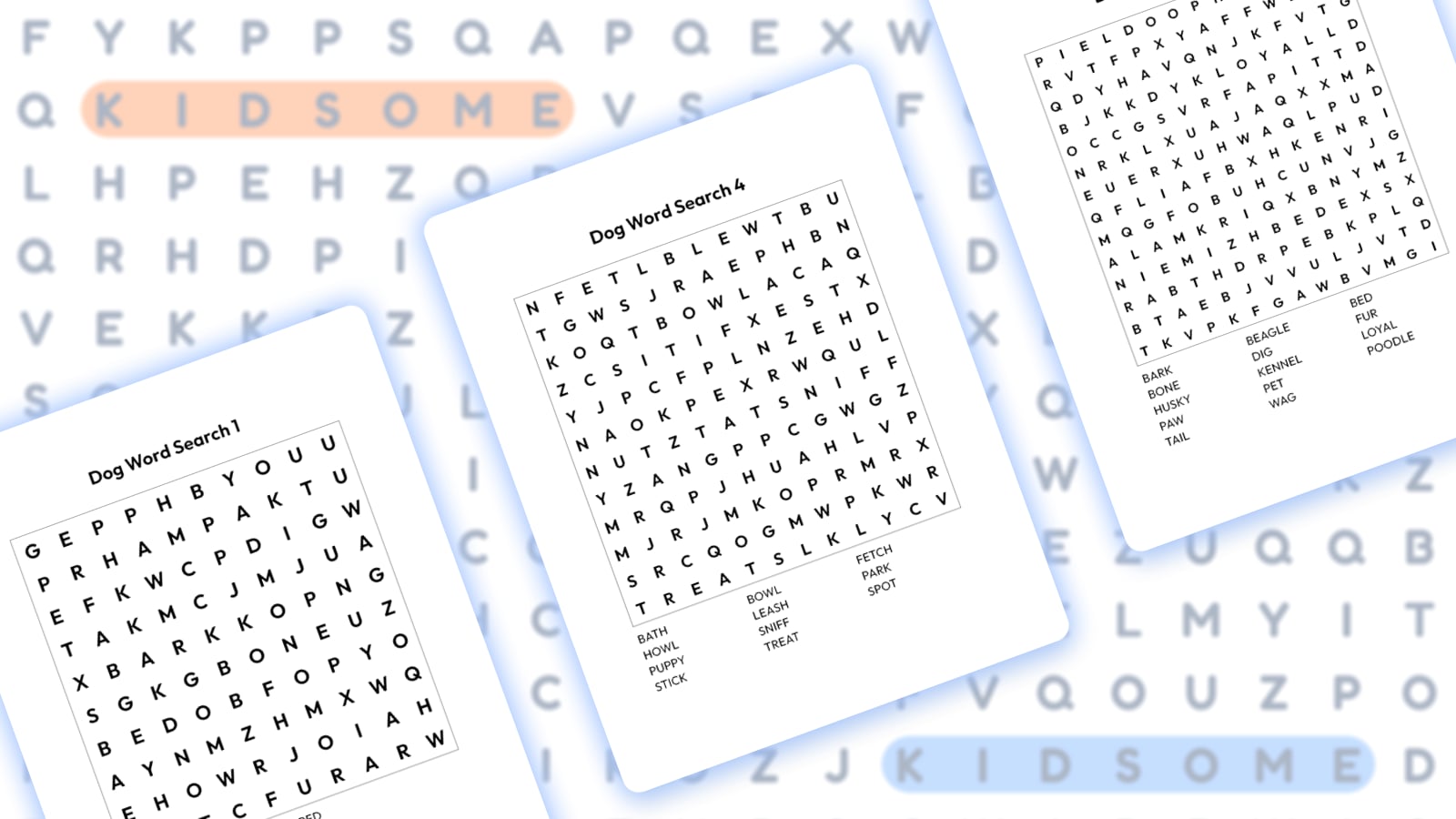
This dog word search set has seven puzzles full of the words kids use every day with a furry friend, and each one is a little harder than the one before. Sheet one is a small 10 by 10 grid with eight short words, such as paw, bone, bark and wag, that run only across or down. By sheet seven the grid is 14 by 14, with fourteen words hiding forward, backward, up, down and on the slant.
The words grow with the puzzles. Early sheets use bed, ball, nose and walk. Later ones bring in fetch, leash, sniff and treat, and the last pages name breeds like beagle, husky and poodle next to kennel, collar and loyal. Every puzzle is a free PDF with the answer key on page two, so a parent or teacher can check a finished sheet in a few seconds. The PDFs print on US Letter and A4 paper. There is no sign-up.
The set suits ages 4 to 8. Younger children can start on the first two sheets with a grown-up reading the list aloud, while confident readers jump to the backward pages. For other themes, visit the word search puzzles page.
Download the dog word search puzzles
 Save
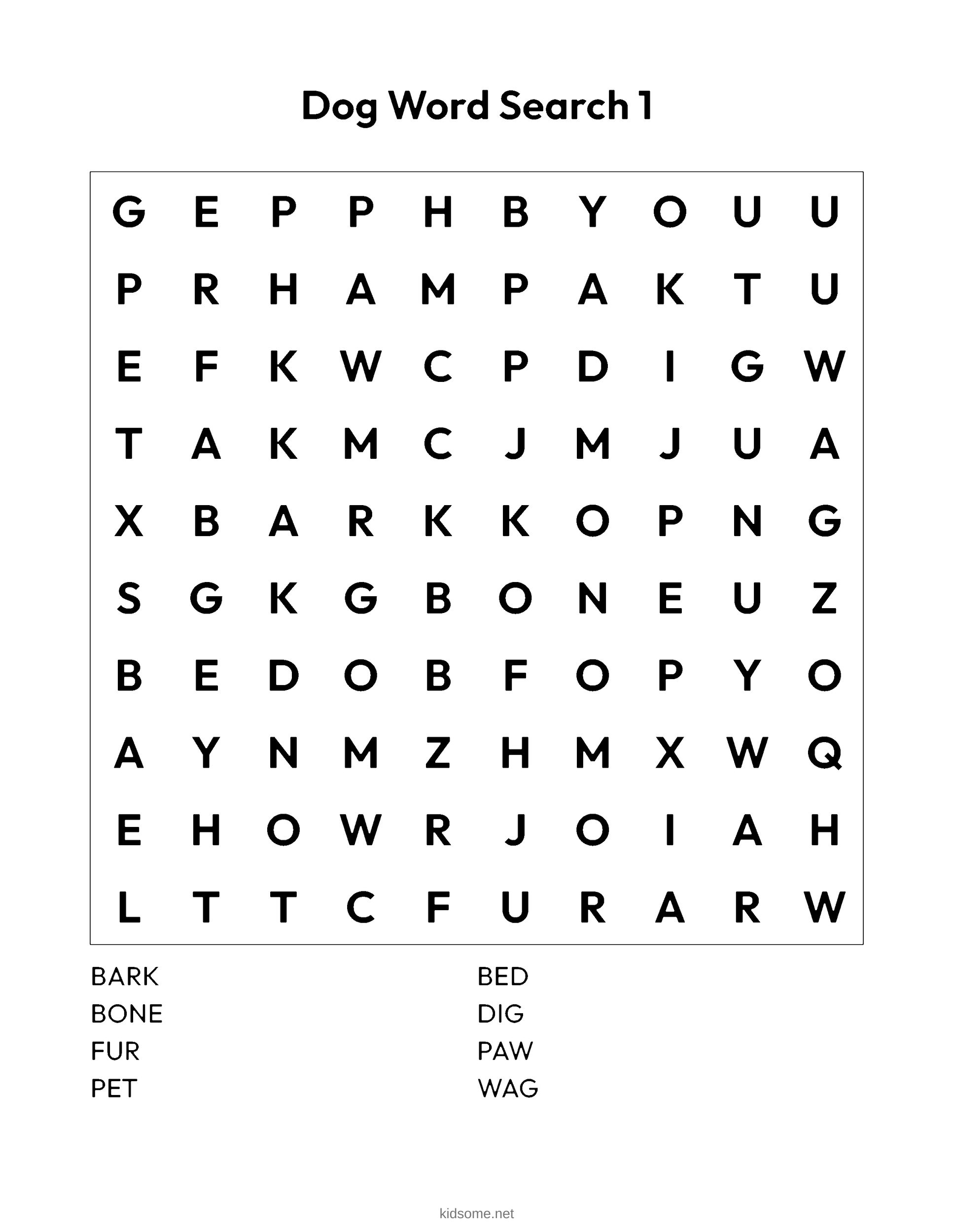
Easy Paw and Bone Search
A small 10 by 10 grid with eight short dog words, including paw, bone, bark and wag, that run only across or down, the easiest page to start on.
Download PDFWord List: BARK, BED, BONE, DIG, FUR, PAW, PET, WAG
Reveal Word List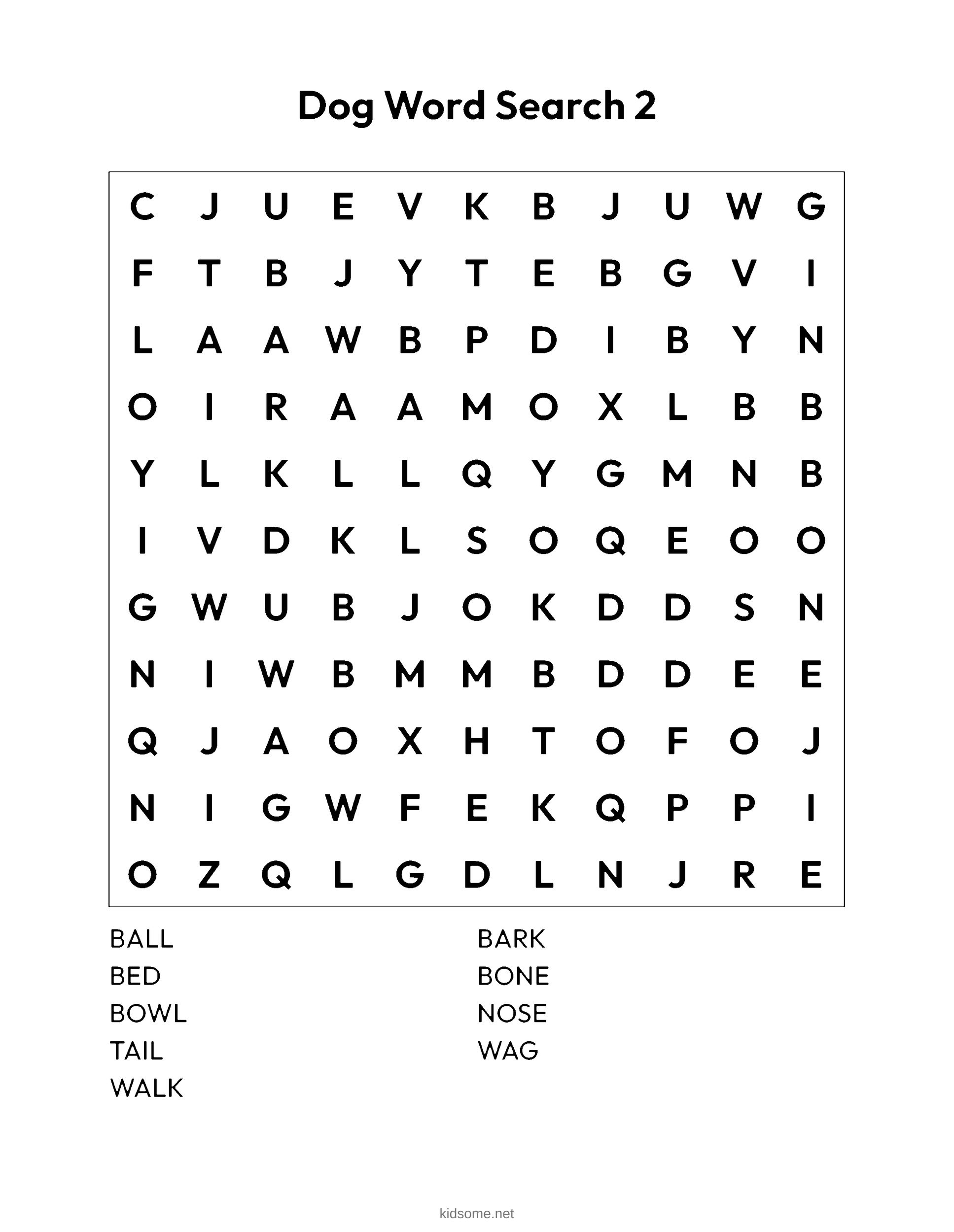 Save
Easy Ball and Tail Search
An 11 by 11 grid with nine words such as ball, tail, nose and walk, every one running straight down, a gentle next step after the first sheet.
Download PDFWord List: BALL, BARK, BED, BONE, BOWL, NOSE, TAIL, WAG, WALK
Reveal Word List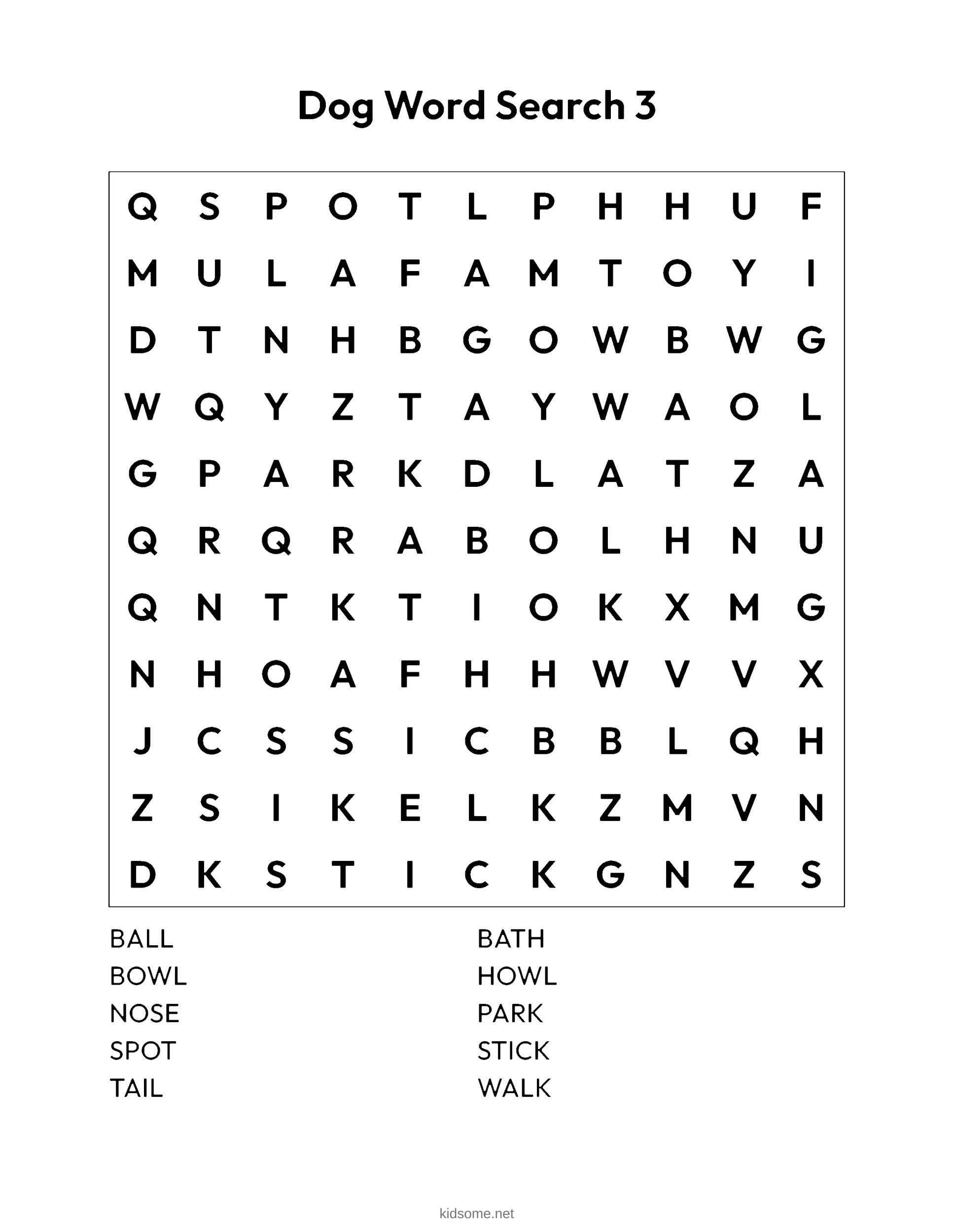 Save
Park and Stick Diagonal Search
An 11 by 11 grid with ten words like park, stick, spot and bath, where howl, bowl and tail slant on the diagonal for the first time in the set.
Download PDFWord List: BALL, BATH, BOWL, HOWL, NOSE, PARK, SPOT, STICK, TAIL, WALK
Reveal Word List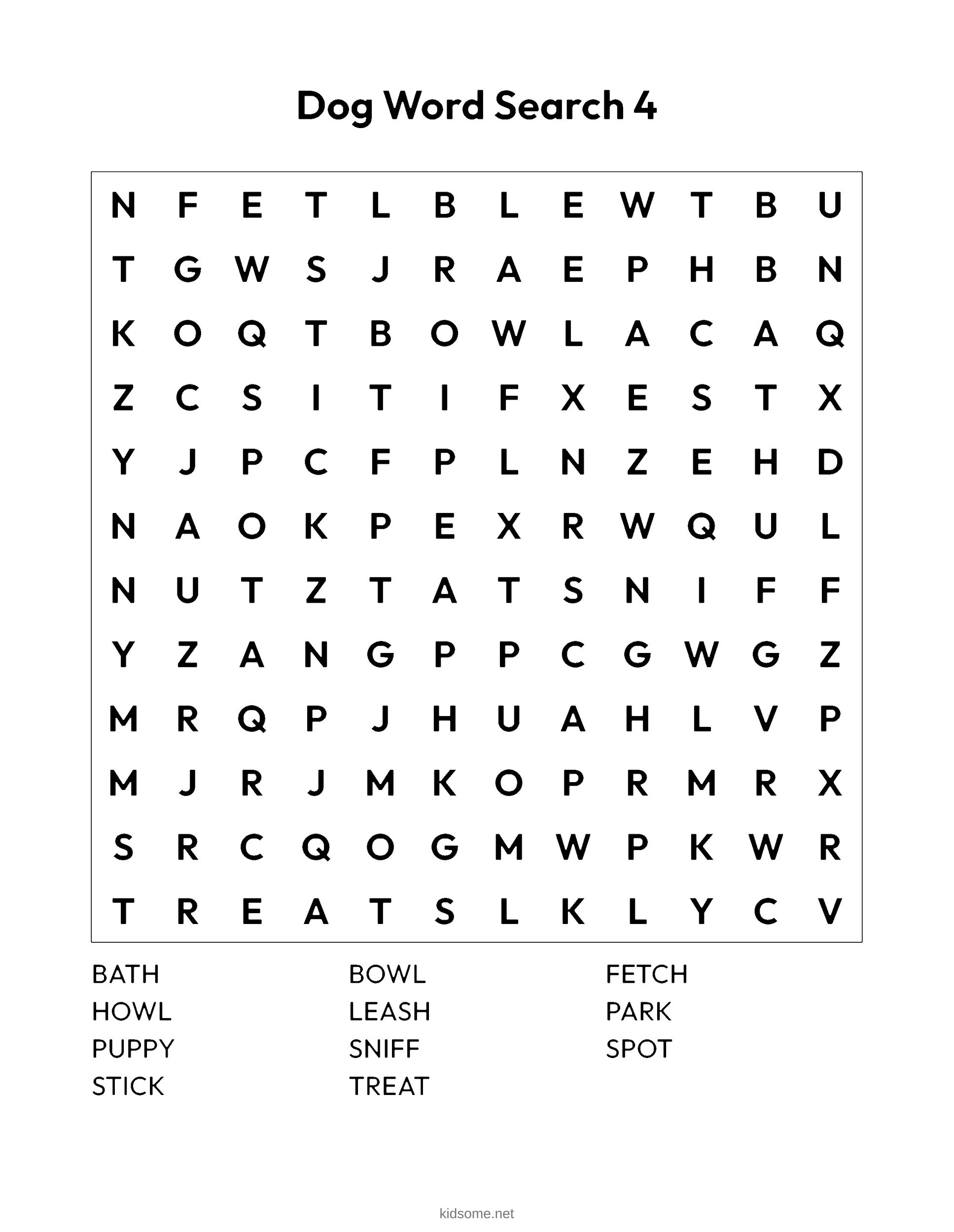 Save
Puppy and Leash on the Slant
A 12 by 12 grid with eleven words, including puppy, leash, fetch and sniff, where five of the words run on the diagonal instead of across or down.
Download PDFWord List: BATH, BOWL, FETCH, HOWL, LEASH, PARK, PUPPY, SNIFF, SPOT, STICK, TREAT
Reveal Word List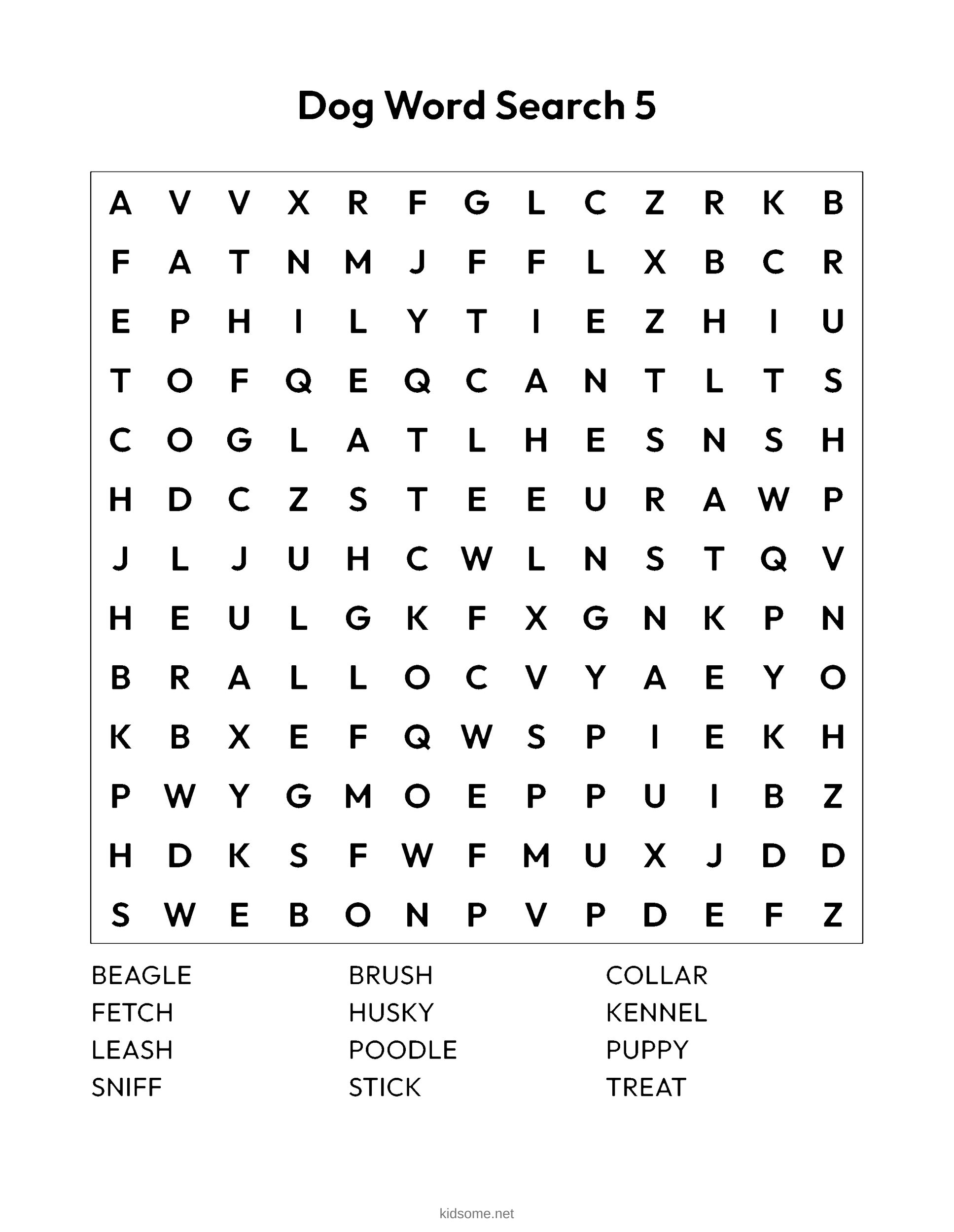 Save
Backward Collar and Kennel Search
A 13 by 13 grid with twelve words where collar reads right to left, puppy and stick read bottom to top, and kennel and beagle hide backward on the slant.
Download PDFWord List: BEAGLE, BRUSH, COLLAR, FETCH, HUSKY, KENNEL, LEASH, POODLE, PUPPY, SNIFF, STICK, TREAT
Reveal Word List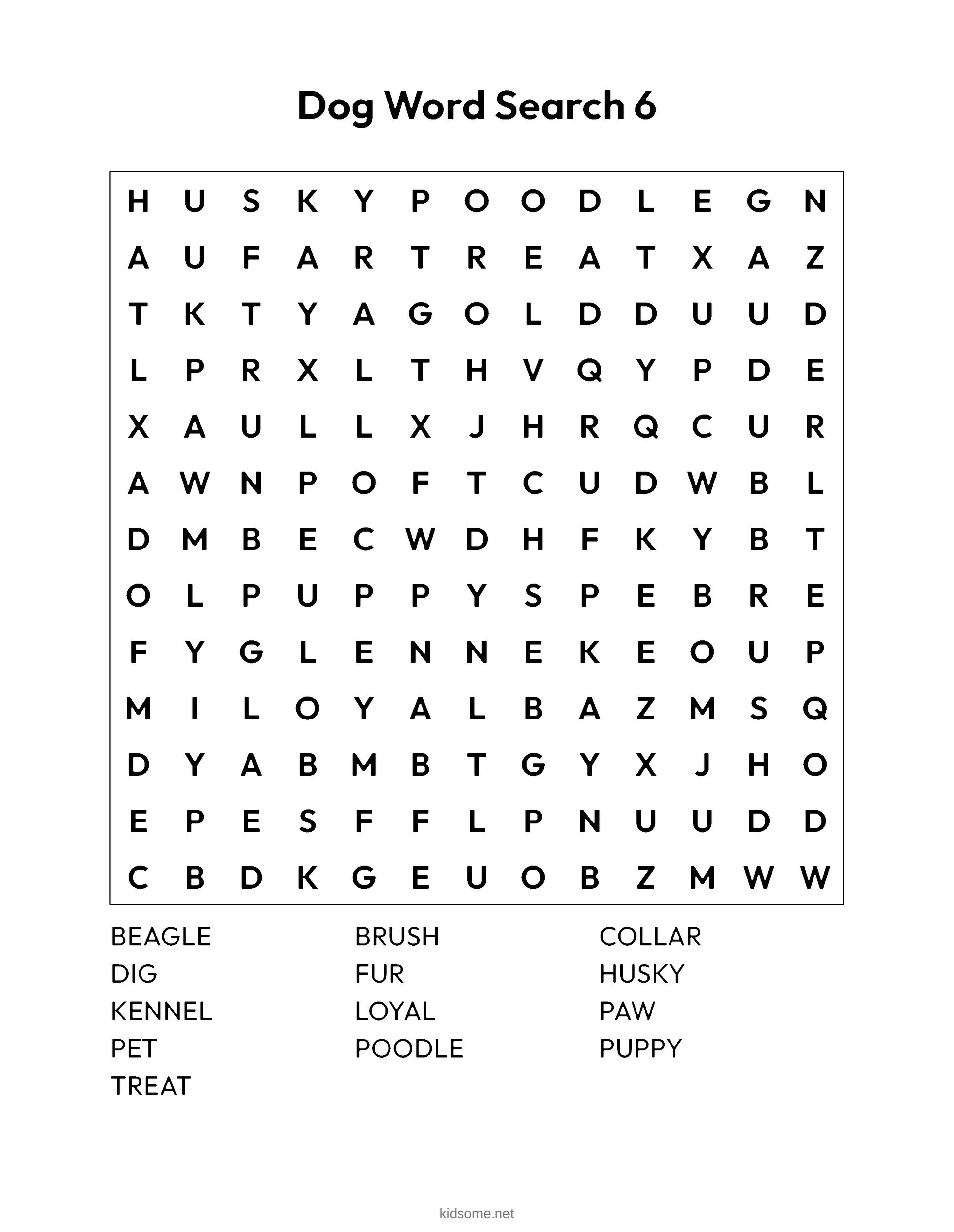 Save
Husky and Poodle Mixed Search
A 13 by 13 grid with thirteen words such as husky, poodle, loyal and brush, hidden across, down, upward, backward and on both diagonals for strong readers.
Download PDFWord List: BEAGLE, BRUSH, COLLAR, DIG, FUR, HUSKY, KENNEL, LOYAL, PAW, PET, POODLE, PUPPY, TREAT
Reveal Word List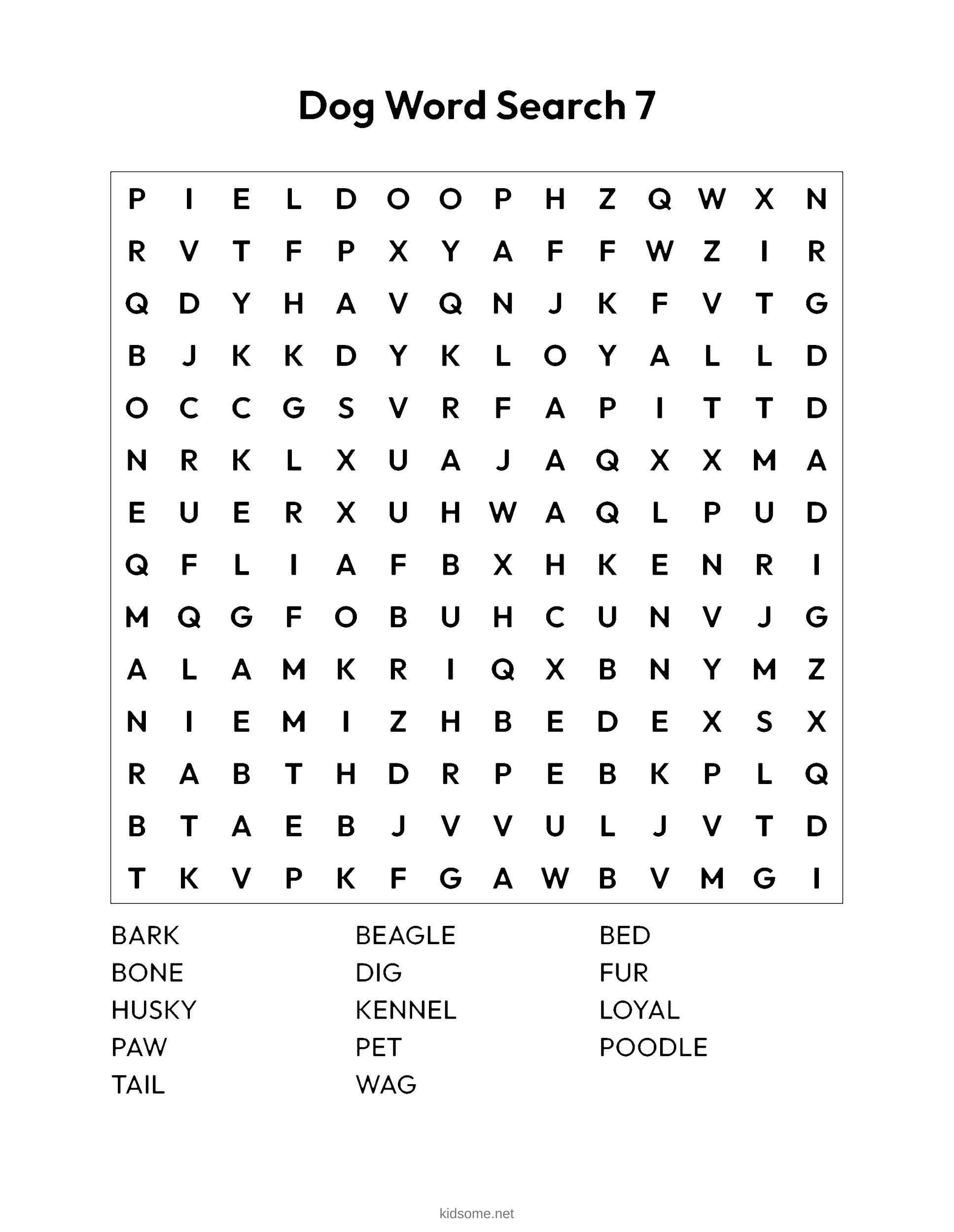 Save
Hardest Beagle and Bark Search
The hardest page, a 14 by 14 grid with fourteen words hidden forward, backward, up, down and on the slant, including beagle, bark, kennel and tail.
Download PDFWord List: BARK, BEAGLE, BED, BONE, DIG, FUR, HUSKY, KENNEL, LOYAL, PAW, PET, POODLE, TAIL, WAG
Reveal Word ListHow to use these puzzles
Each PDF has two pages. Page one is the puzzle and page two is the answer key, with every word circled in the same grid. To keep the answers out of sight, choose page 1 only in your print settings, then print the key once for yourself. Print at 100 percent or choose Fit to page. The PDF is US Letter size and the margins leave room for A4, so the grid and the word list stay whole on either paper.
Plain copy paper is fine for pencils, crayons and colored pencils. Highlighters and markers can soak through thin paper, so use cardstock or thicker paper if your child likes to shade each word in a bright color. For a sheet you can use again and again, slip it into a clear plastic sleeve and circle the words with a dry-erase marker, then wipe it clean for the next child.
Easy Paw and Bone Search and Easy Ball and Tail Search are the easiest pages, with small grids, big letters and words that run only across or down. Park and Stick Diagonal Search adds the first slanted words, and Puppy and Leash on the Slant has five of them in a bigger grid. Backward Collar and Kennel Search, Husky and Poodle Mixed Search and Hardest Beagle and Bark Search come last, with words that read right to left, bottom to top and on both diagonals.
Show new searchers one trick before they start: find the first letter of a word, then check the eight letters around it for the second one. A ruler or a finger under each row helps them keep their place, and crossing each word off the list shows how many are left to find.
Ideas for these puzzles
- Morning work: Put Easy Paw and Bone Search on desks as children come in. It settles a busy room, and early finishers can turn the sheet over and draw a dog doing three of the words they found.
- Spelling practice: After the puzzle, have your child copy each word from the list onto lined paper, saying every letter out loud. Short words like paw and wag suit beginners, while collar and kennel stretch stronger spellers.
- Word sorting: Cut the word list into strips and sort the words into groups: parts of a dog, things a dog does and things a dog needs. Nose, sniff and leash each land in a different pile.
- Pet care talk: Use bowl, bath, brush, walk and treat as a starting point for a chat about looking after a pet. Ask your child what a dog needs each day, then make a simple care chart together.
- Partner search: Pair a stronger reader with a beginner on one shared sheet. One child reads a word from the list, the other hunts for it in the grid, and they swap jobs after every word they circle.
- Beat your time: Older kids can time themselves on Puppy and Leash on the Slant, then try a fresh copy a week later and beat it. Keep the times on a fridge chart to watch them drop.
- Breed hunt: After Husky and Poodle Mixed Search, look up pictures of a beagle, a husky and a poodle in a library book. Children can draw each breed and write its name under the drawing.
- Make your own grid: Give children squared paper and let them build a small puppy word search with five dog words for a friend or sibling. Filling the empty squares with random letters is the part most children like best.
- Rainy day folder: Keep all seven puzzles and a pencil in a folder by the door. When it is too wet for a walk in the park, the folder is ready and nobody needs to wait for the printer.
- Story time tie-in: Read a picture book about a dog, then hand out a puzzle that uses some of the same words. Children enjoy spotting fetch, ball or bark in the grid right after hearing them in the story.
What age is this dog word search for?
The set is made for ages 4 to 8. Children who are still learning their letters can do the first two sheets with a grown-up reading each word aloud. Confident readers in first and second grade usually like the last three sheets best, where words run backward, upward and on the slant and take more careful looking.
Where is the answer key?
Every PDF has two pages. Page one is the puzzle, and page two shows the same grid with each word circled, so you can check work at a glance. If you would rather children not see it, print page one only and keep a single copy of the key for yourself or for the teacher's desk.
Will the puzzles print on A4 paper?
Yes. The PDFs are set to US Letter, and the margins are wide enough that each page prints in full on A4 as well. Leave scaling at 100 percent or choose Fit to page, and check the preview before you print. The grid, the word list and the answer key all stay on the sheet.
Can I use these puzzles in my classroom?
Yes. Teachers, homeschool parents and tutors can print as many copies as their own students need. The puzzles are free for personal and classroom use. Please do not sell them, add them to a paid pack or post the PDF files on another website. Sharing a link to this page with other parents is always welcome.
What should my child use to circle the words?
A pencil works best for beginners, because a wrong circle can be erased. Crayons and colored pencils make it easy to mark each word in a different color, which helps on the busier grids. Highlighters look bright but can soak through thin paper, so save them for cardstock or a sheet inside a plastic sleeve.
Make your own: Free Word Search Generator for Kids