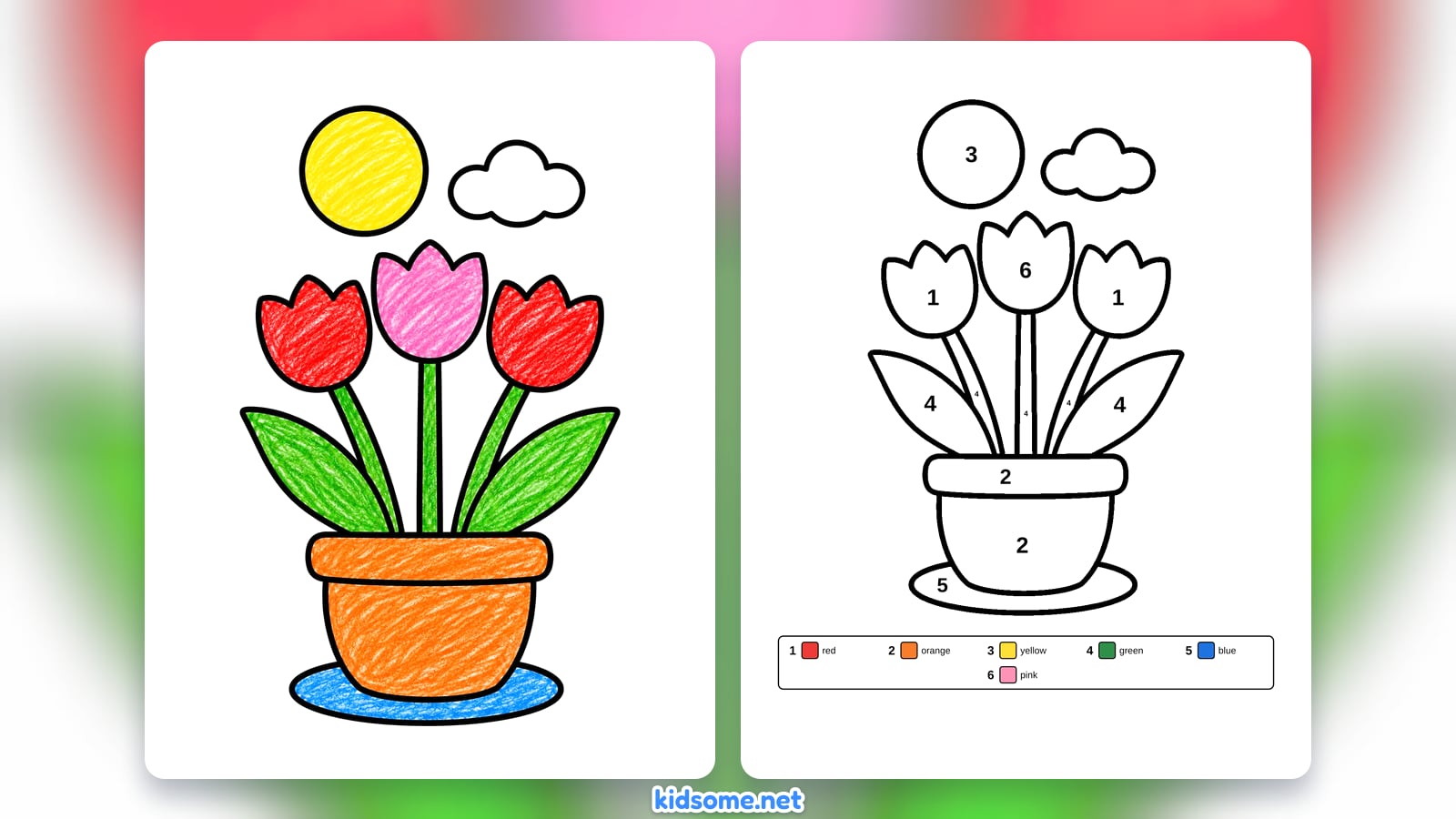
These spring color by number pages give children a calm, cheerful job on a rainy afternoon or a quiet morning. Each picture is split into big shapes, and every shape that needs color has a number in it. The key at the bottom of the page shows which crayon goes with each number, with a swatch and the color name, so children can match them on their own.
There are ten spring scenes: tulips in a clay pot, a bunny holding a carrot, a butterfly over a flower, a bee beside its hive, a duck in rain boots under an umbrella, a rainbow over a hill, a robin on a blossom branch, a ladybug on a daisy, a kite above a hill and a frog on a lily pad. Some pages use only four colors, and the busiest uses seven.
The set suits ages 4 to 8, from children who are just learning their numbers to early readers who can read the color names. This spring color by number printable set is free: every page is a PDF that prints on US Letter and A4, with no sign-up. You can find more in the color by number pages collection.
Download the spring color by number pages
 Save
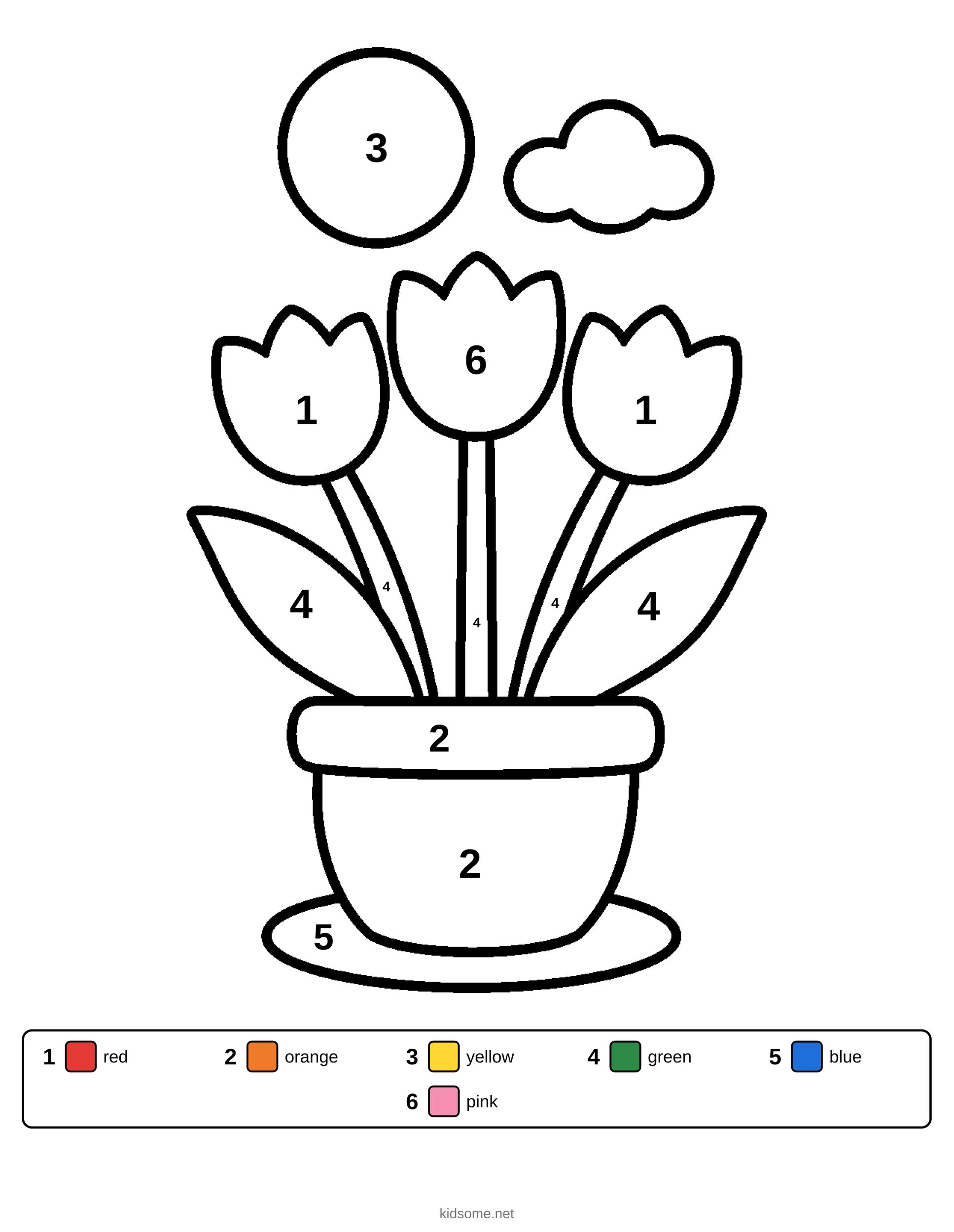
Tulips in a Clay Pot
Three big tulips in a round clay pot with a sun and a small cloud above, a calm first picture for beginners.
Download PDF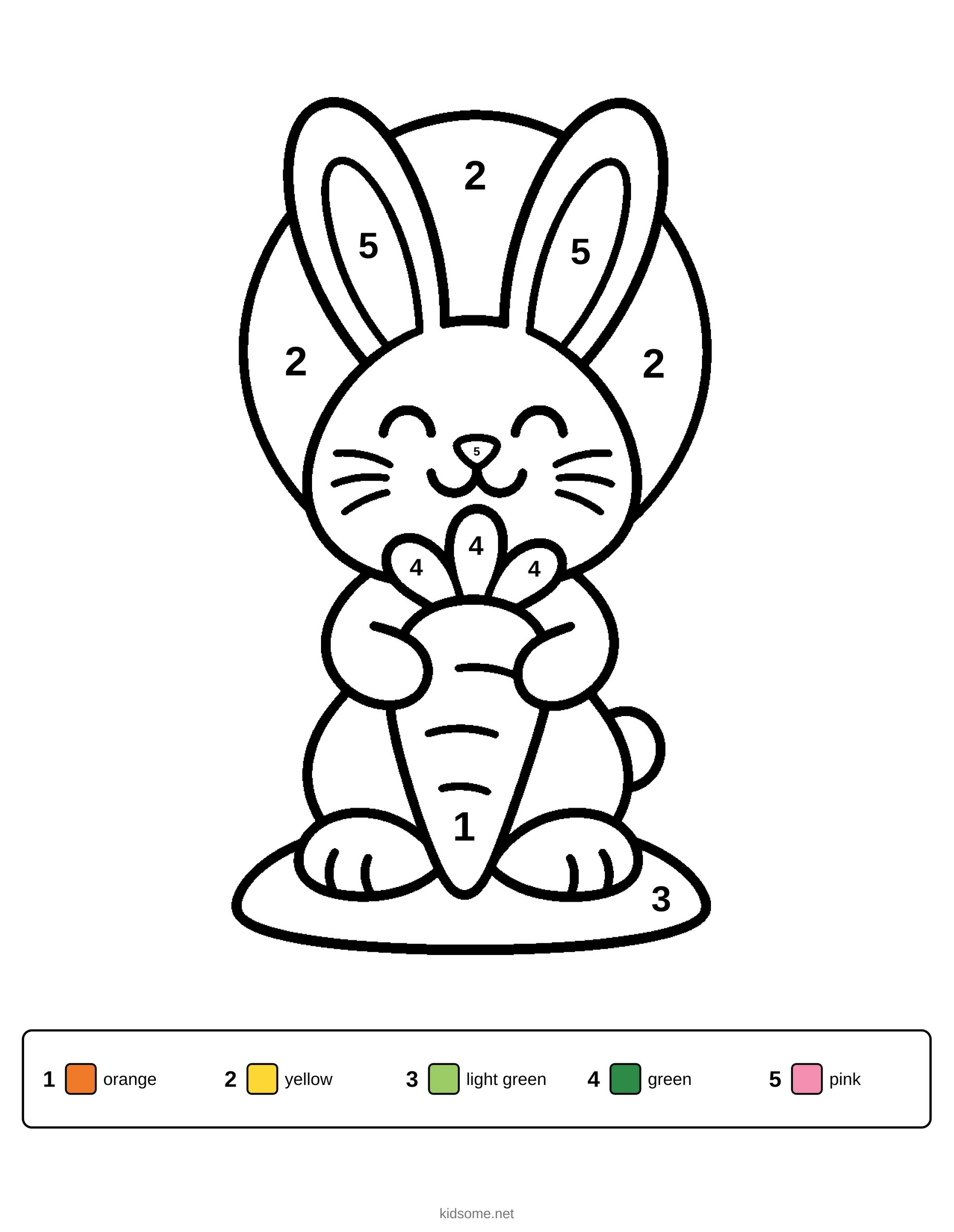 Save
Bunny Holding a Carrot
A smiling bunny sits tall and hugs a big carrot, with a round sun behind its head.
Download PDF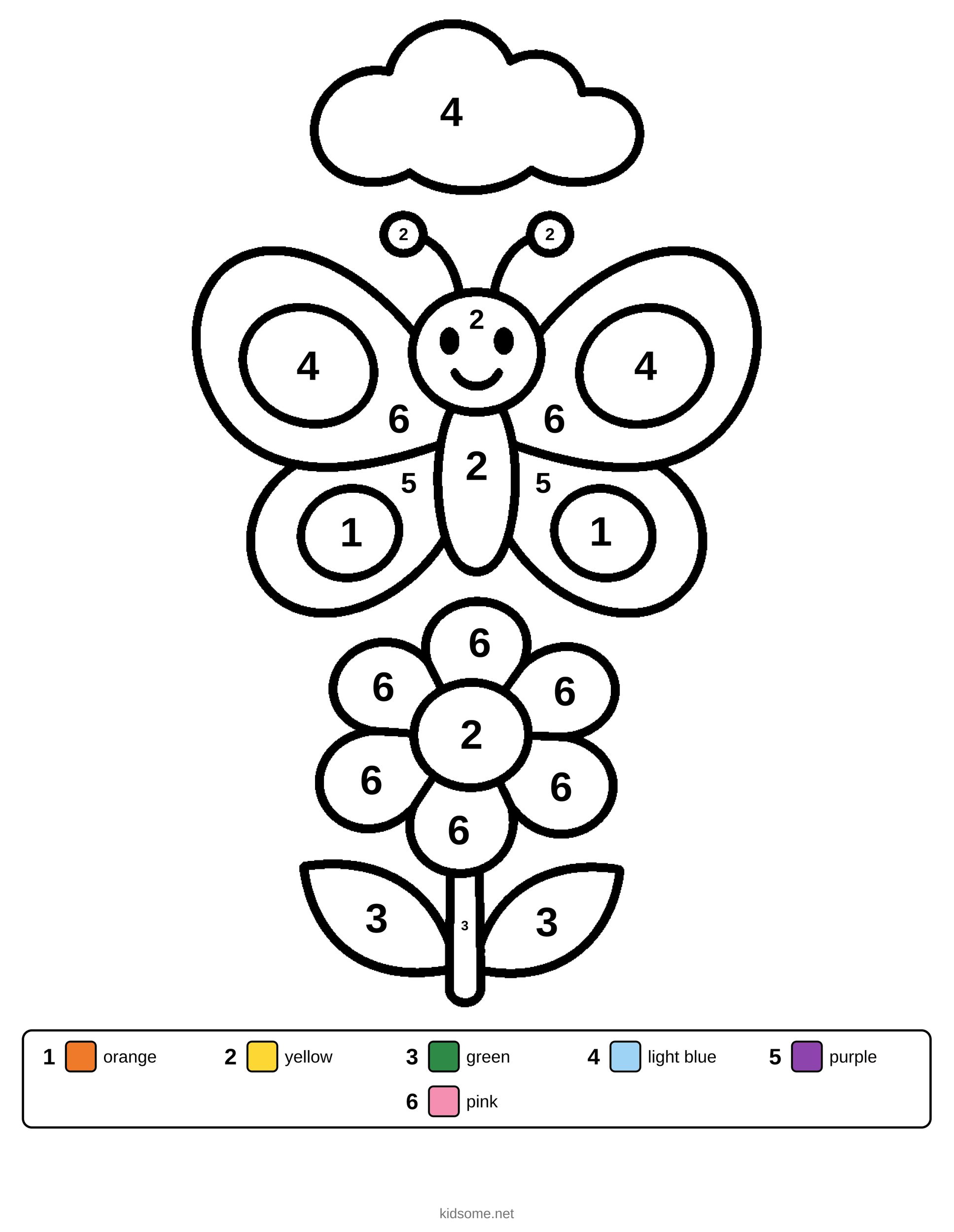 Save
Butterfly Over a Flower
A big butterfly with wide spotted wings hovers over one round flower under a puffy cloud.
Download PDF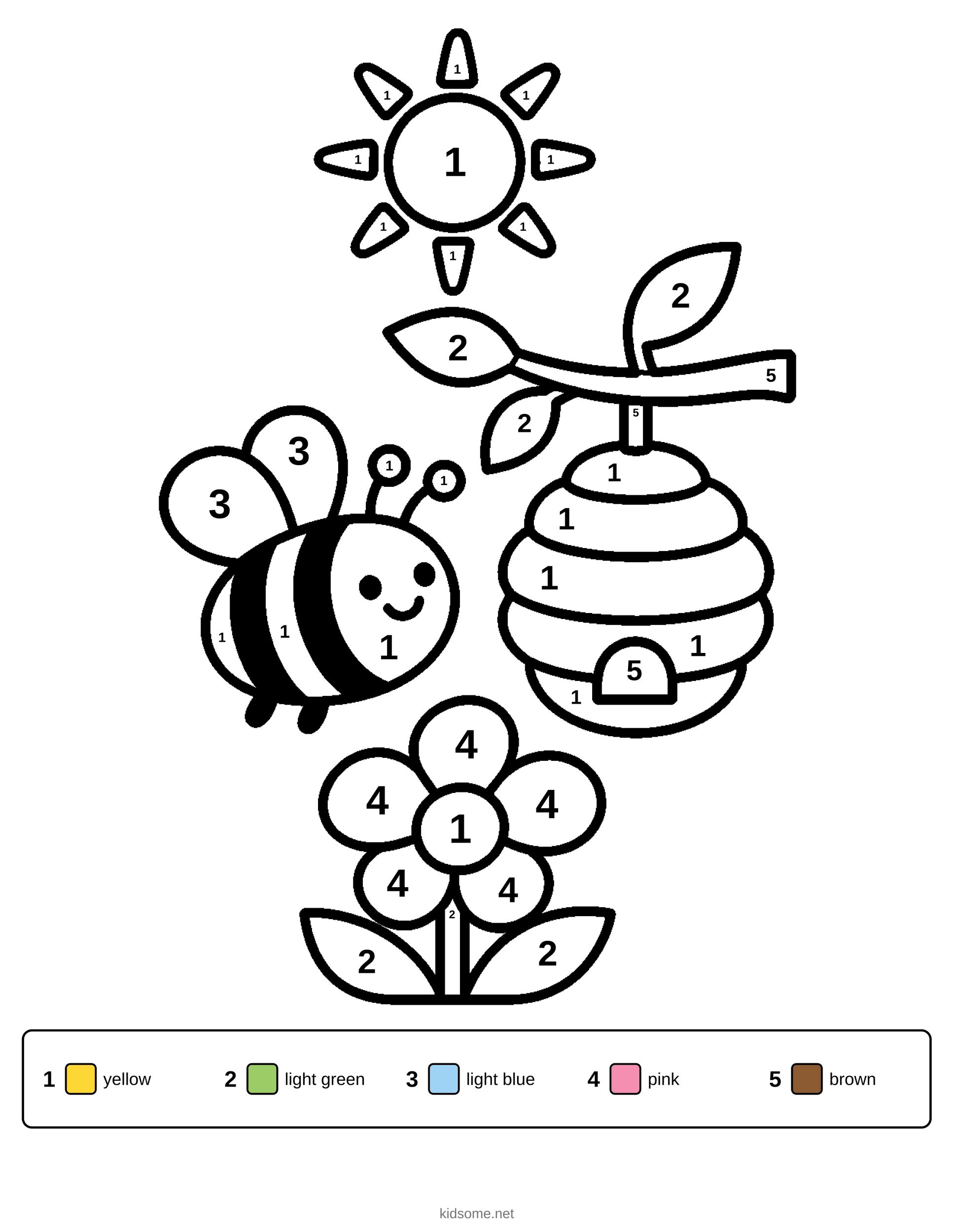 Save
Bee and Hanging Beehive
A striped bee flies beside a round beehive hanging from a leafy branch, with a flower and a sun.
Download PDF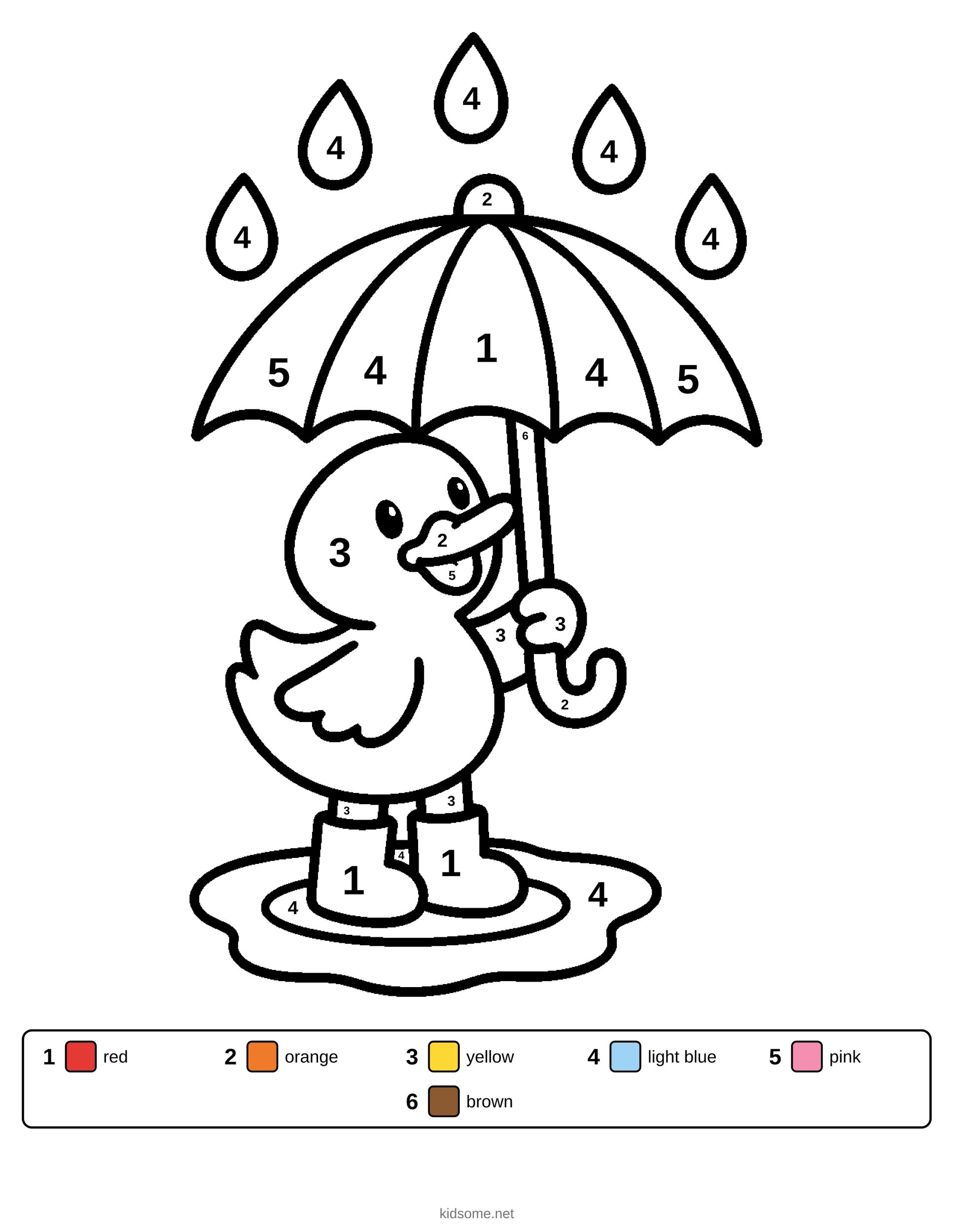 Save
Duck in Rain Boots
A little duck in red boots stands under an open umbrella while big raindrops fall around it.
Download PDF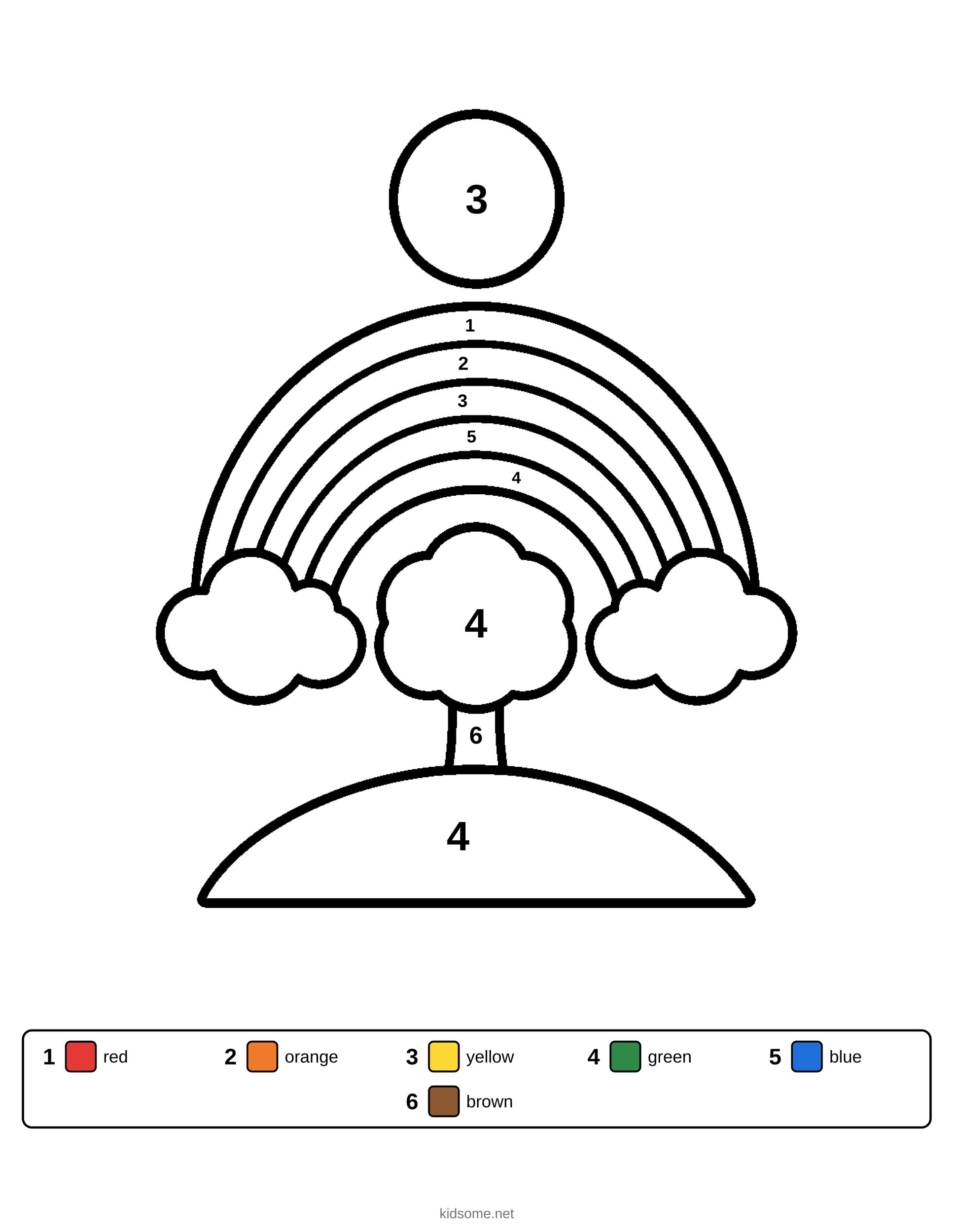 Save
Rainbow Over a Hill
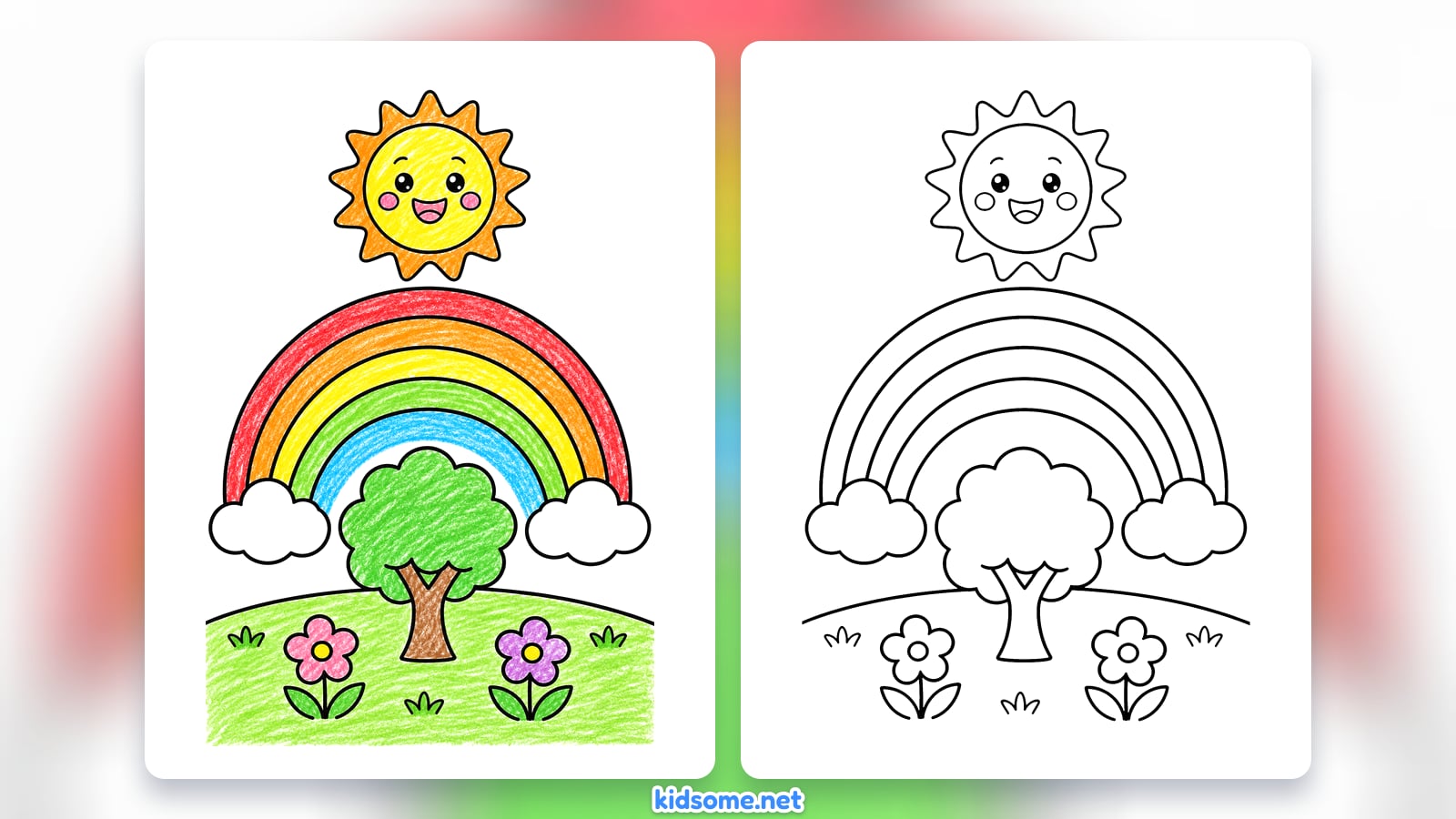
A wide rainbow arches over a green hill with a round tree, a cloud at each end and a sun above.
Download PDF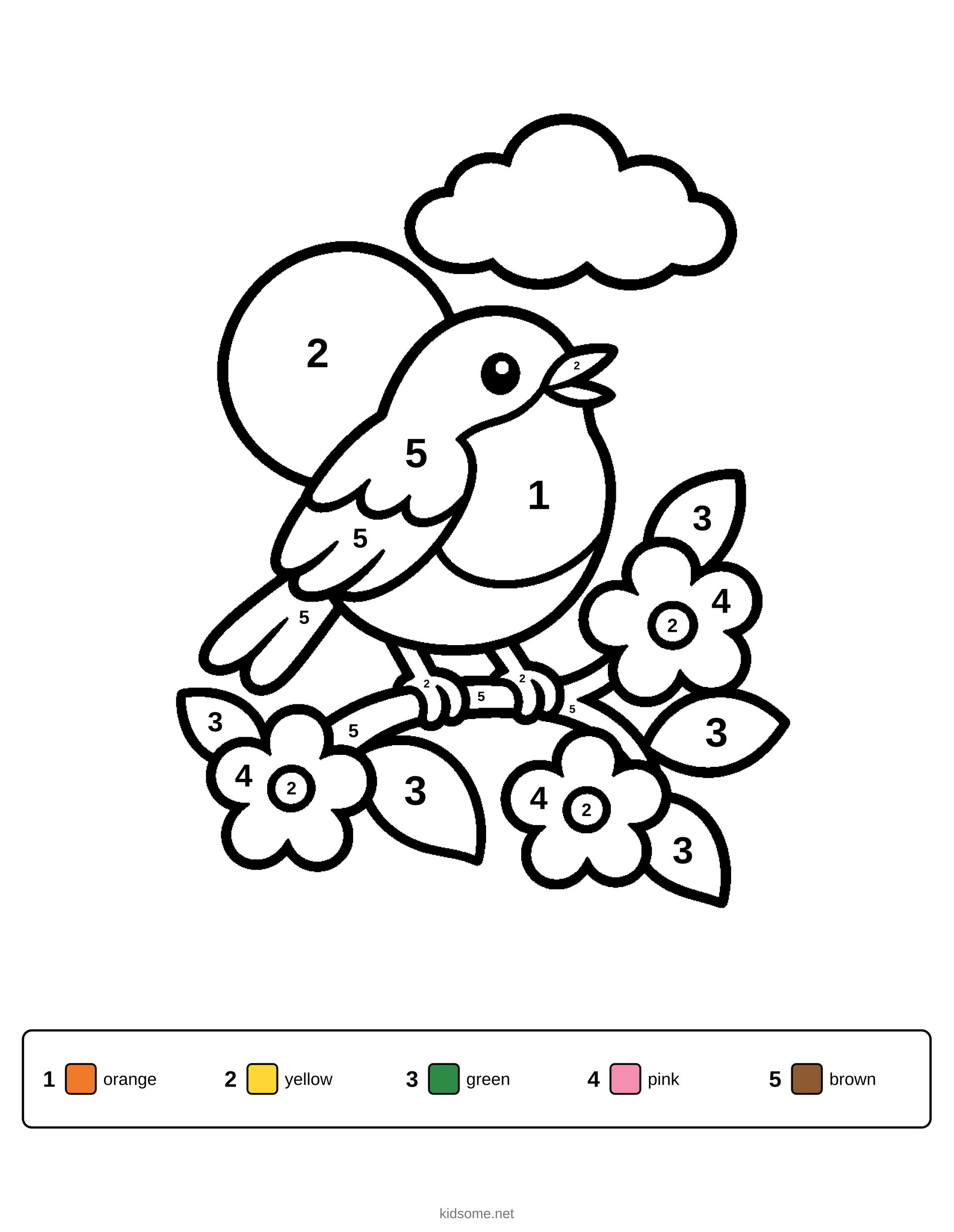 Save
Robin on Blossom Branch
A plump robin sits on a branch of round blossoms and leaves, with a sun and a cloud behind it.
Download PDF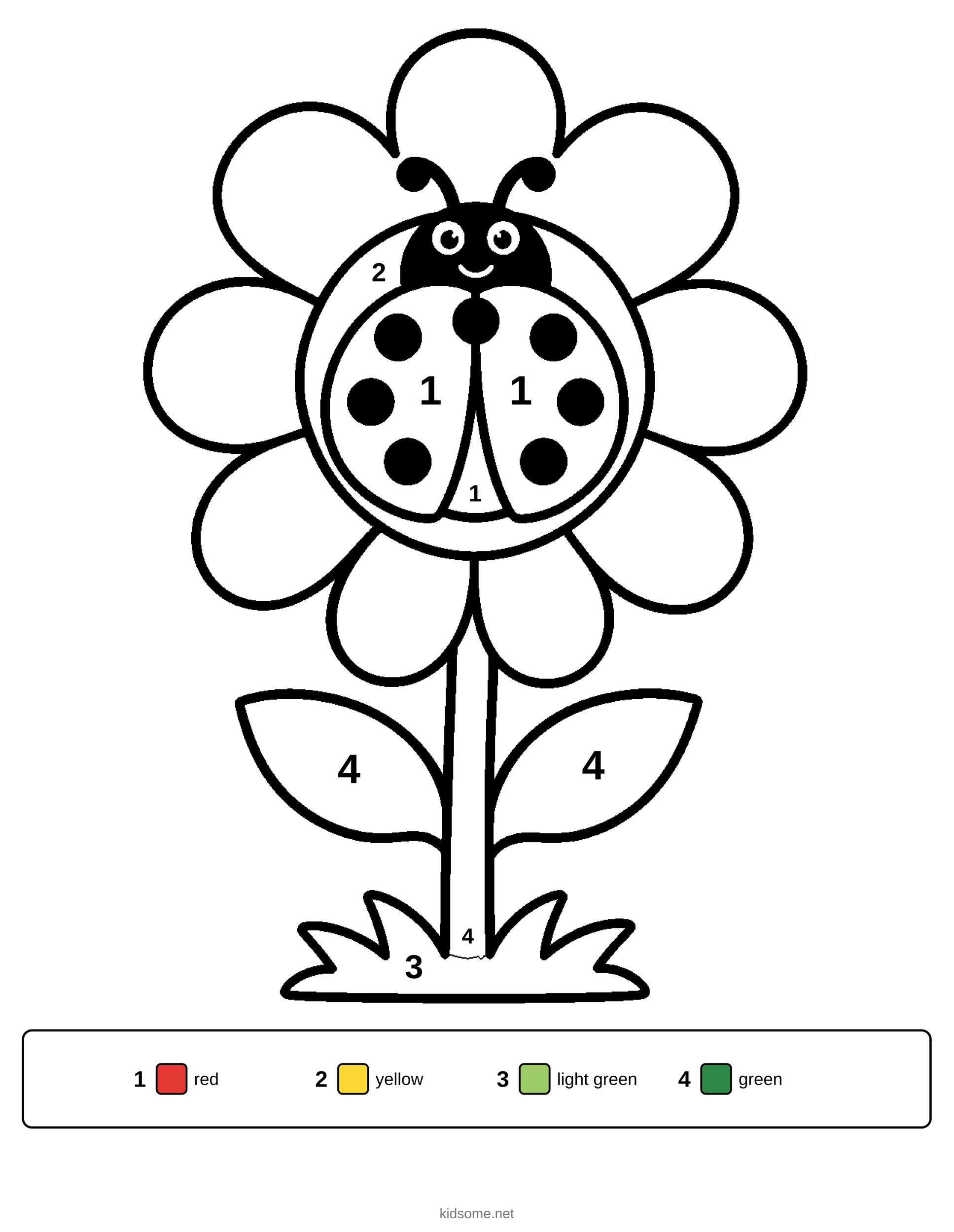 Save
Ladybug on a Daisy
A big spotted ladybug rests on a huge daisy with wide petals, a long stem and two leaves.
Download PDF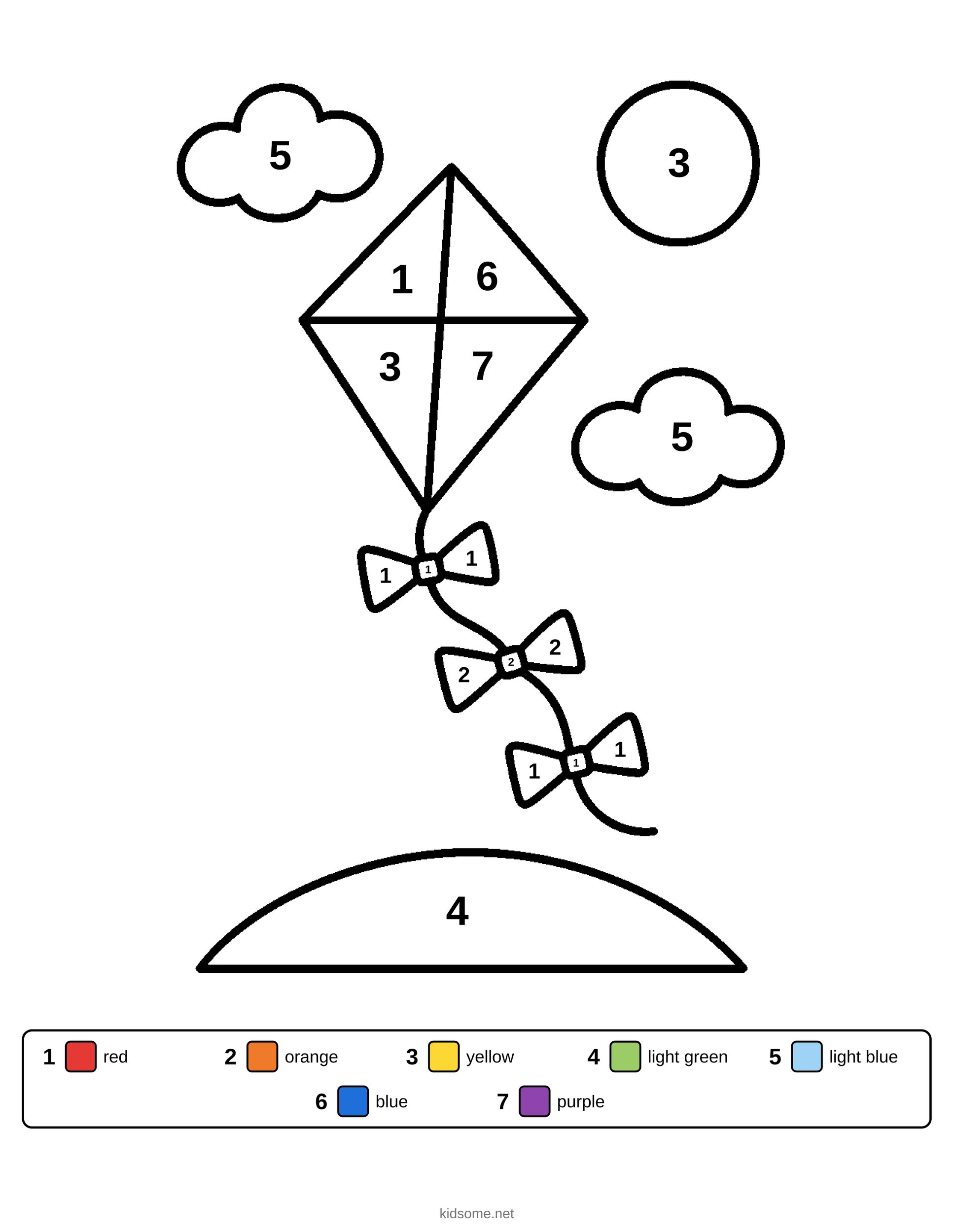 Save
Diamond Kite and Clouds
A diamond kite with four panels and a bow tail flies above a hill, two clouds and a round sun.
Download PDF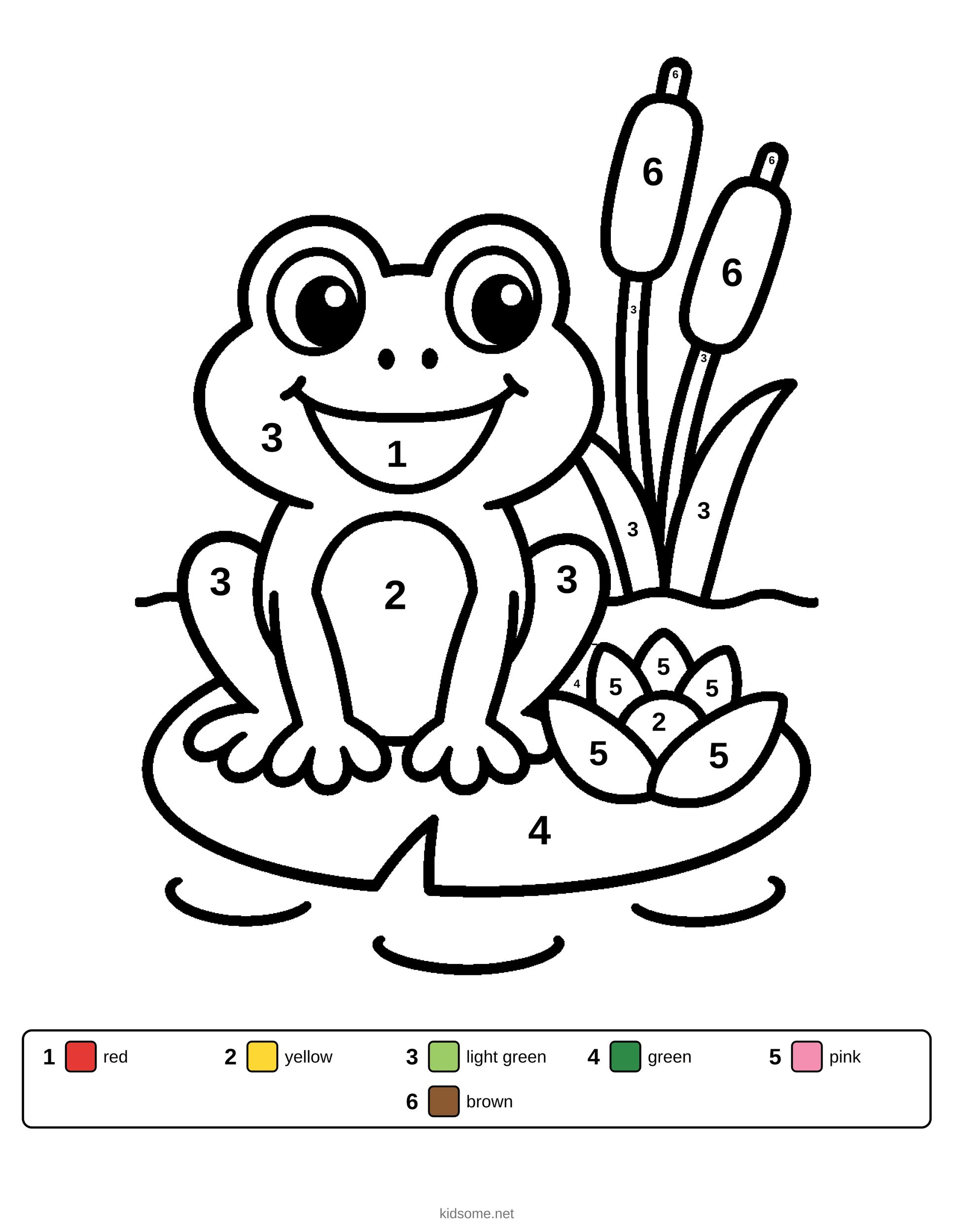 Save
Frog on a Lily Pad
A happy frog sits up on a round lily pad beside a water lily, with two cattails behind it.
Download PDFHow to use these pages
Print at 100 percent on plain copy paper, or on card stock if your child likes markers. The PDF is US Letter with margins that also fit A4. Page one is the color by number picture. Page two is the same picture finished in color, so print page one alone if you want the result to be a surprise, or keep page two nearby to check.
Show your child how it works before they start. Find a number in a shape, look for the same number in the key at the bottom, then color the shape with that crayon. Shapes with no number stay white, such as the petals of the big daisy, which makes that picture quick to finish. A tiny shape may have a small number, so a grown-up can point those out.
The easiest pages are Ladybug on a Daisy and Tulips in a Clay Pot, with only a few colors and large open shapes. Bunny Holding a Carrot, Butterfly Over a Flower and Rainbow Over a Hill sit in the middle. Robin on Blossom Branch and Frog on a Lily Pad have many small pieces, and Diamond Kite and Clouds uses seven colors, so save it for a child who is ready for more.
Crayons and colored pencils both work well. The key names every color, so a box of 16 or 24 crayons covers the whole set, and a child can pick the closest match for colors like light green or pink. Coloring one color at a time, all the ones, then all the twos, keeps the page tidy and helps younger children stay on track.
Ideas for these pages
- One color at a time: Ask your child to find every 1 on the page and color those first, then every 2. Hunting for one number at a time builds number recognition and keeps the page from feeling too big.
- Count the shapes: Before coloring, count how many shapes have a 3 or a 4. Write the totals at the top, then check them again after coloring to see if any shape was missed.
- Read the color names: For early readers, cover the swatches in the key with a strip of paper so only the names show. Reading yellow, pink or light green before picking a crayon turns the page into reading practice.
- Spring word list: After finishing a picture, write three spring words about it on the back, such as rain, bloom and hop. Younger children can say the words while a grown-up writes them down.
- Compare with page two: When a page is done, hold it next to the finished picture on page two. Talk about which parts match and which colors your child chose differently, and why both look good.
- Garden science: Use the tulip, daisy, bee and butterfly pages to start a talk about how flowers grow. Ask what a bee needs from a flower and why a butterfly visits one in spring.
- Rainy day table: Keep a few printed pages and a cup of crayons on a side table for indoor recess or a wet afternoon at home. Each page takes about fifteen to thirty minutes, which fills a calm stretch.
- Make a mural: Color all ten pages as a class, cut them out and tape them along a wall to make a spring garden. Children can add paper flowers and raindrops around the pictures to fill the gaps.
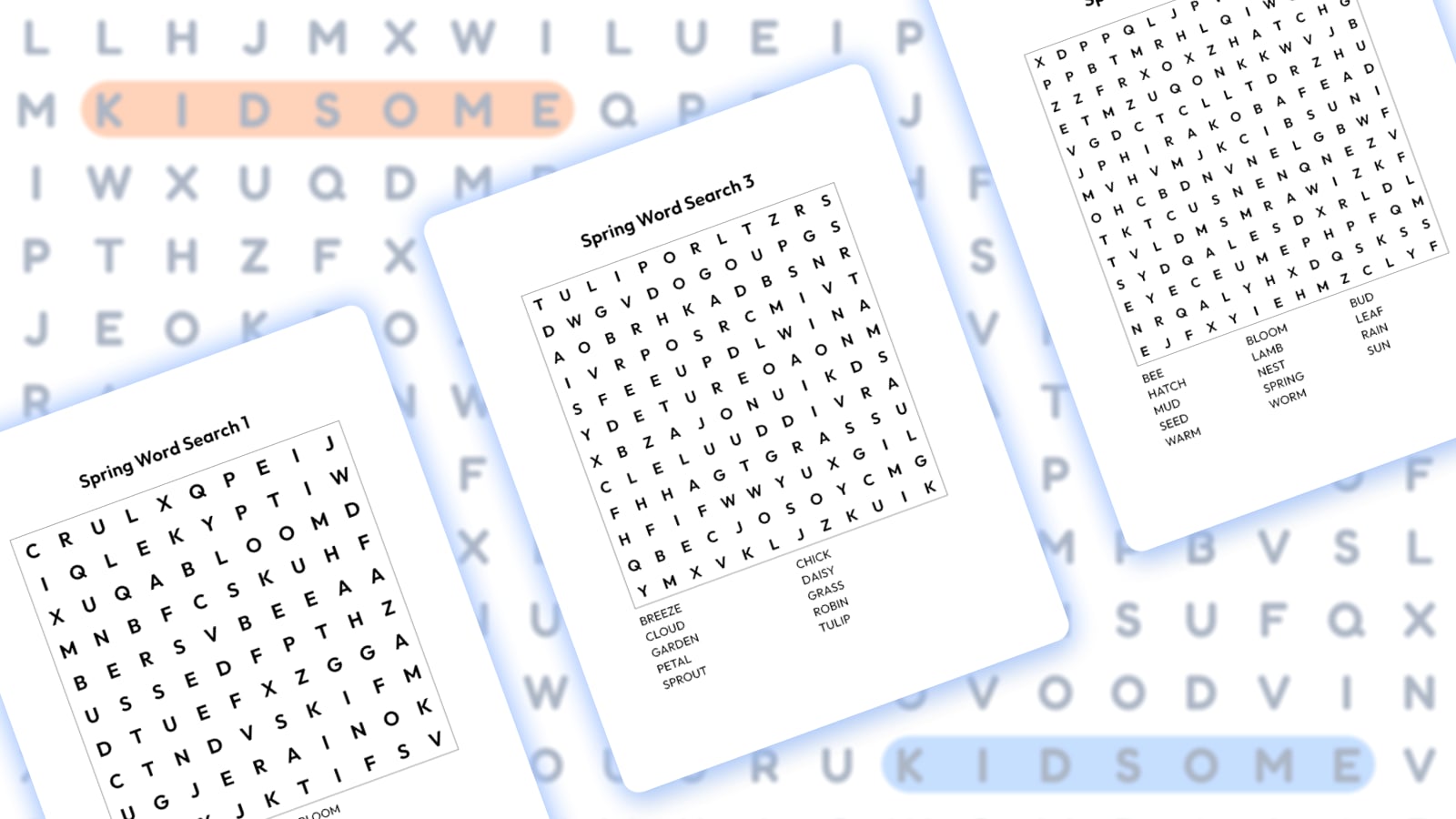
- Puzzle pairing: Finish a picture, then try a spring word search to find the same flower and animal words in a grid. It makes a neat quiet-time pair.
What age are these spring color by number pages for?
They suit ages 4 to 8. Younger children can start with the tulips and the ladybug, which have big shapes and fewer colors, with a grown-up reading the key. Older children can work through the detailed pages on their own and read the color names in the key.
What if we do not have the exact colors?
Any close crayon is fine. The key shows each color as a swatch and by name, so a child can pick the nearest match from their box. A slightly different green or pink still makes a lovely picture, and page two shows one way the finished scene can look.
What is on page two of each PDF?
Page two is the same picture already colored, a finished example to compare with. Print only page one for the child if you want the result to stay a surprise, and print page two for yourself if you would like a quick way to check the colors when the page is done.
Can I print them in black and white?
Yes. The numbered picture is black and white already. The color swatches in the key will print as grey, but every swatch has its color name written next to it, so children can still match each number to the right crayon without a color printer.
Can I use these pages in my classroom?
Yes, and the spring color by number free download needs no sign-up. Teachers, homeschool parents and tutors can print as many copies as their own students need. The pages are free for personal and classroom use. Please do not sell them, add them to a paid pack or post the PDF files on another website. Sharing a link to this page is always welcome.
Make your own: Free Printable Multiplication Color by Number Worksheets, Free Printable Division Color by Number Worksheets